2 layers164 × 100 mm

 bgmbzk/Industrial-STM32-CAN-Node
Industrial-grade CAN-Bus Node design based on STM32F103. Features SMD components, high-reliability routing, and production-ready Gerber files.
Industrial STM32-CAN Node is an open-source printed circuit board by bgmbzk, from the bgmbzk/Industrial-STM32-CAN-Node repository on GitHub. It is a 2-layer board of 92.3 × 54.5 mm with 13 parts on 43 nets, routed with 179 tracks and 19 vias.
It is built around the SN65HVD230D and AMS1117CD-3.3. Its parts include 4 capacitors, 3 resistors, 3 ICs, 2 connectors and 1 crystal. It belongs with the interfaces and adapters boards and the STM32 boards of this library.


This repository contains the full hardware design for a high-reliability, SMD-based Industrial CAN-Bus Node. The project is designed around the STM32F103C8T6 microcontroller and the SN65HVD230 CAN transceiver, optimized for robust performance in industrial communication environments.
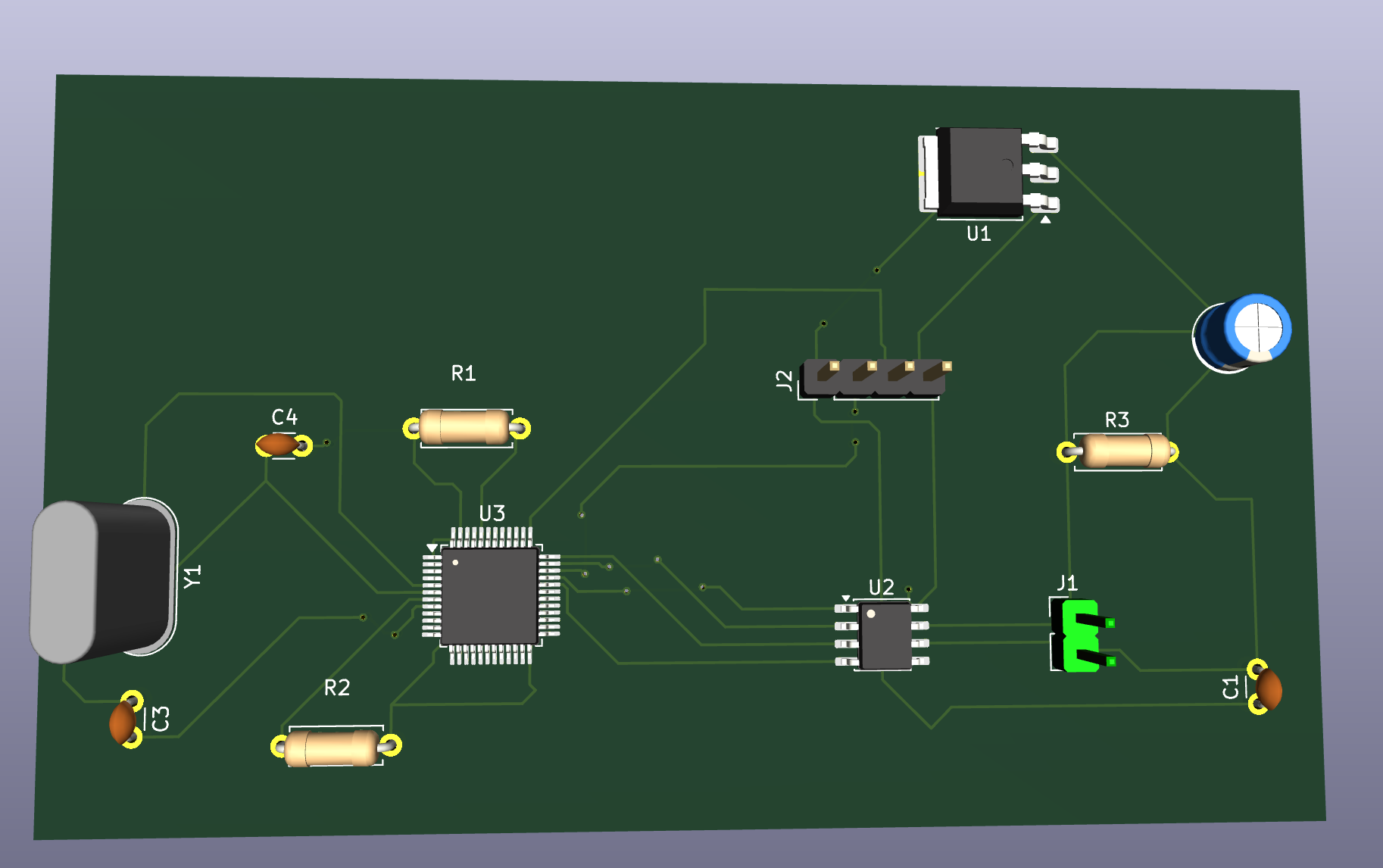
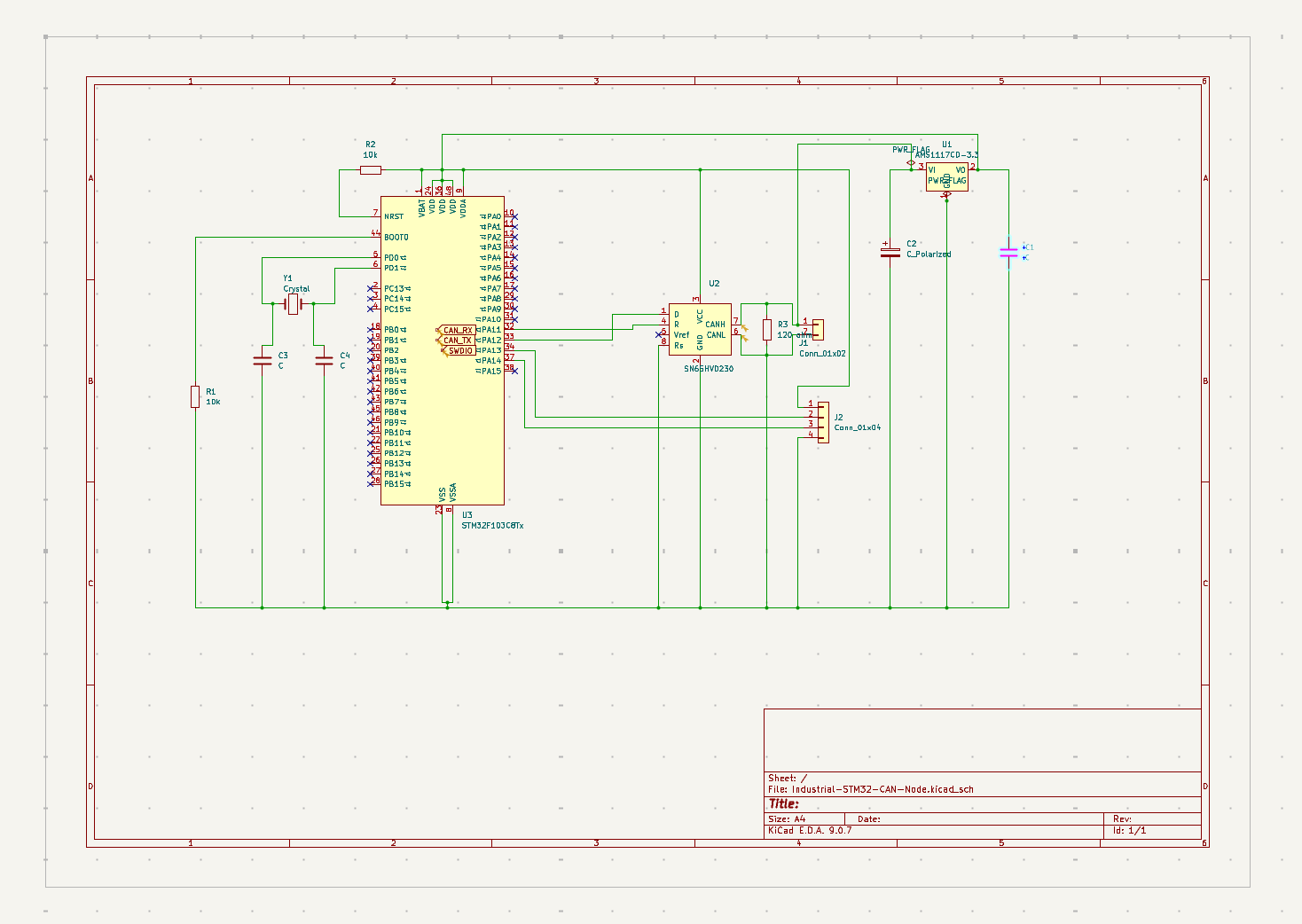
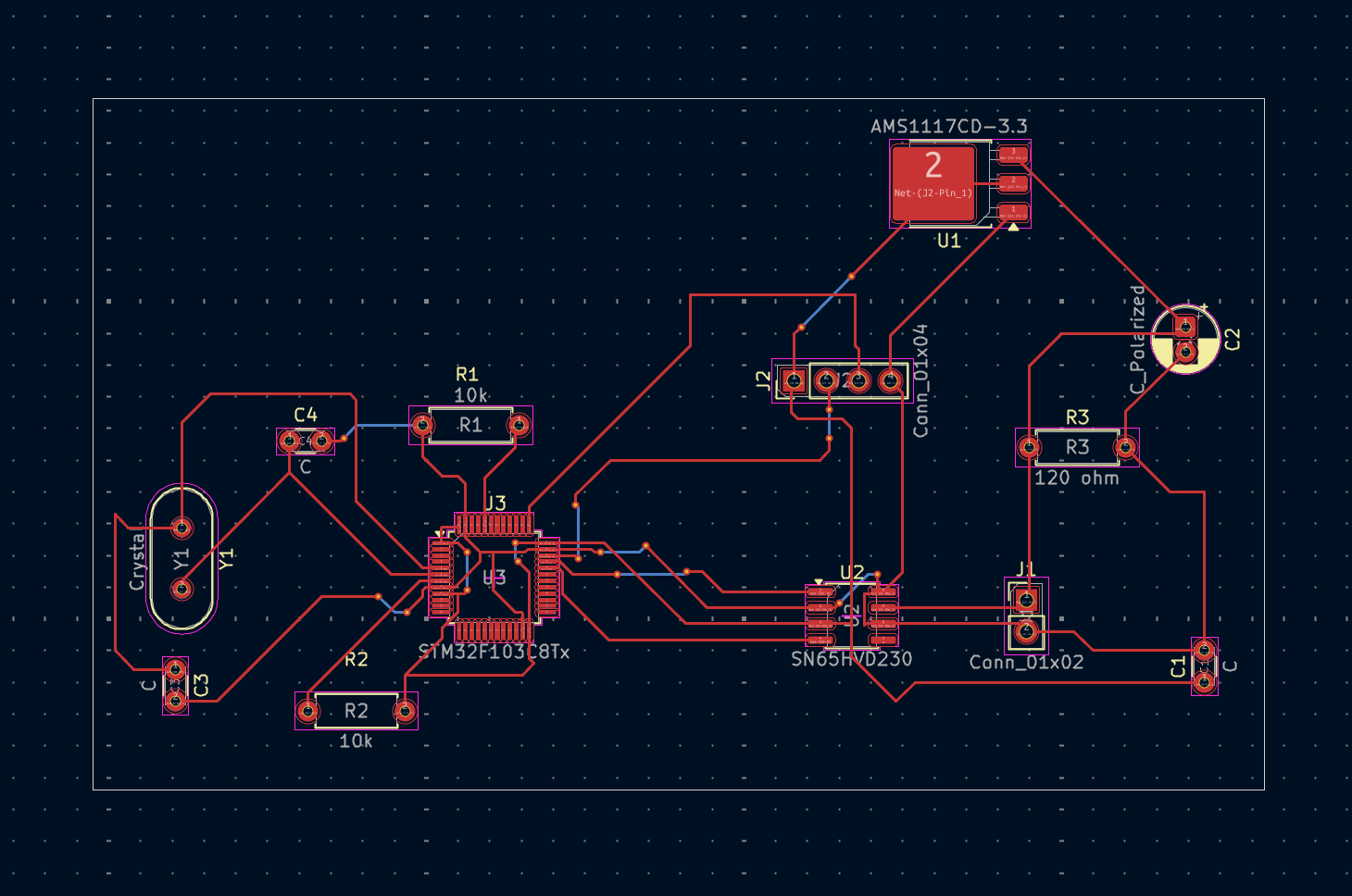
/Industrial-STM32-CAN-Node_gerber: Production files (Gerber, Drill, BOM).Industrial-STM32-CAN-Node.kicad_pro: KiCad project file.Industrial-STM32-CAN-Node.kicad_sch: Schematic design.Industrial-STM32-CAN-Node.kicad_pcb: PCB layout design./gerber folder for manufacturing files.Designed with precision for industrial reliability.
This project has been significantly upgraded from its predecessor to meet industrial standards:
| Qty | Value | Footprint | References |
|---|---|---|---|
| 3 | C | Capacitor_THT:C_Disc_D3.0mm_W1.6mm_P2.50mm | C1, C3, C4 |
| 2 | 10k | Resistor_THT:R_Axial_DIN0207_L6.3mm_D2.5mm_P7.62mm_Horizontal | R1, R2 |
| 1 | 120 ohm | Resistor_THT:R_Axial_DIN0207_L6.3mm_D2.5mm_P7.62mm_Horizontal | R3 |
| 1 | AMS1117CD-3.3 | Package_TO_SOT_SMD:TO-252-3_TabPin2 | U1 |
| 1 | C_Polarized | Capacitor_THT:CP_Radial_D5.0mm_P2.00mm | C2 |
| 1 | Conn_01x02 | Connector_PinHeader_2.54mm:PinHeader_1x02_P2.54mm_Vertical | J1 |
| 1 | Conn_01x04 | Connector_PinHeader_2.54mm:PinHeader_1x04_P2.54mm_Vertical | J2 |
| 1 | Crystal | Crystal:Crystal_HC49-U_Vertical | Y1 |
| 1 | SN65HVD230 | Package_SO:SOIC-8_3.9x4.9mm_P1.27mm | U2 |
| 1 | STM32F103C8Tx | Package_QFP:LQFP-48_7x7mm_P0.5mm | U3 |


deep-th/CAN_Logger
This is a compact and reliable CAN logger board built for automotive and industrial applications. It features the ESP32-S3 microcontroller and MCP25625 CAN controller with integrated transceiver, supporting two…

Hugondon/Proyecto-Trayectorias
Códigos utilizados para el proyecto de ingeniería

carlassaraf/tp_analyzer
RP2350A based firmware for a three-phase analyzer instrument running FreeRTOS and LVGL UI

Casual-Coder-dev/ESP32-Mini-1-N8-Devboard-
This project contains the pcb of an ESP32 Mini 1 N8 Development board that is suitable for your needs.

It measures 92.3 × 54.5 mm and has 2 copper layers, 1.6 mm thick.
13 parts, built around the SN65HVD230D and AMS1117CD-3.3. The full list of its parts is on this page, with links to each part's symbol and footprint where PCBKit's library has them.
From the bgmbzk/Industrial-STM32-CAN-Node repository on GitHub, at the commit this page was made from: the board is Industrial-STM32-CAN-Node.kicad_pcb and its schematic Industrial-STM32-CAN-Node.kicad_sch. PCBKit opens the board in the browser, with nothing to install.
Its repository states no licence, so its author keeps all rights: ask bgmbzk before reusing the design.