Pi zero analogaudio is an open-source printed circuit board by bablokb, from the bablokb/pi-zero-analogaudio repository on GitHub, published under the GPL-3.0 licence. It is a 2-layer board of 30.5 × 26 mm with 13 parts on 15 nets, routed with 31 tracks and 0 vias.
It is built around the STX-3120-5B. Its parts include 4 capacitors, 4 resistors, 2 connectors and 1 IC. It belongs with the audio and music boards of this library.
The Pi-Zero is a stripped down board, there is no analog audio jack
like on the bigger Pis. But it is no problem to add it using a few
simple and cheap components.
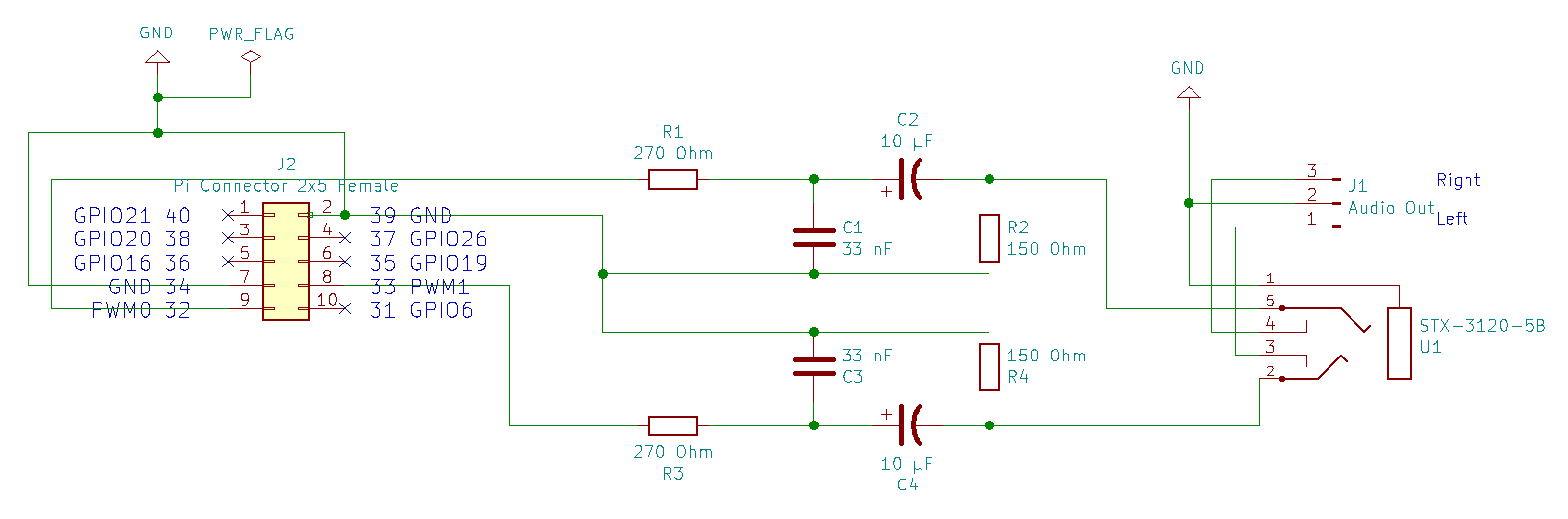
The schematic
shows the necessary parts and the wiring. Basically, you configure the
Zero to output pwm-signals, then you use a combination of a lowpass
and highpass filter to clean the signal on every channel.
The audio quality is ok, but not on hifi level. The filters limit the
frequency range and the signal is still not absolutely clean afterwards.
If you really need high-quality audio-output, use HDMI, bluetooth or
attach an audio-hat based on I2S using a DAC.
Hardware
Required parts:
two resistors 270 Ohm
two resistors 150 Ohm
two capacitors 33nF
two capacitors 10µF
an 3.5mm audio-jack (e.g. STX-3120-5B from Adafruit)
some jumper-wires
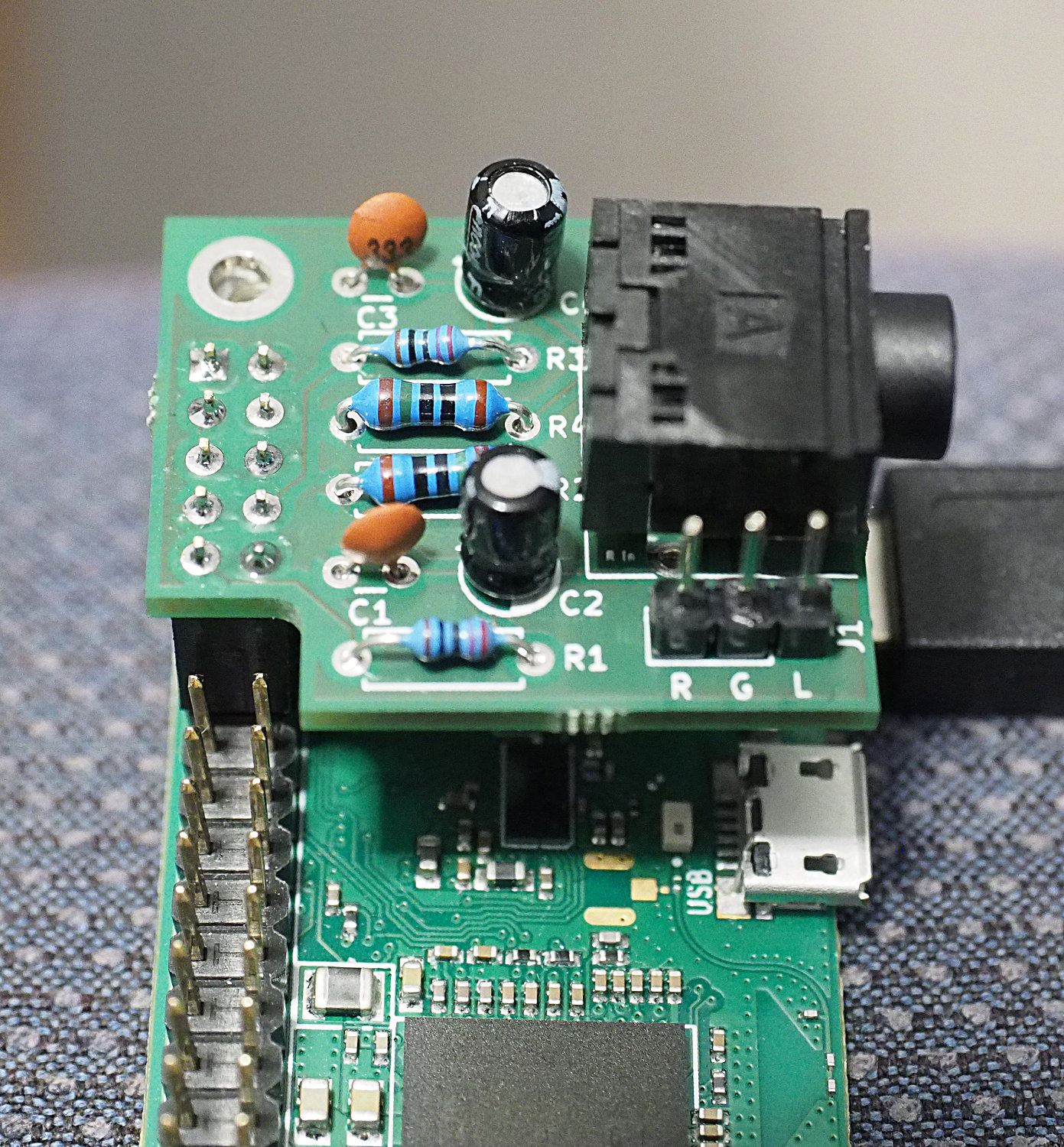
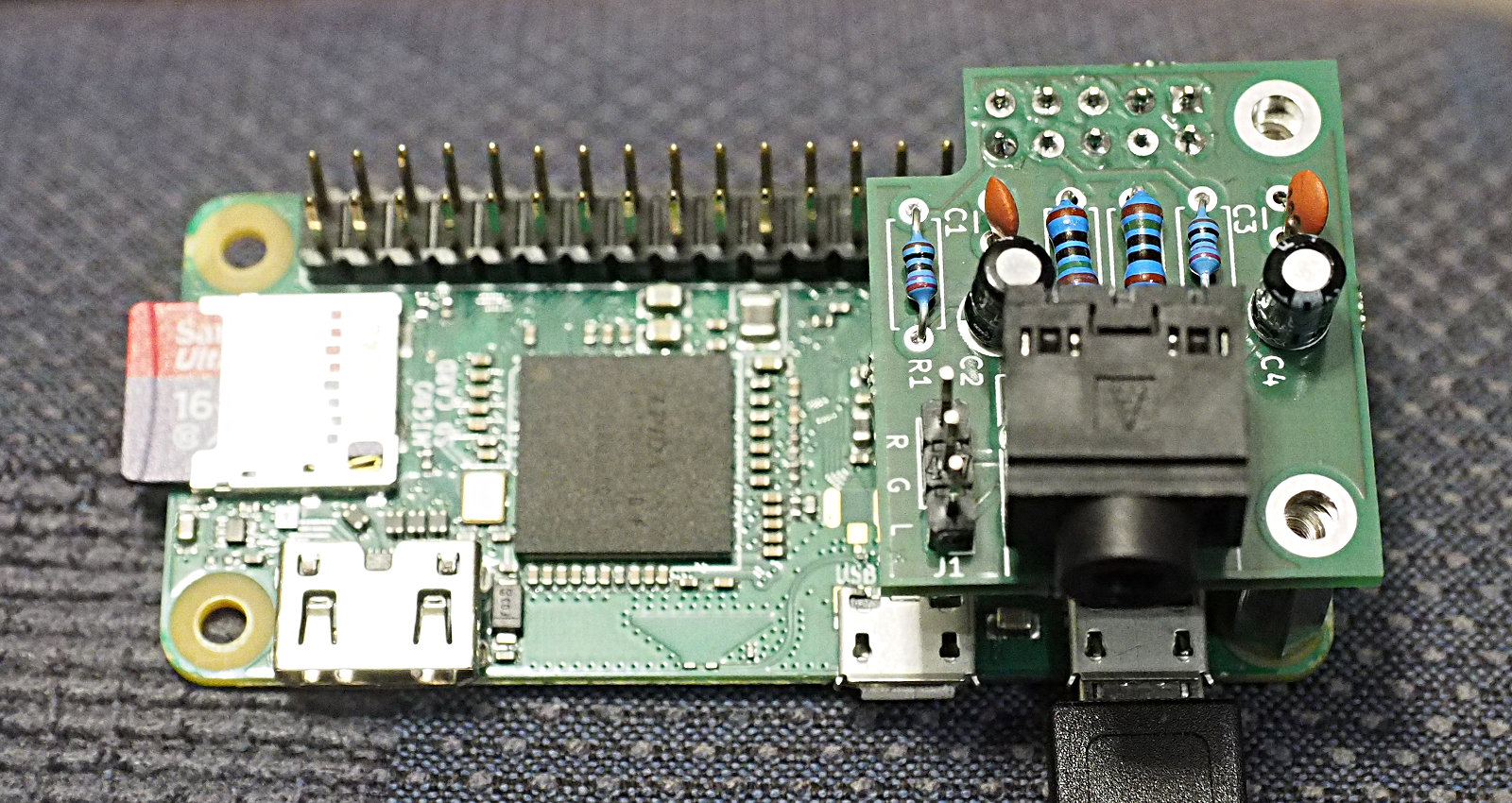
In the folder kicad you can find a complete pcb, designed for the above
throughhole components. You will need to adapt the design if you use a
different audio-jack.
Software and System Configuration
You don't need special software, just use aplay to play wav-files or
e.g. mpg123 for mp3-files.
You can configure the system manually, or you can clone the repository
and just run the install command:
text
git clone https://github.com/bablokb/pi-zero-analogaudio.git
cd pi-zero-analogaudio
sudo tools/install
The install command will add the following lines to your /boot/config.txt:
This configures analog-audio for the physical pins 32 and 33. Other
pin-combinations are possible, see the file /boot/overlays/README for
a complete list.
In addition, the install command runs
text
amixer cset numid=3 1
This switches the audio-output from auto (0) or HDMI (2) to analog-out (1).
You can also use raspi-config for this task (or for switching back).
It measures 30.5 × 26 mm and has 2 copper layers, 1.6 mm thick.
What parts does the Pi zero analogaudio use?
13 parts, built around the STX-3120-5B. The full list of its parts is on this page, with links to each part's symbol and footprint where PCBKit's library has them.
Where can I download the Pi zero analogaudio KiCad files?
From the bablokb/pi-zero-analogaudio repository on GitHub, at the commit this page was made from: the board is kicad/pi-zero-analogaudio/pi-zero-analogaudio.kicad_pcb. PCBKit opens the board in the browser, with nothing to install.
Can I use the Pi zero analogaudio design in my own project?
Its repository publishes it under the GPL-3.0 licence: you may reuse it on that licence's terms (keep the author's notice, and for a copyleft licence share your changes alike).
Fistst ESP and STM32 pcb project, it will have a power meter sd crd wifi and the ability to play back MP3 file (and maybe more) . Also it will feature a power usage meter. Maybe it will aso have battery power option
A portable device that can spoof/emulate any magnetic stripe, credit card or hotel card "wirelessly", even on standard magstripe (non-NFC/RFID) readers.