4 layers100 × 100 mm
Debug
atopile/swoop
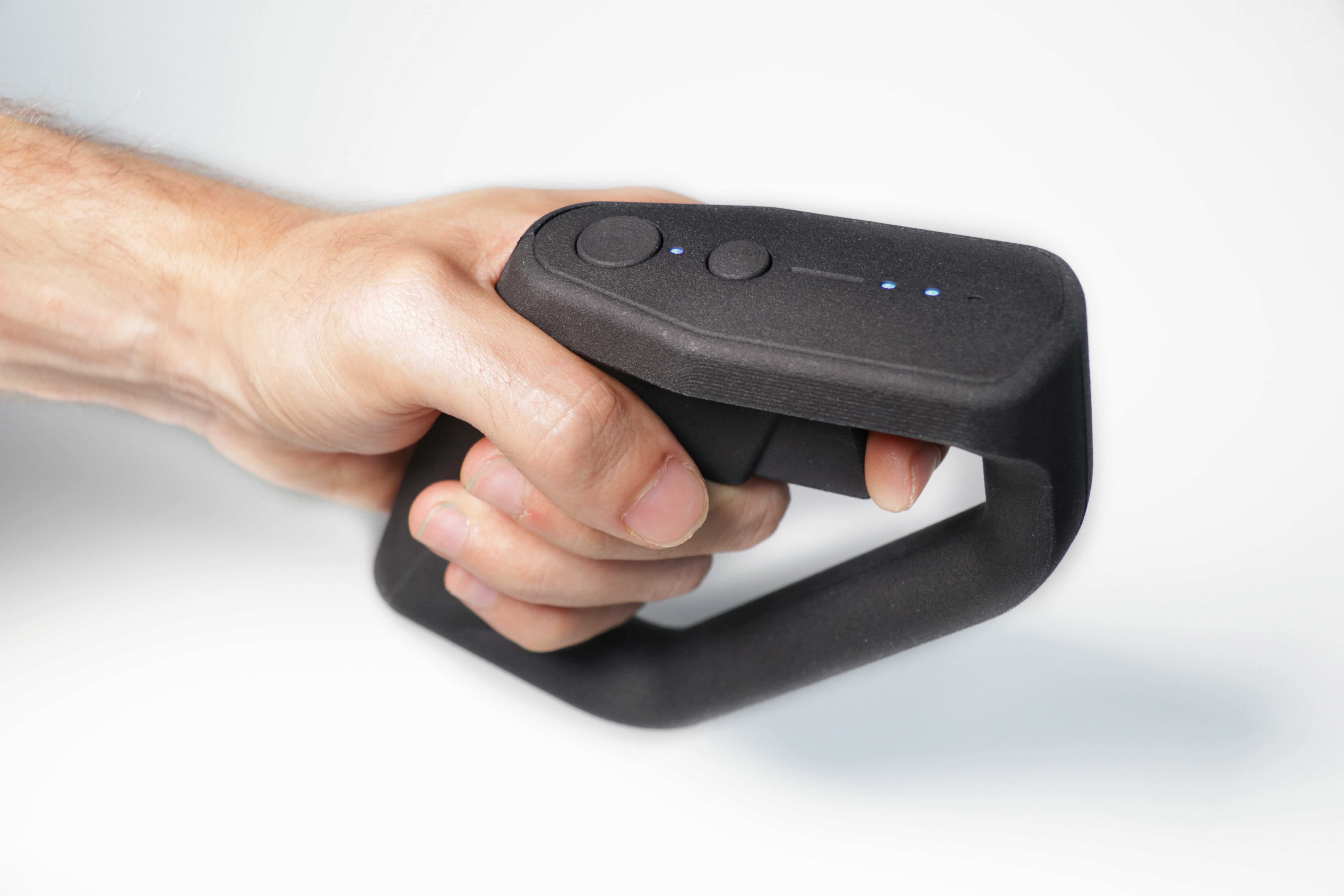
With swoop, you can fly remote controlled aircraft with the motion of your hand. It's especially fun when flying FPV because the motion of your remote precisely maps to the aircraft.
150 parts51MIT

 atopile/swoop51
With swoop, you can fly remote controlled aircraft with the motion of your hand. It's especially fun when flying FPV because the motion of your remote precisely maps to the aircraft.
Bmi088 is an open-source printed circuit board by atopile, from the atopile/swoop repository on GitHub, published under the MIT licence. It is a 2-layer board of 225.7 × 100.8 mm with 3 parts on 11 nets, routed with 28 tracks and 0 vias.
Its parts include 2 capacitors and 1 IC.
 [blocked]
 [blocked]
 [blocked]
 [blocked]
 [blocked]
With swoop, you can fly remote controlled aircraft with the motion of your hand. It's especially fun when flying FPV because the motion of your remote precisely maps to the aircraft.
This project is fully open source and designed with atopile, a new language and compiler to design electronics with code.
Latest auto-generated artifacts
Electronics: Gerbers, Bill of material, position files
3D Files (STL, STEP files in the future)
Atopile code
The atopile entry point is located here. Clone the repository and install atopile if you'd like to explore further.
The three rotation axis, yaw, pitch, roll of the remote each control the same channel on your aircraft. If you tilt your remote to a certain angle, your aircraft will rotate in that same direction with a certain rotational speed. That's what makes this controller so intuitive to use! To start using the remote, simply double click the arming button (the larger button). This will zero the controller to the current position and start streaming the control outputs to the receiver.
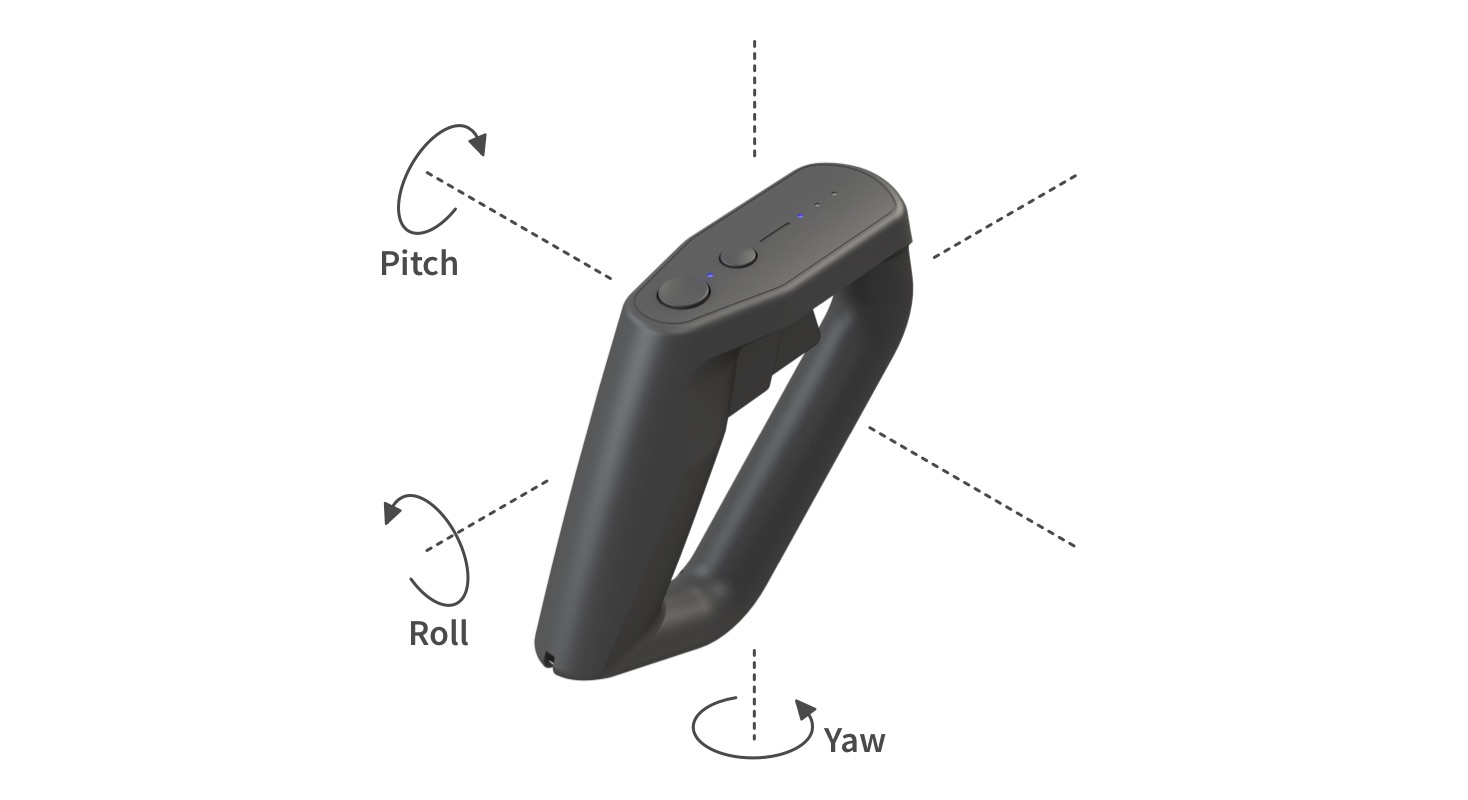
To control the throttle, which is your aircraft's motor power, simply press the trigger. Inside the controller, a hall sensor precisely keeps track of the trigger position. This makes for a total of four control inputs with yaw, pitch, roll and throttle.
The smaller button on the remote let's you switch the flight mode. Pretty handy to tweak how your aircraft reacts to your control inputs!
Lastly, the remote has an integrated transceiver from the popular open source ExpressLRS project, which makes it compatible with any of their receivers!
Here is what we are planning for this controller:
We will share documentation once we've made more progress on the project development. For current status, checkout the product page.
If you are curious about the project, join us on the atopile discord server.
If you would like to contribute on atopile, here is what you will need:
For electronics:
For firmware:
| Qty | Value | Footprint | References |
|---|---|---|---|
| 2 | Multilayer Ceramic Capacitors MLCC - SMD/SMT 100nF 10V 0402 RoHS | lib:C0402 | C1, C2 |
| 1 | lib:LGA-16_L4.5-W3.0-P0.50-BL | U1 |
atopile/swoop
With swoop, you can fly remote controlled aircraft with the motion of your hand. It's especially fun when flying FPV because the motion of your remote precisely maps to the aircraft.

atopile/swoop
With swoop, you can fly remote controlled aircraft with the motion of your hand. It's especially fun when flying FPV because the motion of your remote precisely maps to the aircraft.

atopile/swoop
With swoop, you can fly remote controlled aircraft with the motion of your hand. It's especially fun when flying FPV because the motion of your remote precisely maps to the aircraft.

atopile/swoop
With swoop, you can fly remote controlled aircraft with the motion of your hand. It's especially fun when flying FPV because the motion of your remote precisely maps to the aircraft.

atopile/swoop
With swoop, you can fly remote controlled aircraft with the motion of your hand. It's especially fun when flying FPV because the motion of your remote precisely maps to the aircraft.

atopile/swoop
With swoop, you can fly remote controlled aircraft with the motion of your hand. It's especially fun when flying FPV because the motion of your remote precisely maps to the aircraft.

atopile/swoop
With swoop, you can fly remote controlled aircraft with the motion of your hand. It's especially fun when flying FPV because the motion of your remote precisely maps to the aircraft.

atopile/swoop
With swoop, you can fly remote controlled aircraft with the motion of your hand. It's especially fun when flying FPV because the motion of your remote precisely maps to the aircraft.

atopile/swoop
With swoop, you can fly remote controlled aircraft with the motion of your hand. It's especially fun when flying FPV because the motion of your remote precisely maps to the aircraft.

atopile/swoop
With swoop, you can fly remote controlled aircraft with the motion of your hand. It's especially fun when flying FPV because the motion of your remote precisely maps to the aircraft.


hzeller/rpi-rgb-led-matrix
Controlling up to three chains of 64x64, 32x32, 16x32 or similar RGB LED displays using Raspberry Pi GPIO


atopile/atopile
Design circuit boards with code! ✨ Get software-like design reuse 🚀, validation, version control and collaboration in hardware; starting with electronics ⚡️


hackclub/sprig
🍃 Learn to code by making games in a JavaScript web-based game editor.
It measures 225.7 × 100.8 mm and has 2 copper layers, 1.6 mm thick.
3 parts. The full list of its parts is on this page, with links to each part's symbol and footprint where PCBKit's library has them.
From the atopile/swoop repository on GitHub, at the commit this page was made from: the board is elec/src/bmi088/elec/layout/default/bmi088.kicad_pcb. PCBKit opens the board in the browser, with nothing to install.
Its repository publishes it under the MIT licence: you may reuse it on that licence's terms (keep the author's notice, and for a copyleft licence share your changes alike).