
2 layers33.7 × 97.8 mm
HAN ESP TSS721
UtilitechAS/amsreader-firmware
ESP8266 and ESP32 compatible firmware to read, interpret and publish data to MQTT from smart electrical meters, both DLMS and DSMR is supported
29 parts470

 andypugh/ESP-Heat17
A multi-zone central heating controller based on the ESP32
Temp~Sensor is an open-source printed circuit board by andypugh, from the andypugh/ESP-Heat repository on GitHub, published under the GPL-3.0 licence. It is a 2-layer board of 25.4 × 38.1 mm with 7 parts on 4 nets, routed with 26 tracks and 0 vias.
It is built around the DS18B20. Its parts include 3 connectors, 2 ICs, 1 resistor and 1 diode. It belongs with the sensors and measurement boards of this library.
A multi-zone central heating controller based on the ESP32.
It can be configured for an almost unlimited number of zones, pumps and separate boilers. Boiler run-on is supported, and configurable. Temperature sensing assumes DS18B20 sensors. One zone per valve, and it is assumed that zone valves trip microswitches when open.
Branches: no_master: Uses GPIO to read from the DS18B20 sensors
master: using a DS2482 1-wire master adaptor for longer cable runs. Using WebServer to handle http requests.
WiFiServer: Initial version using wiFi server and parsing incoming URLs byte-by-byte
The DS2482-100 is a I2C->1-Wire bridge (http://www.maximintegrated.com/datasheet/index.mvp/id/4382), contains functionality that means it is better at driving long and complex networks.
I used a DS2482-800 which additionally expands the bus to 8 separate channels, which allows for longer single-ended networks. For simplicity, using this break-out board. https://uk.rs-online.com/web/p/communication-wireless-development-tools/1360731/
Here is the main screen, showing a diagram of the house, with the temperature of each zone. The shape and position of each room is defined by an SVG path, for example: "M250 350 v190 h140 v-190 z" So that almost any house layout (or limited graphical elements for tanks etc) can be defined.
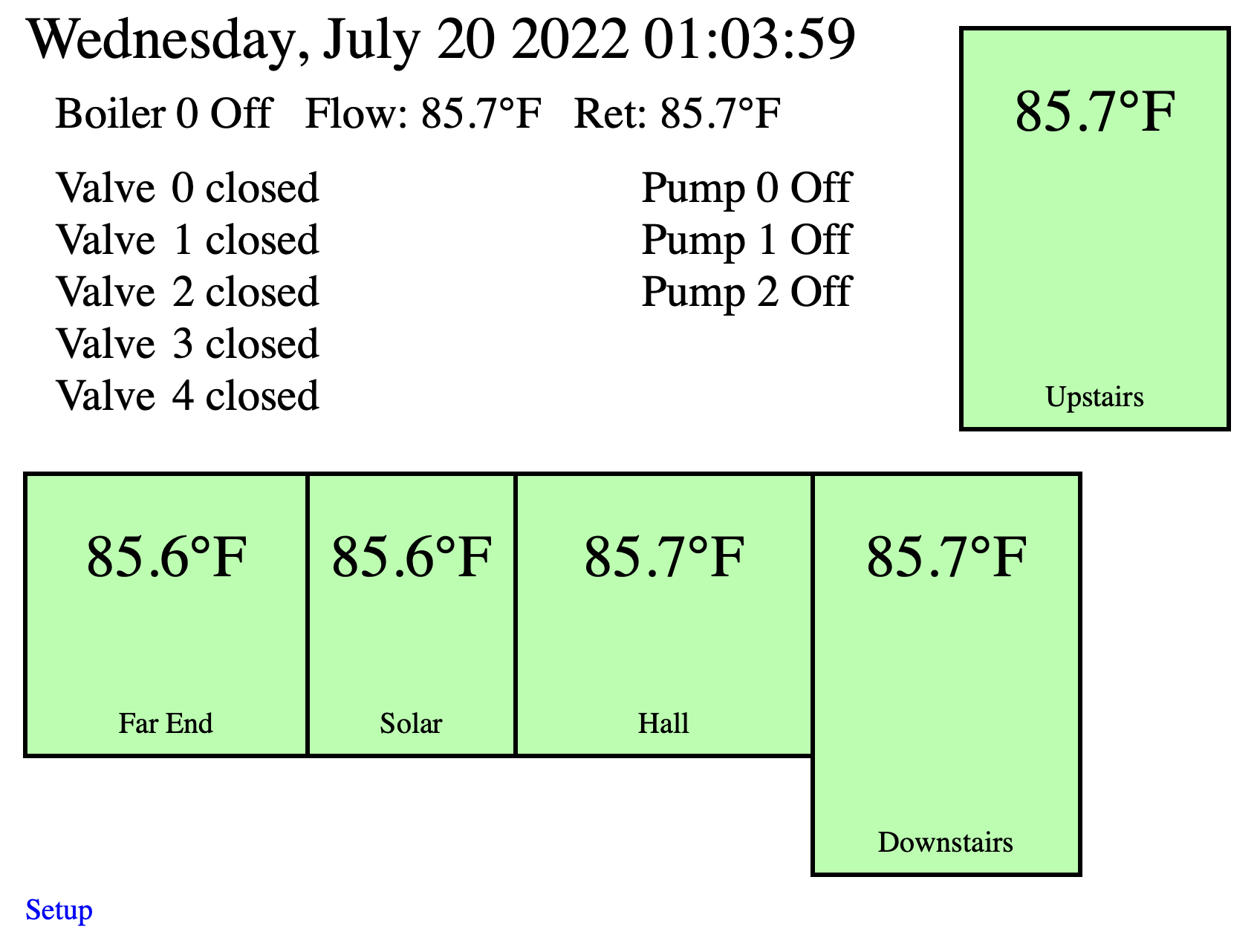
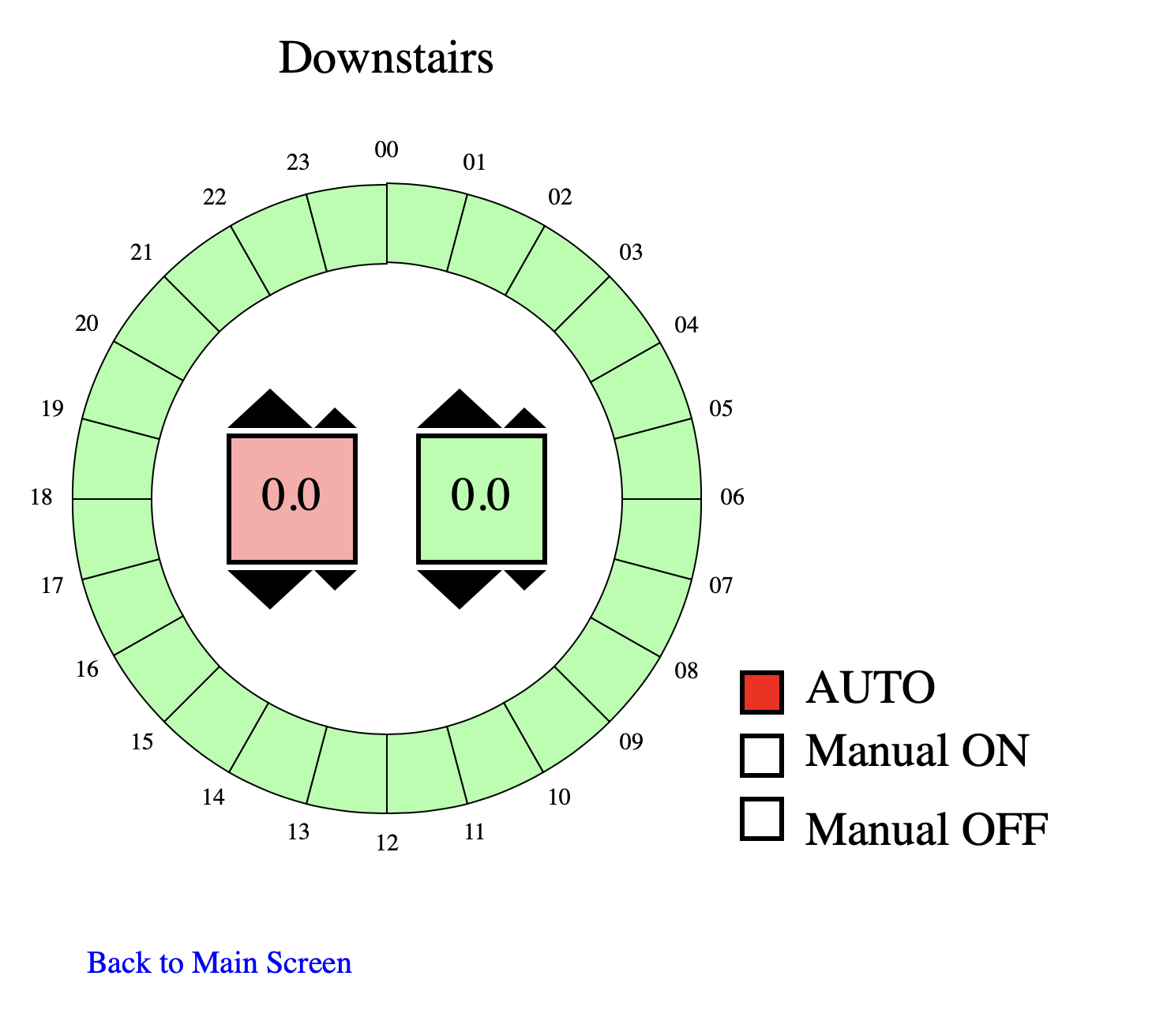
Here is one of the programming screens
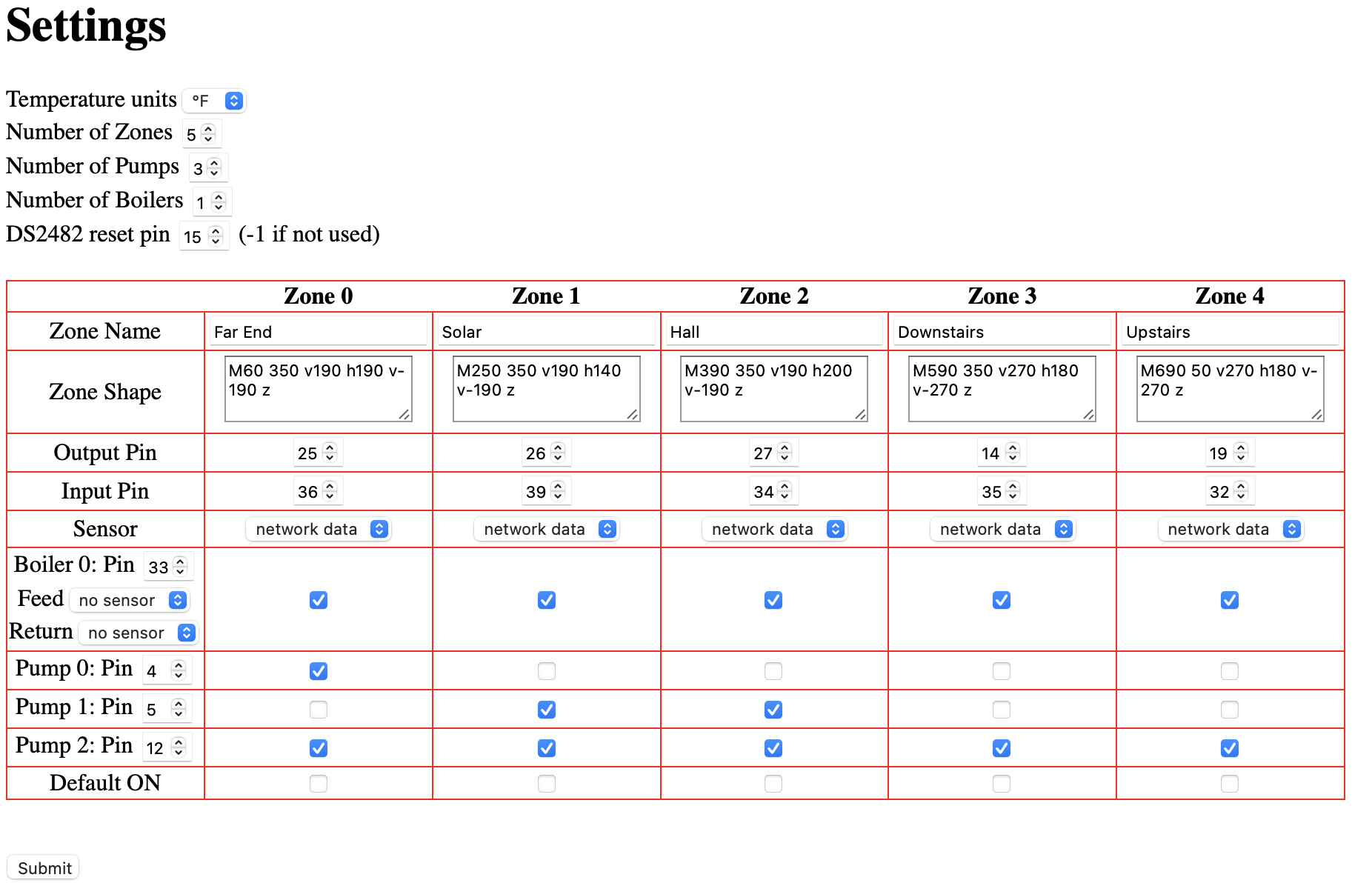
And the setup screen where the pins for each valve and pump etc can be defined, as well as the house layout and the temperature sensor allocation.
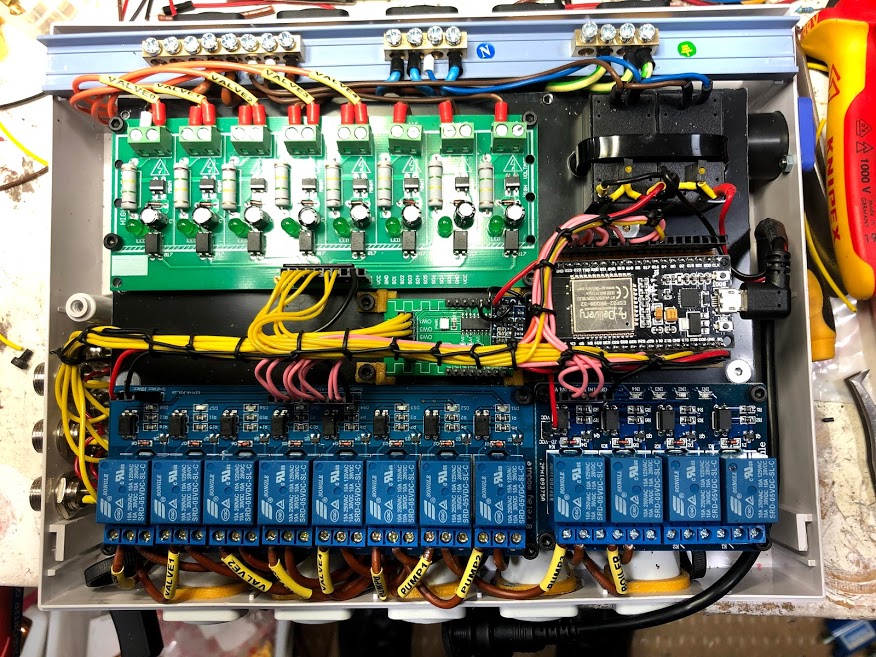
And here is one iteration of the hardware installed in a consumer unit case with Neutrik connectors for the pumps and valves and CB connectors for the temperature sensors:
| Qty | Value | Footprint | References |
|---|---|---|---|
| 2 | DS18B20 | TO_SOT_Packages_THT:TO-92_Molded_Wide_Reverse | U1, U2 |
| 1 | Conn_01x03_Female | MyParts:RSProClamp | J3 |
| 1 | Conn_01x03_Female | MyParts:Amphenol_FCI_3 | J2 |
| 1 | LED | LEDs:LED_0603_HandSoldering | D1 |
| 1 | R1 | Resistors_SMD:R_0603_HandSoldering | R1 |
| 1 | Screw_Terminal_01x03 | Connectors_Phoenix:PhoenixContact_MCV-G_03x3.50mm_Vertical | J1 |
UtilitechAS/amsreader-firmware
ESP8266 and ESP32 compatible firmware to read, interpret and publish data to MQTT from smart electrical meters, both DLMS and DSMR is supported

pablozg/freeds
Derivador de energía solar excedente creado por Pablo Zerón, Diseño PCB por Amcalo, Tester original por Aeizoon, Wiki por Zoilo Mora

AK-Homberger/NMEA2000WifiGateway-with-ESP32
This repository shows how to build a NMEA2000 WiFi Gateway with voltage and temperature alarms.

fehlfarbe/arduino-motorfocus
Arduino motorfocus with moonlite protocol for telescopes


felixwittwer/homeassistant_automaic_greenhouse
A cool Project to make your greenhouse smart. What about automaic irrigation and collecting enviromental data right from your garden.

Neumi/fastLOGIC
An affordable Arduino-based board designed for straightforward (industrial) logic control, ideal for building small-scale automation and control solutions.
It measures 25.4 × 38.1 mm and has 2 copper layers, 1.6 mm thick.
7 parts, built around the DS18B20. The full list of its parts is on this page, with links to each part's symbol and footprint where PCBKit's library has them.
From the andypugh/ESP-Heat repository on GitHub, at the commit this page was made from: the board is hardware/KiCad/Temp~Sensor.kicad_pcb. PCBKit opens the board in the browser, with nothing to install.
Its repository publishes it under the GPL-3.0 licence: you may reuse it on that licence's terms (keep the author's notice, and for a copyleft licence share your changes alike).