
4 layers45 × 32 mm
Templog mainboard
Michael-Manning/E-Paper-Climate-Logger
Firmware, PCB, and enclosure for the Weathergotchi E-Paper climate logger.
68 parts457MIT

 ameliaritger/arduino-ph-sensor
Repository containing scripts and files related to intertidal pH sensor development and testing
Ph sensor is an open-source printed circuit board by ameliaritger, from the ameliaritger/arduino-ph-sensor repository on GitHub, published under the Apache-2.0 licence. It is a 2-layer board of 86.8 × 38.1 mm with 25 parts on 44 nets, routed with 123 tracks and 11 vias.
It is built around the DS3231MZ/V+. Its parts include 8 resistors, 5 capacitors, 4 ICs, 2 connectors and 1 switch. It belongs with the sensors and measurement boards of this library.
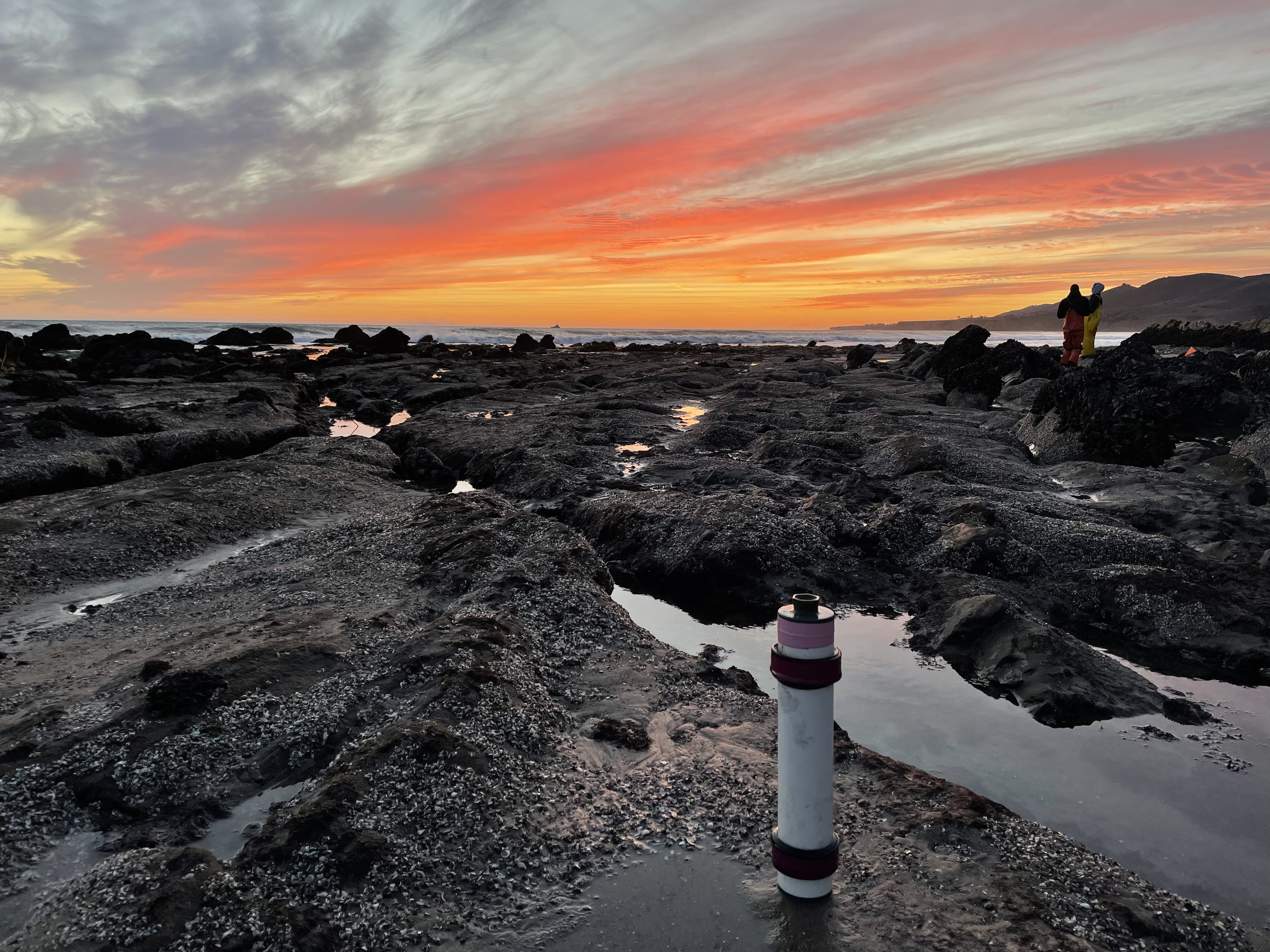
This repository contains the scripts and files related to the development of an intertidal Arduino pH sensor.
This repository is maintained by Hofmann Lab graduate student Amelia Ritger (GitHub: @ameliaritger) at the University of California, Santa Barbara in the Department of Ecology, Evolution, & Marine Biology. Please direct any questions or comments about this repository to Amelia Ritger.
.
├── documentation/                              # folder containing documentation for building the Arduino data logger for the pH sensor project
│   └── arduinoPHConstructionOperation.docx     # document for building the Arduino data logger
|
├── software/                                   # folder containing software relevant to the Arduino data logger
|   └── arduinoCode/                            # folder containing C++ code to program the Arduino
|      └── CONFIG.h                             # configuration script, to set filename, sampling interval, and sampling start date & time
|      └── SRC.h                                # source script, for useful functions
|      └── arduinoCode.ino                      # main script, to sample from the pH sensor and store the values on the Arduino
|
|   └── rCode/                                  # folder containing R code to process pH sensor data. Note: currently formatted for project development, not finalized for public application!
|      └── Final_OMEGAS.Rmd                     # Step 3: Apply calibration constants to deployment data
|      └── Final_Tris_Cal.Rmd                   # STEP 2: Calculate calibration constants for the sensor
|      └── Final_deploy_voltages.Rmd            # STEP 4: Plot calibrated sensor data with HOBO logger temperature data
|      └── Final_standardize_data.Rmd           # STEP 1: Standardize Arduino (new design) and Madgetech (old design) data
|
├── media/                                      # folder containing media files for project repo
|
├── draft_files/                                # folder containing all draft project files related to initial testing and development
|
├── README.md
├── .gitignore
└── ph-sensor-dev.Rproj| Qty | Value | Footprint | References |
|---|---|---|---|
| 5 | 1M | Resistor_SMD:R_0603_1608Metric_Pad0.98x0.95mm_HandSolder | R1, R4, R5, R6, R7 |
| 3 | 100uF | Capacitor_SMD:C_1206_3216Metric_Pad1.33x1.80mm_HandSolder | C2, C3, C4 |
| 2 | 10k | Resistor_SMD:R_0603_1608Metric_Pad0.98x0.95mm_HandSolder | R2, R3 |
| 2 | ADS_Ritger | Library:ADC_amelia_nomount | U1, U2 |
| 1 | |||
| 1 | 10uF | Capacitor_SMD:C_1206_3216Metric_Pad1.33x1.80mm_HandSolder | C5 |
| 1 | 15k | Resistor_SMD:R_0603_1608Metric_Pad0.98x0.95mm_HandSolder | R8 |
| 1 | 22uF | Capacitor_SMD:C_1206_3216Metric_Pad1.33x1.80mm_HandSolder | C1 |
| 1 | Adafruit_Feather_M0_Adalogger | Library:Adalogger_amelia_nomount | A1 |
| 1 | Conn_01x03_Pin | Connector_PinSocket_2.54mm:PinSocket_1x03_P2.54mm_Horizontal | J2 |
| 1 | Conn_01x06_Pin | Connector_PinSocket_2.54mm:PinSocket_1x06_P2.54mm_Horizontal | J1 |
| 1 | DS3231MZ | Library:DS3231RTC_amelia | U3 |
| 1 | NRF24L01_Breakout | Library:NRF24L01Module | U4 |
| 1 | SW_Reed | Library:REED_amelia | SW1 |
The 22 most common of 25 parts.
Michael-Manning/E-Paper-Climate-Logger
Firmware, PCB, and enclosure for the Weathergotchi E-Paper climate logger.

Open-Smartwatch/open-smartwatch-gps
Hardware design files for the GPS version of the open-smartwatch


drpykachu/Sonar-Watch
A self-designed, home-made watch intended to tell time in a funky and unique way!

samyyy2311/CassetteCat
A music player for Android. Plays your own files, Jellyfin and Navidrome/Subsonic servers, and internet radio, with synced lyrics, an equalizer, Android Auto and a Listening Record. No account or tracking.

It measures 86.8 × 38.1 mm and has 2 copper layers, 1.6 mm thick.
25 parts, built around the DS3231MZ/V+. The full list of its parts is on this page, with links to each part's symbol and footprint where PCBKit's library has them.
From the ameliaritger/arduino-ph-sensor repository on GitHub, at the commit this page was made from: the board is hardware/pcbDesign/ph-sensor.kicad_pcb and its schematic hardware/pcbDesign/ph-sensor.kicad_sch. PCBKit opens the board in the browser, with nothing to install.
Its repository publishes it under the Apache-2.0 licence: you may reuse it on that licence's terms (keep the author's notice, and for a copyleft licence share your changes alike).