

4 layers299 × 127 mm

Interdisciplinary neural interface project involving FPGA development, custom PCB design and SNN simulation.
DishBrain is an open-source printed circuit board by aliihsan1913, from the aliihsan1913/Wetware-Interface-Architecture repository on GitHub. It is a 6-layer board of 19 × 26.7 mm with 11 parts on 105 nets, routed with 538 tracks and 87 vias.
It is built around the LP5907MFX-3.3. Its parts include 6 capacitors, 2 connectors and 1 IC. It belongs with the interfaces and adapters boards of this library.
Wetware Interface Architecture is an interdisciplinary engineering project focused on the design and development of a complete neural acquisition and processing pipeline.
The project explores how biological neural activity can be acquired, represented, processed, and analyzed through a combination of custom electronics, FPGA-based event processing, embedded software, and computational neuroscience models.
Rather than focusing on a single subsystem, this work investigates the entire pathway between neural activity and digital computation, bringing together concepts from neural engineering, electrophysiology, neuromorphic systems, FPGA development, embedded software, and custom hardware design.
This project includes work on:
The project investigates a complete neural signal processing chain beginning at a biological neural interface and extending to digital event processing and software-based analysis.
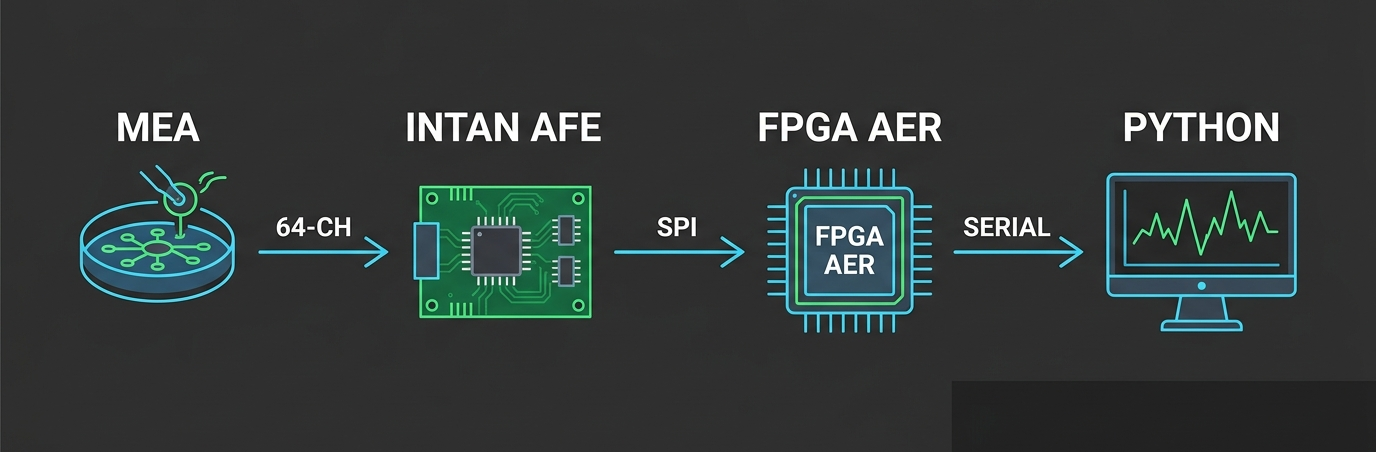
The proposed workflow consists of:
MEA → Neural Acquisition Interface → FPGA Event Processing → Embedded Software → Analysis Environment
The complete hardware concept is illustrated below.
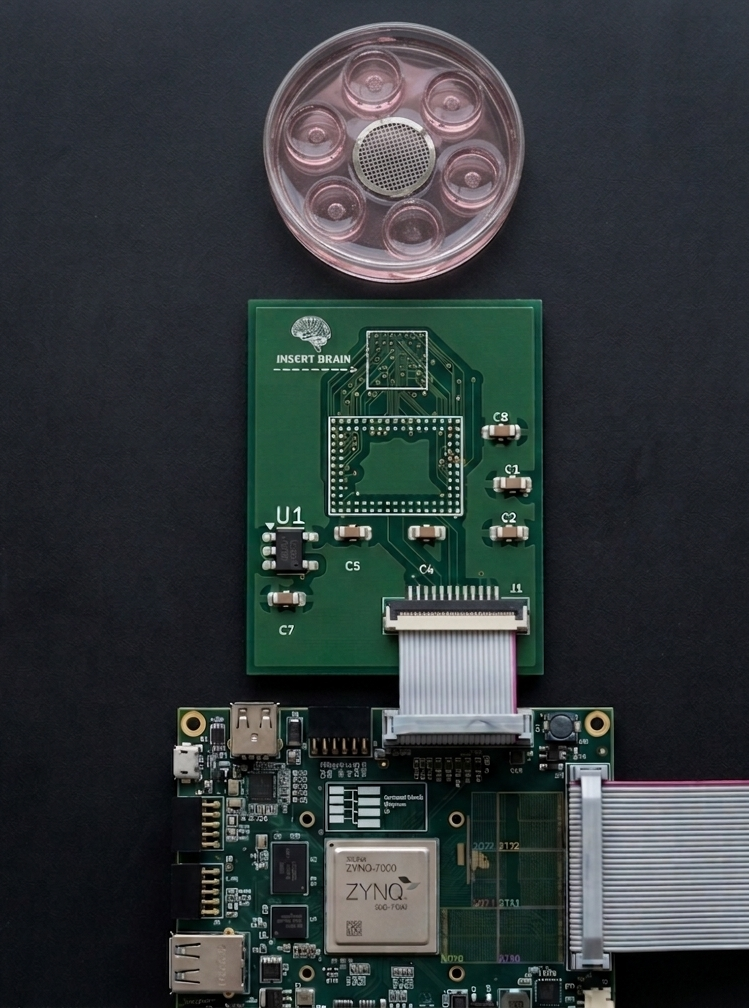
The system combines:
This architecture was developed to investigate the interaction between biological neural activity and programmable digital systems.
A dedicated PCB platform was developed as part of the neural acquisition architecture.
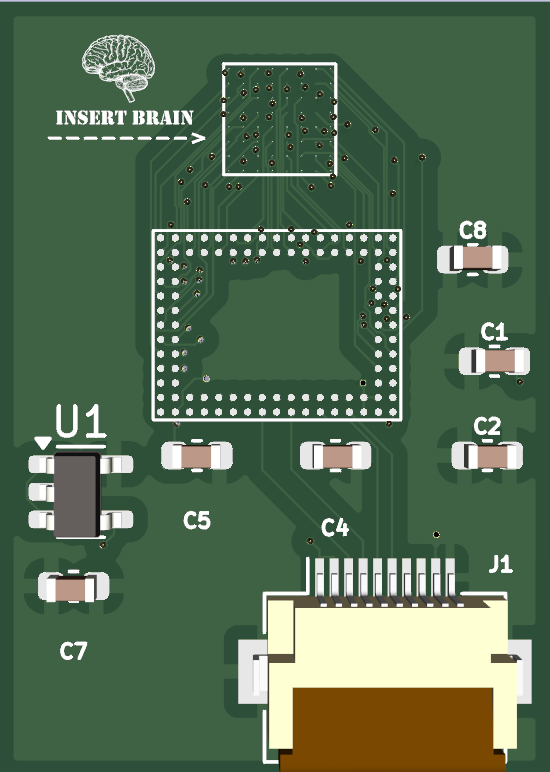
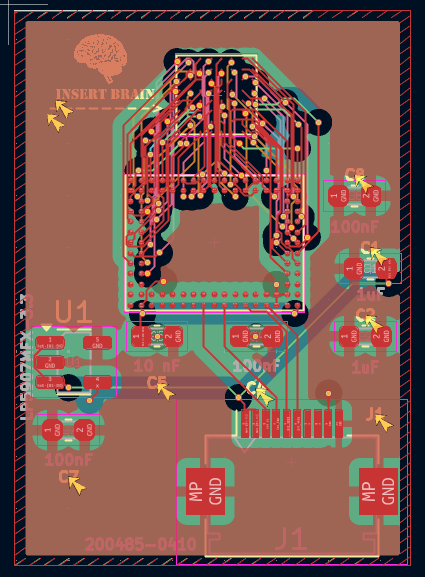
Development activities included:
01_PCB/

├── DishBrain.kicad_pcb
├── DishBrain.kicad_sch
└── DishBrain.kicad_proThe FPGA subsystem investigates event-driven neural processing using an Address Event Representation (AER) approach.
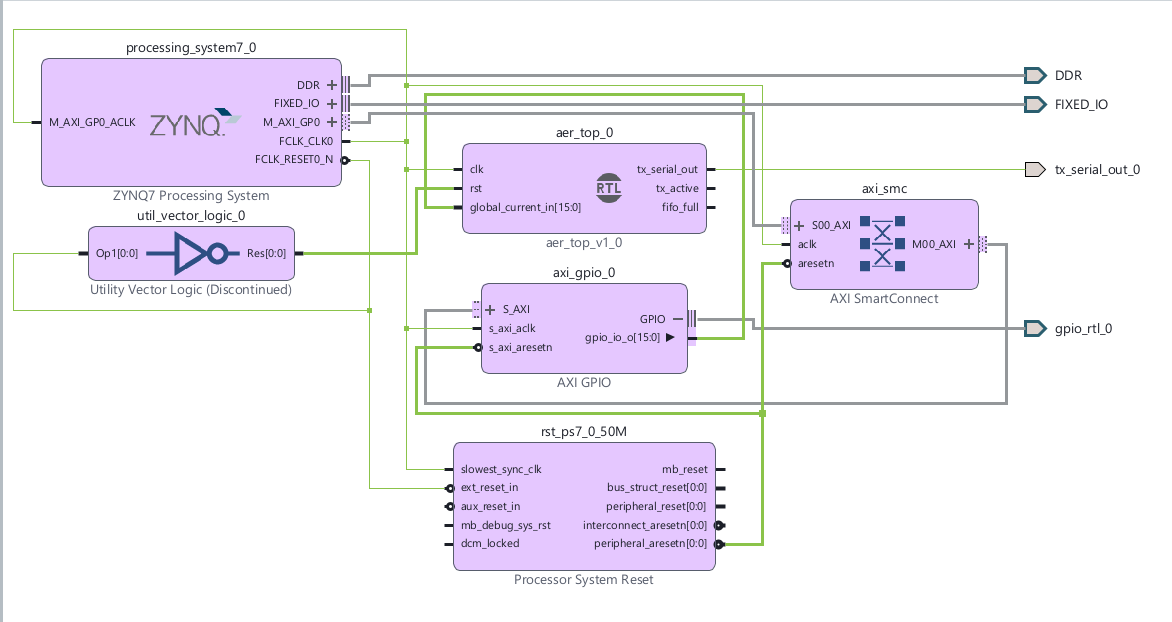
The architecture integrates:
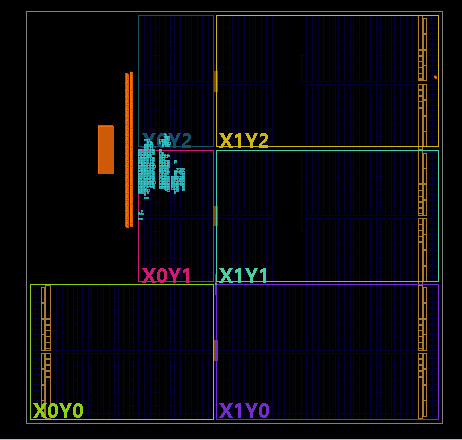
The implementation view shows the synthesized and implemented FPGA design.
02_FPGA/

├── aer_top.v
├── aer_top.xdc
├── bioic_system_wrapper.v
├── bioic_system_wrapper.xsa
├── main.c
Development activities included:
A Brian2-based Spiking Neural Network (SNN) environment was developed to investigate network-level neural dynamics.
Implemented features include:
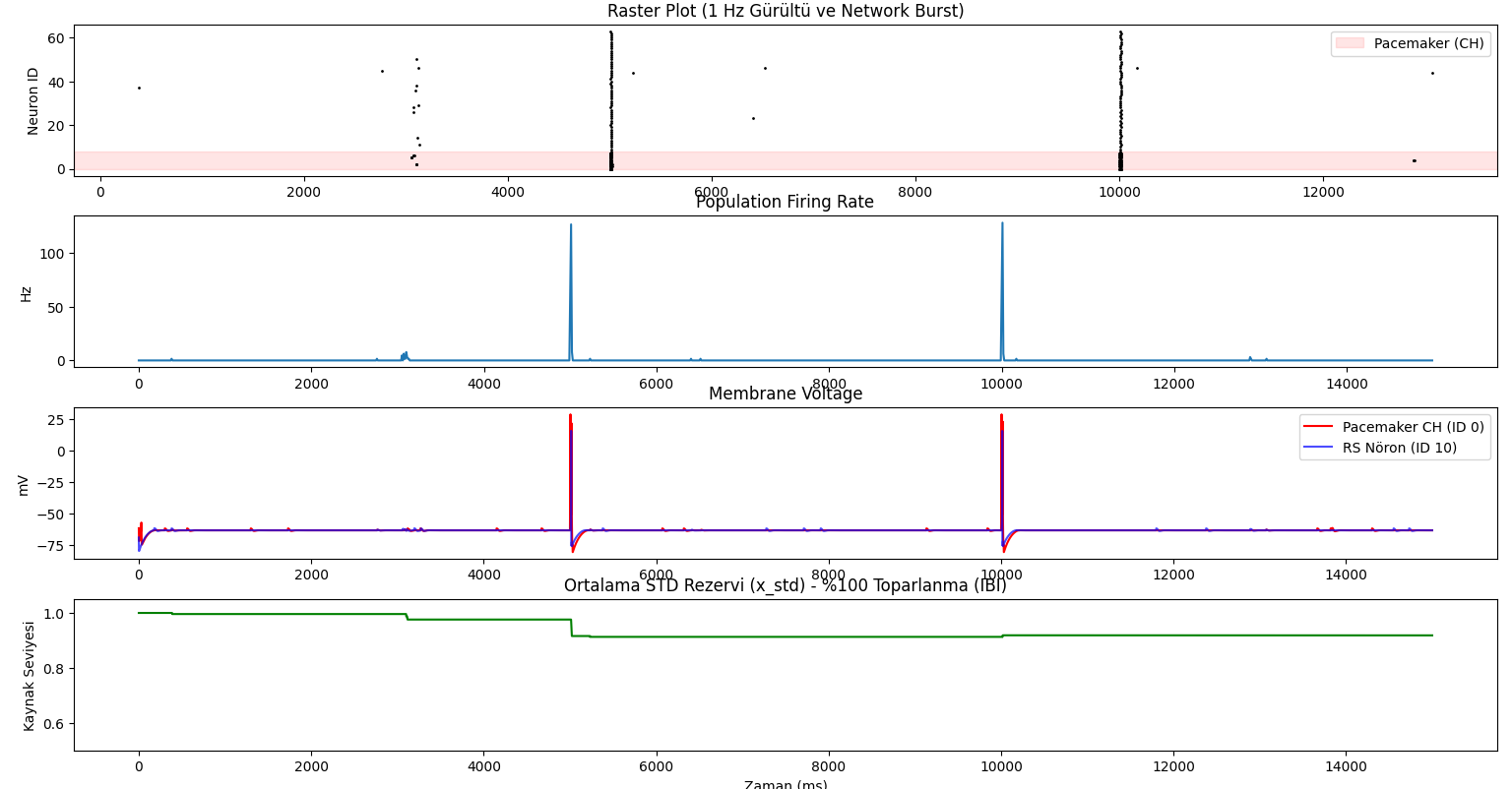
The simulation generates:
03_Simulations/

└── snn_core.pyWetware_Interface_Architecture/
├── README.md
│
├── 01_PCB/
│ ├── DishBrain.kicad_pcb
│ ├── DishBrain.kicad_sch
│ └── DishBrain.kicad_pro
│
├── 02_FPGA/
│ ├── aer_top.v
│ ├── aer_top.xdc
│ ├── bioic_system_wrapper.v
│ ├── bioic_system_wrapper.xsa
│ └── main.c
│
├── 03_Simulations/
│ └── snn_core.py
│
└── 04_Documents/
└── Images/
├── hardware_assembly_mockup.png
├── system_architecture_diagram.png
├── snn_simulation_results.pngThis project was developed as an exploration of how neural interfaces, custom hardware, FPGA systems, and computational neuroscience can be combined into a unified engineering architecture.
The objective was not to study these domains independently, but to investigate how they interact as components of a future neural acquisition and processing platform.
This repository contains the primary engineering artifacts produced during the development of the Wetware Interface Architecture project.
The project was developed across multiple software environments, including KiCad, Vivado, Vitis, and Python-based simulation workflows. Due to the size and complexity of these environments, only the main design files, source code, implementation outputs, and architectural documentation are included in this repository.
Some intermediate development files, generated project data, temporary build artifacts, cached files, experimental revisions, screenshots, and software-generated directories are intentionally excluded or were not preserved during project organization and migration.
Examples include:
The files included in this repository represent the final and most relevant artifacts associated with the project.
Additional technical details can be discussed upon request.
Current status:
Future work includes:
Ali İhsan Şahin
Electrical and Electronics Engineering
| Qty | Value | Footprint | References |
|---|---|---|---|
| 3 | 100nF | Capacitor_SMD:C_0603_1608Metric | C4, C7, C8 |
| 2 | 1uF | Capacitor_SMD:C_0603_1608Metric | C1, C2 |
| 1 | 10 nF | Capacitor_SMD:C_0603_1608Metric | C5 |
| 1 | 200485-0410 | Connector_FFC-FPC:Hirose_FH12-10S-0.5SH_1x10-1MP_P0.50mm_Horizontal | J1 |
| 1 | Conn_02x32_Counter_Clockwise_MountingPin | My_Wetware_Lib:MEA_8x8_30um | J2 |
| 1 | LOGO | beyinresim | G*** |
| 1 | LP5907MFX-3.3 | Package_TO_SOT_SMD:SOT-23-5 | U1 |
| 1 | ~ | My_Wetware_Lib:RHD2164-mock | 1 |

jerry20091103/Teensy_Grovebox
A portable synth and music multi-tool made with Teensy 4.1


Mew463/esp32-caliper
It features a built in 150mAh battery and a USB C interface for charging/uploading code.


will127534/RPI5-SDexpress-Hat
ctrl-c "RPI5-CFE-Hat" ctrl-v "RPI5-SDexpress-Hat"


ATmega8/kiterf
Release KiteRF is a SDR system with K210 & FPGA & ESP32 as its core controller, which make SDR more intelligent, portable and cheap.
It measures 19 × 26.7 mm and has 6 copper layers, 1.6 mm thick.
11 parts, built around the LP5907MFX-3.3. The full list of its parts is on this page, with links to each part's symbol and footprint where PCBKit's library has them.
From the aliihsan1913/Wetware-Interface-Architecture repository on GitHub, at the commit this page was made from: the board is 01_PCB/DishBrain.kicad_pcb and its schematic 01_PCB/DishBrain.kicad_sch. PCBKit opens the board in the browser, with nothing to install.
Its repository states no licence, so its author keeps all rights: ask aliihsan1913 before reusing the design.