2 layers40 × 20 mm

 adrienkohlbecker/atf1508_plcc84_breakout7
Breakout board for Atmel's ATF1508 CPLDs in a PLCC-84 socket
Atf1508 plcc84 breakout is an open-source printed circuit board by adrienkohlbecker, from the adrienkohlbecker/atf1508_plcc84_breakout repository on GitHub, published under the CERN-OHL-W-2.0 licence. It is a 2-layer board of 140.8 × 33 mm with 13 parts on 73 nets, routed with 953 tracks and 72 vias.
Its parts include 8 capacitors, 3 connectors and 1 IC. It belongs with the interfaces and adapters and fPGA and programmable logic boards and the FPGA and CPLD boards of this library.
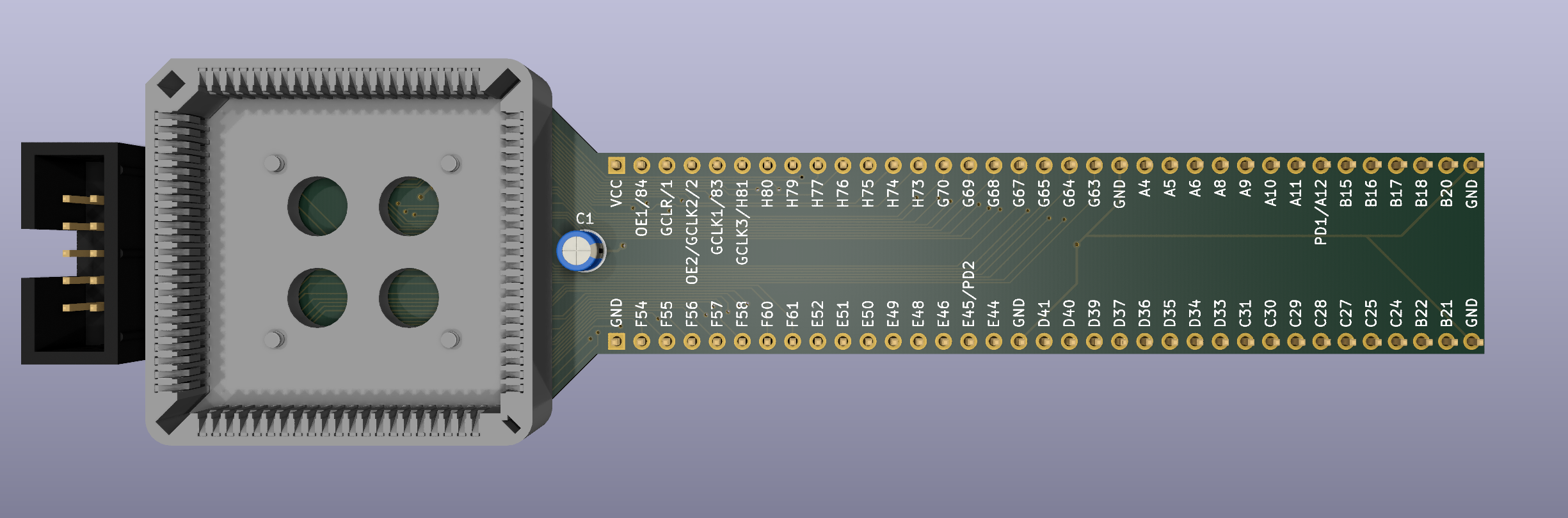
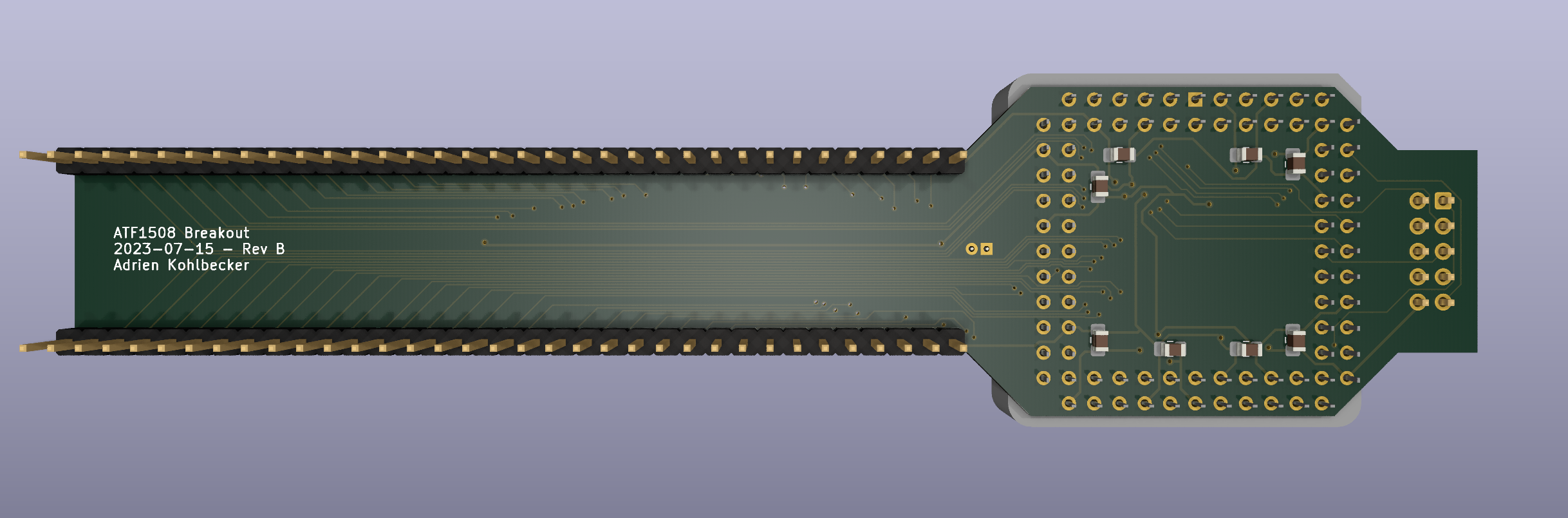
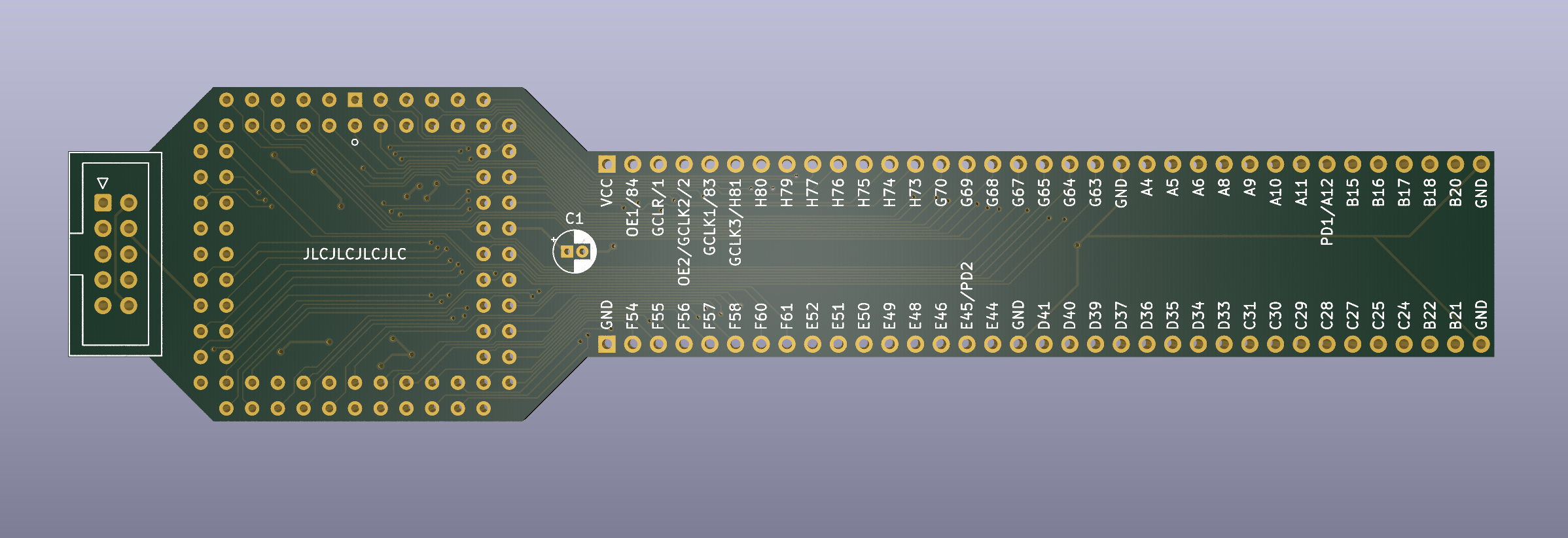
Breakout board for Atmel's AFT1508 CPLDs in a through-hole PLCC-84 socket. The size is friendly for breadboard use, with two rows of holes left available on each side of the breadboard for wires to come in.
| Refs | Qty | Component | Description |
|---|---|---|---|
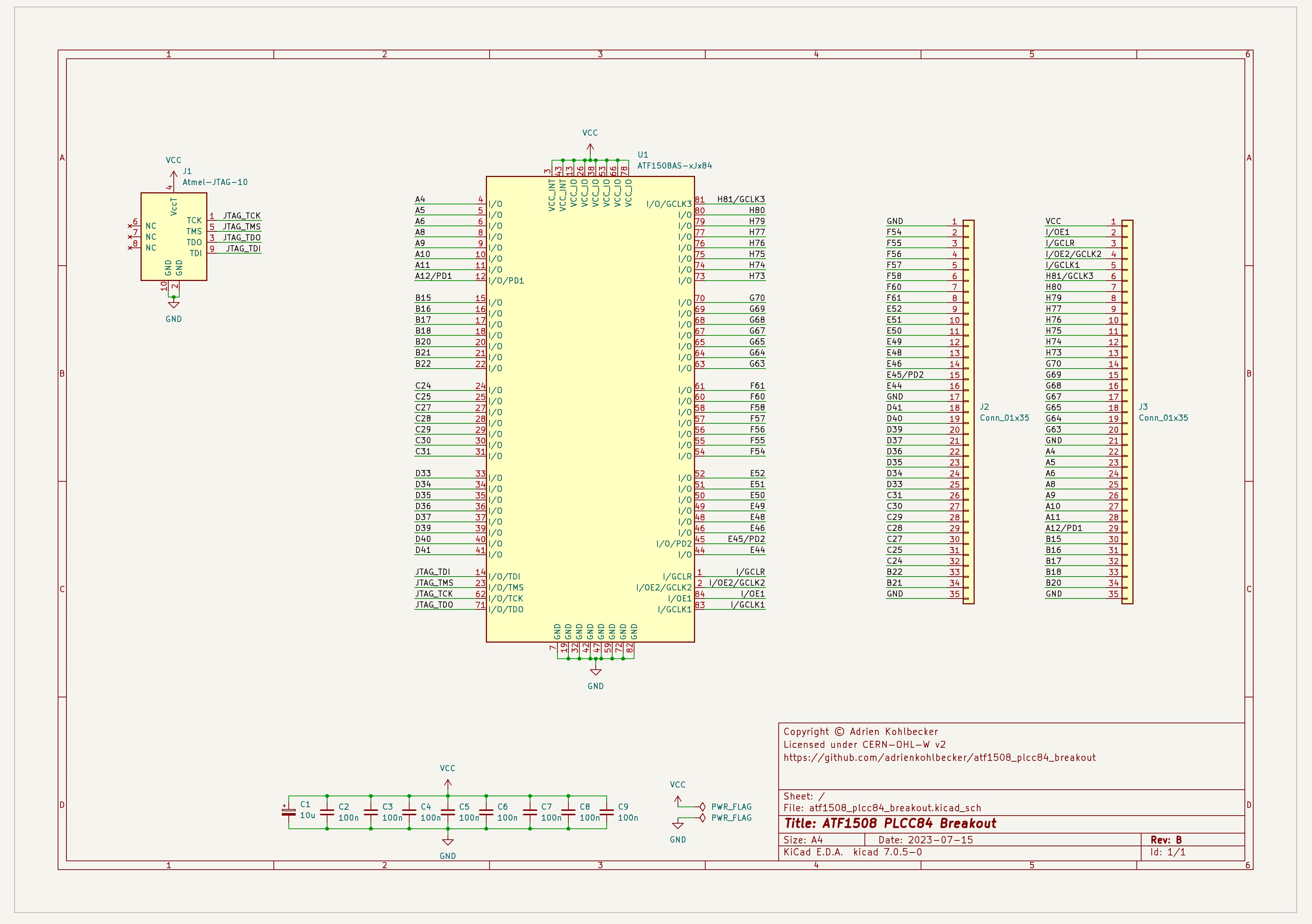
| C1 | 1 | 10u | Polarized capacitor, through hole D4.0mm P1.5mm |
| C2, C3, C4, C5, C6, C7, C8, C9 | 8 | 100n | Unpolarized capacitor, 0805 SMD |
| J1 | 1 | Atmel-JTAG-10 | Atmel 10-pin JTAG connector, 2x5 IDC |
| J2, J3 | 2 | Conn_01x35 | Generic connector, single row, 01x35 |
| U1 | 1 | ATF1508AS-xJx84 | Microchip CPLD, in PLCC-84 through-hole socket |
| Qty | Value | Footprint | References |
|---|---|---|---|
| 8 | 100n | Capacitor_SMD:C_0805_2012Metric_Pad1.18x1.45mm_HandSolder | C2, C3, C4, C5, C6, C7, C8, C9 |
| 2 | Conn_01x35 | Connector_PinHeader_2.54mm:PinHeader_1x35_P2.54mm_Vertical | J2, J3 |
| 1 | 10u | Capacitor_THT:CP_Radial_D4.0mm_P1.50mm | locked |
| 1 | ATF1508AS-xJx84 | Package_LCC:PLCC-84_THT-Socket | U1 |
| 1 | Atmel-JTAG-10 | Connector_IDC:IDC-Header_2x05_P2.54mm_Vertical | J1 |


samyk/magspoof
A portable device that can spoof/emulate any magnetic stripe, credit card or hotel card "wirelessly", even on standard magstripe (non-NFC/RFID) readers.

fossasia/pslab-scripts
Pocket Science Lab - Scripts for Sensor Experiments


willem-pennings/balancing-cube
A cube that balances itself in a corner or edge using reaction wheels

VoronDesign/Voron-Hardware
Cool Hardware designed by the Voron Design group

hoglet67/RGBtoHDMI
Bare-metal Raspberry Pi project that provides pixel-perfect sampling of Retro Computer RGB/YUV video and conversion to HDMI
It measures 140.8 × 33 mm and has 2 copper layers, 1.6 mm thick.
13 parts. The full list of its parts is on this page, with links to each part's symbol and footprint where PCBKit's library has them.
From the adrienkohlbecker/atf1508_plcc84_breakout repository on GitHub, at the commit this page was made from: the board is atf1508_plcc84_breakout.kicad_pcb and its schematic atf1508_plcc84_breakout.kicad_sch. PCBKit opens the board in the browser, with nothing to install.
Its repository publishes it under the CERN-OHL-W-2.0 licence: you may reuse it on that licence's terms (keep the author's notice, and for a copyleft licence share your changes alike).