2 layers52.3 × 10.5 mm
StackLink
gusmanb/logicanalyzer
24 channel, 100Msps logic analyzer hardware and software
29 parts5.1kGPL-3.0

 Squalius-cephalus/silakka187
Direct pin 16 button macro pad with rotary encoder support.
Silakka18 is an open-source printed circuit board by Squalius-cephalus, from the Squalius-cephalus/silakka18 repository on GitHub. It is a 2-layer board of 97.6 × 104.8 mm with 29 parts on 43 nets, routed with 252 tracks and 8 vias.
Its parts include 18 switches and 1 IC. It belongs with the RP2040 boards of this library.
RP2040 based macropad with hotswap sockets. Microcontroller uses QMK firmware with Vial support. Based on the Silli18 project, but the firmware is not compatible between them.
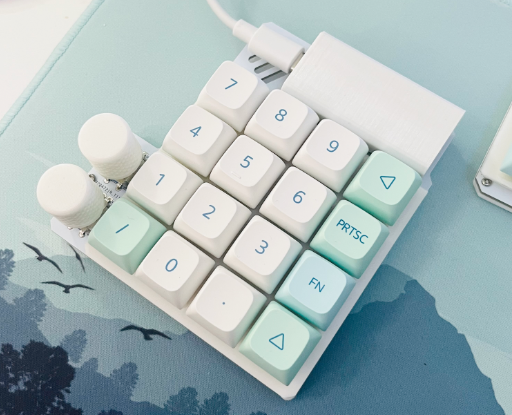
PCB design uses footprints from ScottoKeebs and kbd library.
| Qty | Value | Footprint | References |
|---|---|---|---|
| 16 | Keyswitch | kbd:CherryMX_Hotswap | S1, S2, S3, S4, S5, S6, S7, S8, S9, S10, S11, S12, S13, S14, S15, S16 |
| 2 | RotaryEncoder_Switch | Keebio-Parts.pretty-master:RotaryEncoder_EC11 | SW1, SW2 |
| 1 | Raspberry_Pi_Pico | ScottoKeebs_MCU:Raspberry_Pi_Pico | U1 |
The 19 most common of 29 parts.
gusmanb/logicanalyzer
24 channel, 100Msps logic analyzer hardware and software

VoronDesign/Voron-Hardware
Cool Hardware designed by the Voron Design group

hoglet67/RGBtoHDMI
Bare-metal Raspberry Pi project that provides pixel-perfect sampling of Retro Computer RGB/YUV video and conversion to HDMI

hackclub/OnBoard
💡 Join 1,000 teenagers and make your first PCB with a $100 grant!

OLIMEX/DIY-LAPTOP
Do It Yourself Open Source Hardware and Software Modular Hacker's Friendly Laptop

UtilitechAS/amsreader-firmware
ESP8266 and ESP32 compatible firmware to read, interpret and publish data to MQTT from smart electrical meters, both DLMS and DSMR is supported


It measures 97.6 × 104.8 mm and has 2 copper layers, 1.6 mm thick.
29 parts. The full list of its parts is on this page, with links to each part's symbol and footprint where PCBKit's library has them.
From the Squalius-cephalus/silakka18 repository on GitHub, at the commit this page was made from: the board is kicad/silakka18/silakka18.kicad_pcb and its schematic kicad/silakka18/silakka18.kicad_sch. PCBKit opens the board in the browser, with nothing to install.
Its repository states no licence, so its author keeps all rights: ask Squalius-cephalus before reusing the design.