2 layers140.5 × 30 mm
Type e
google/mozc-devices
Circuit diagrams and firmware source code for Gboard DIY keyboards
16 parts3kApache-2.0
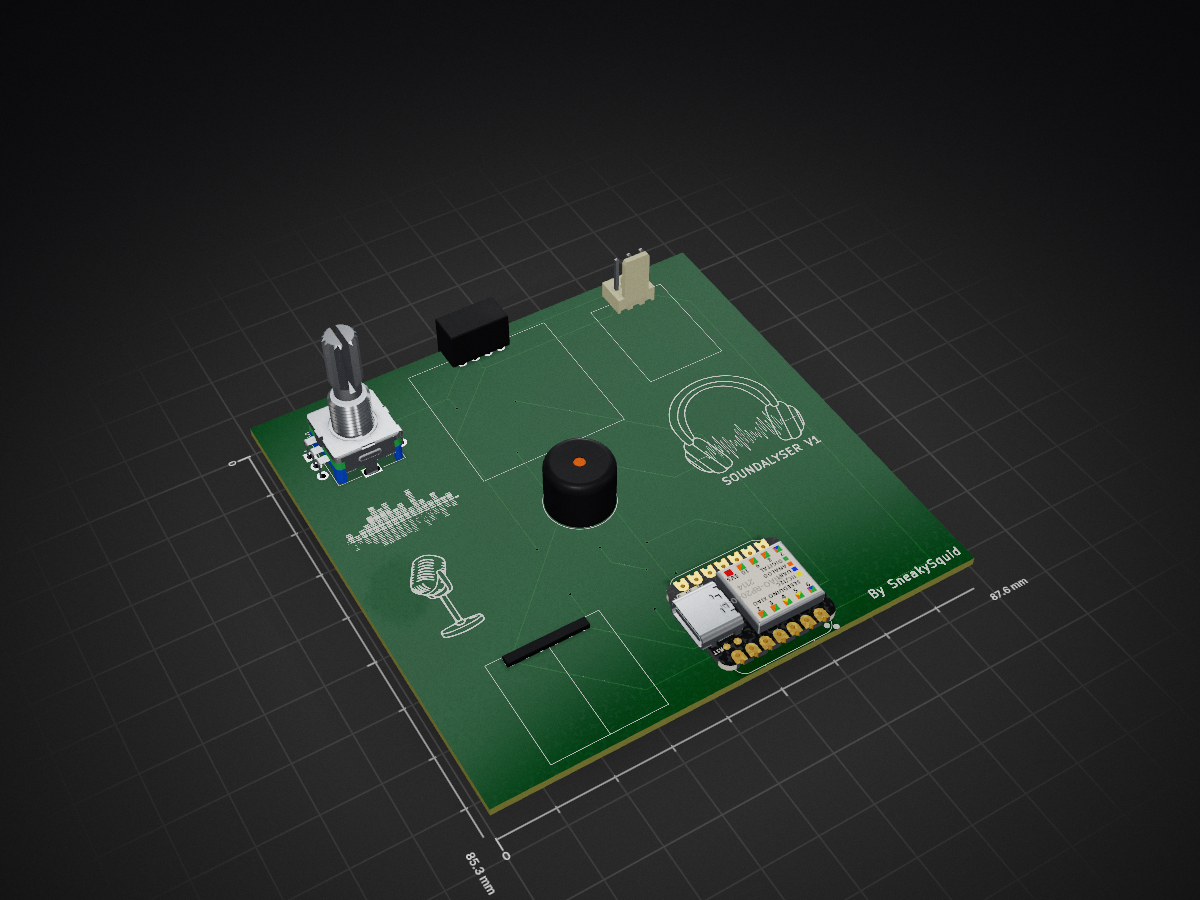
 Sn3akySqu1d/Soundalyser
Key Features: 5 screens navigatable using a rotary encoder: Waveform, sound bar chart, mood screen that compares the current average sound levels to recommended limits, a stats screen that shows number of samples taken…
Soundalyser is an open-source printed circuit board by Sn3akySqu1d, from the Sn3akySqu1d/Soundalyser repository on GitHub. It is a 2-layer board of 87.6 × 85.3 mm with 16 parts on 14 nets, routed with 85 tracks and 12 vias.
Its parts include 4 ICs and 1 switch. It belongs with the RP2040 boards of this library.
Soundalyser is a compact portable sound monitoring device that records, logs and displays ambient noise.
Key Features:
5 screens navigatable using a rotary encoder:
Waveform, sound bar chart, mood screen that compares the current average sound levels to recommended limits, a stats screen that shows number of samples taken, minimum/maximum recorded sound levels and average sound level and a screen that shows details about the SD card.
Data is logged to a csv file on an SD card every 10 minuites so that it can be saved and analysed later. A sample is taken once a second.
A buzzer beeps to alert the user if the sound level gets dangerously loud. (>900 average)
Display autosleeps and is woken by pushing in the rotary encoder.
Funded by Hack Club's Highway Program
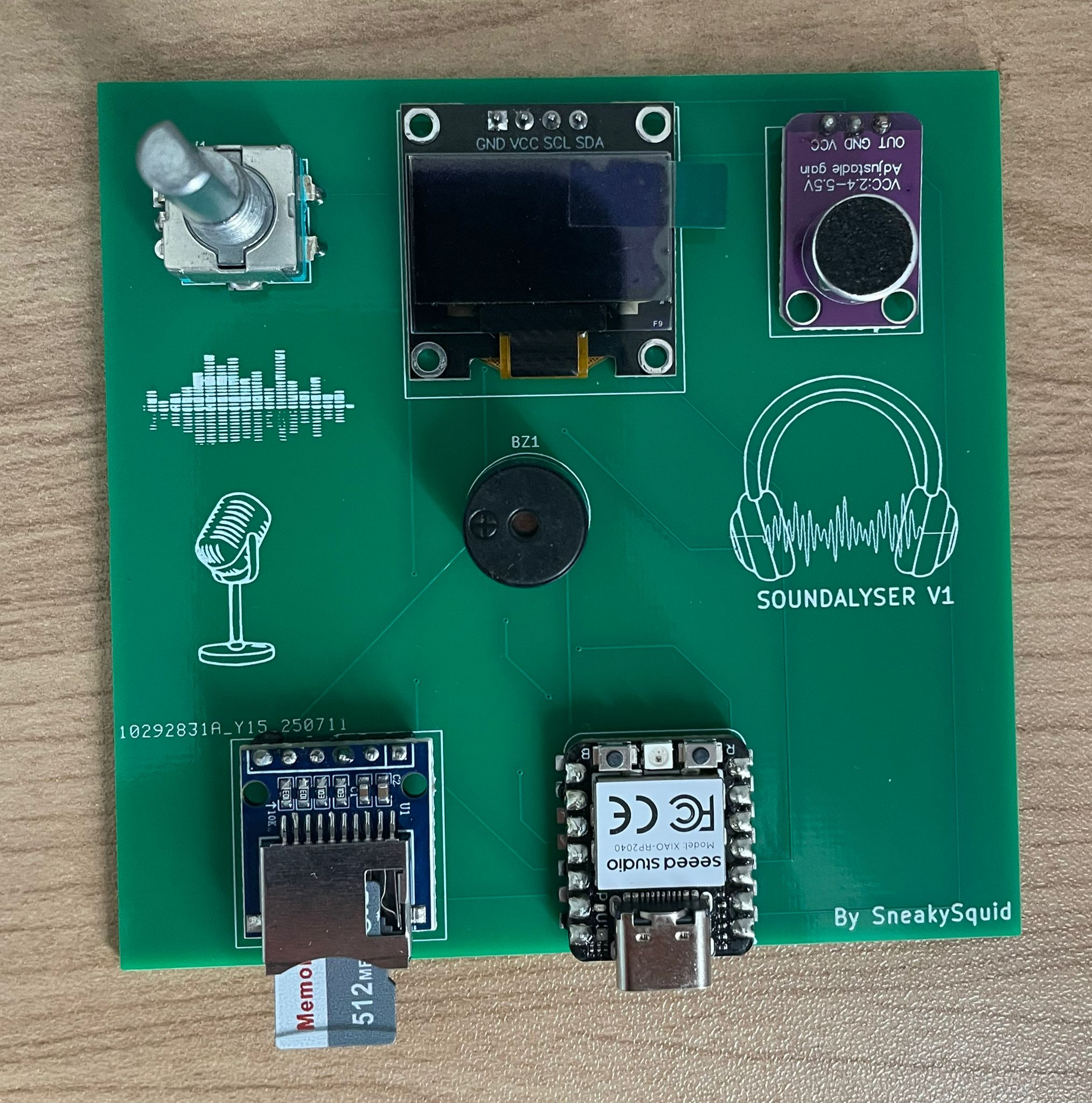
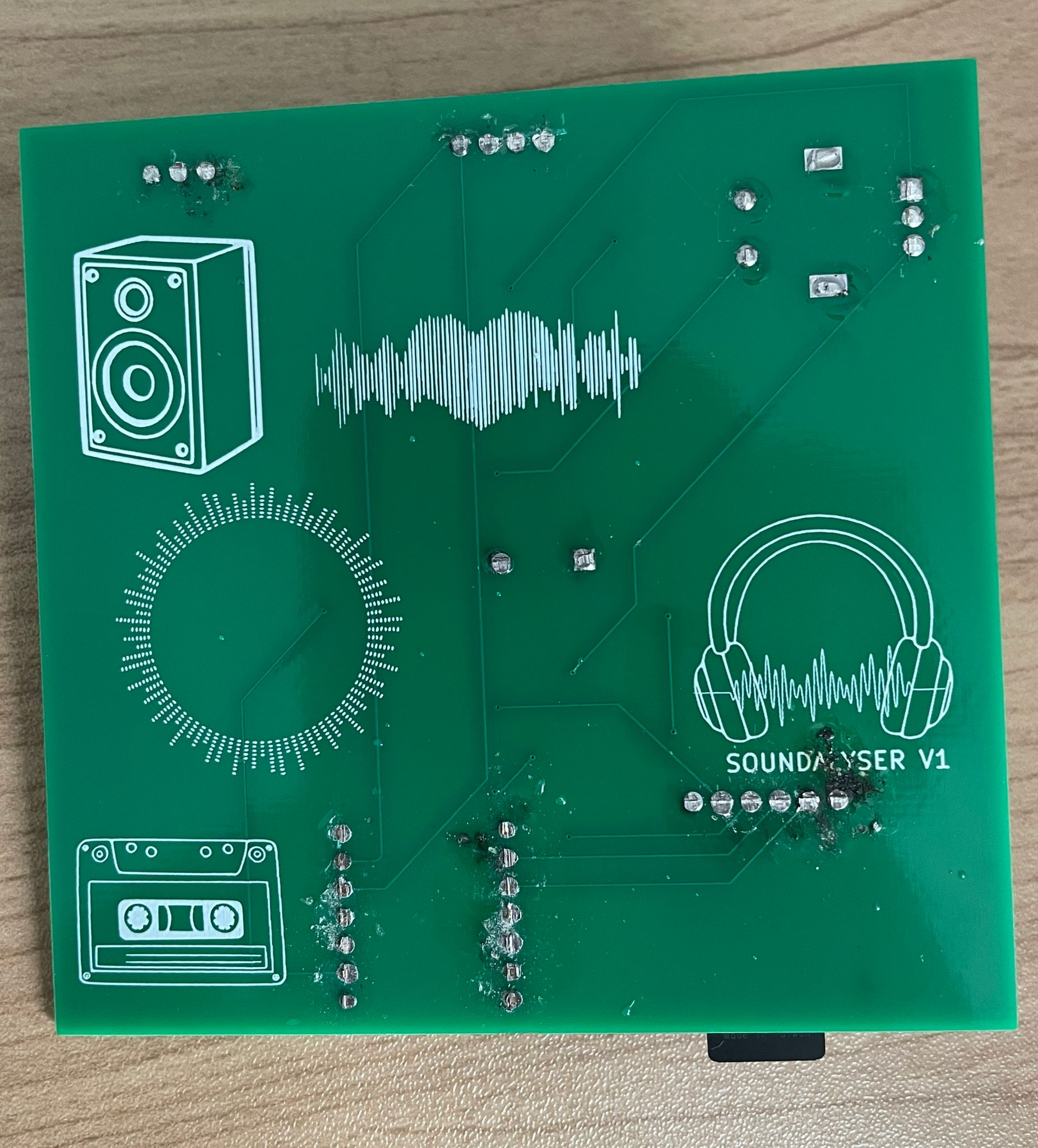
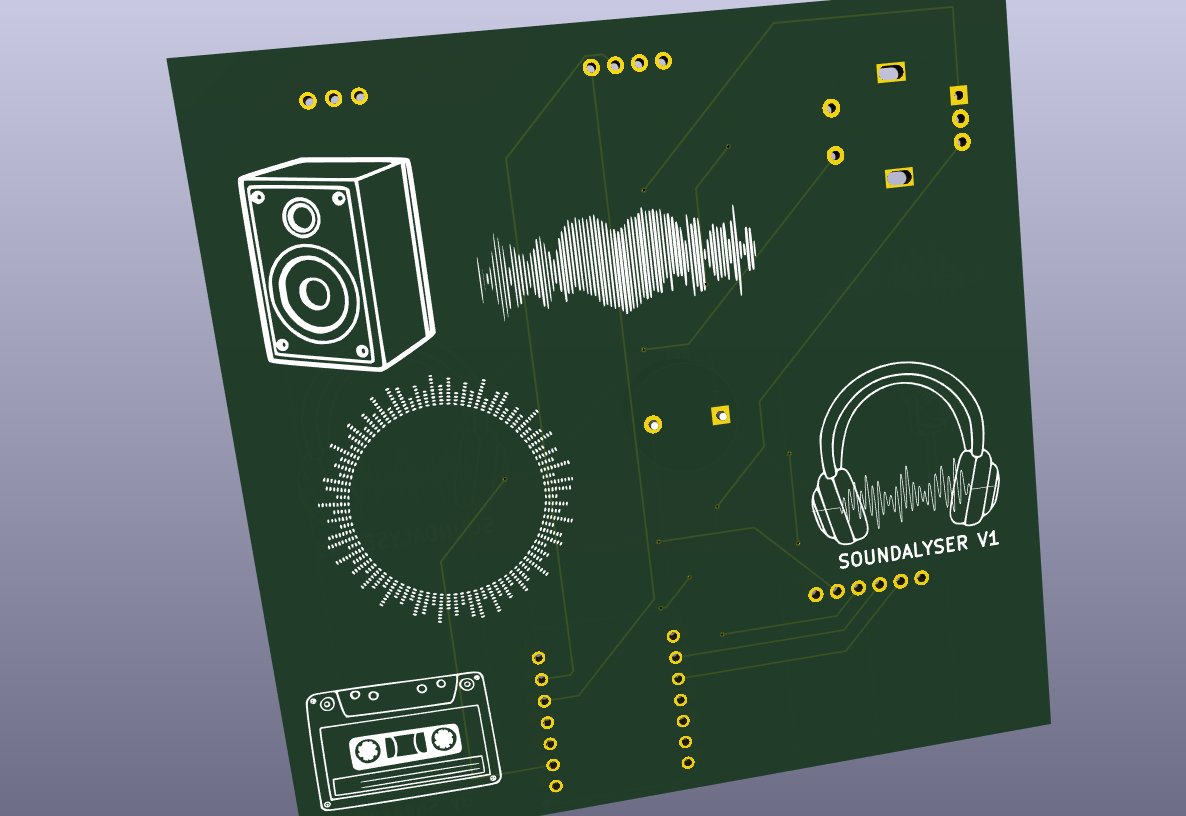
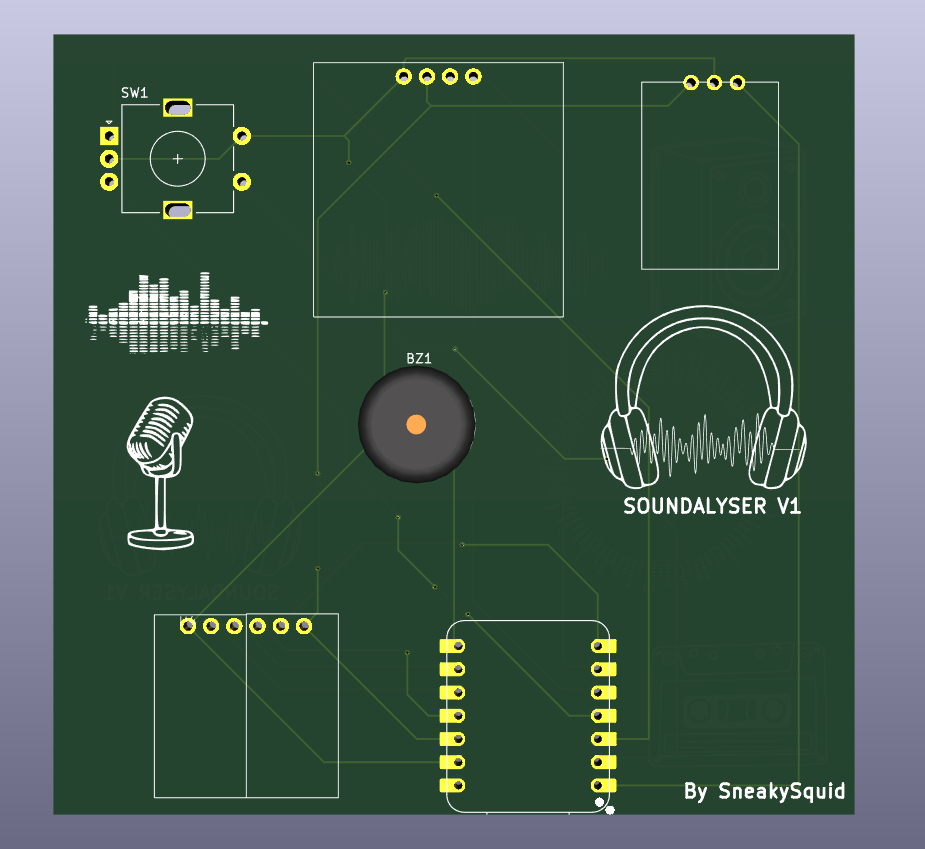
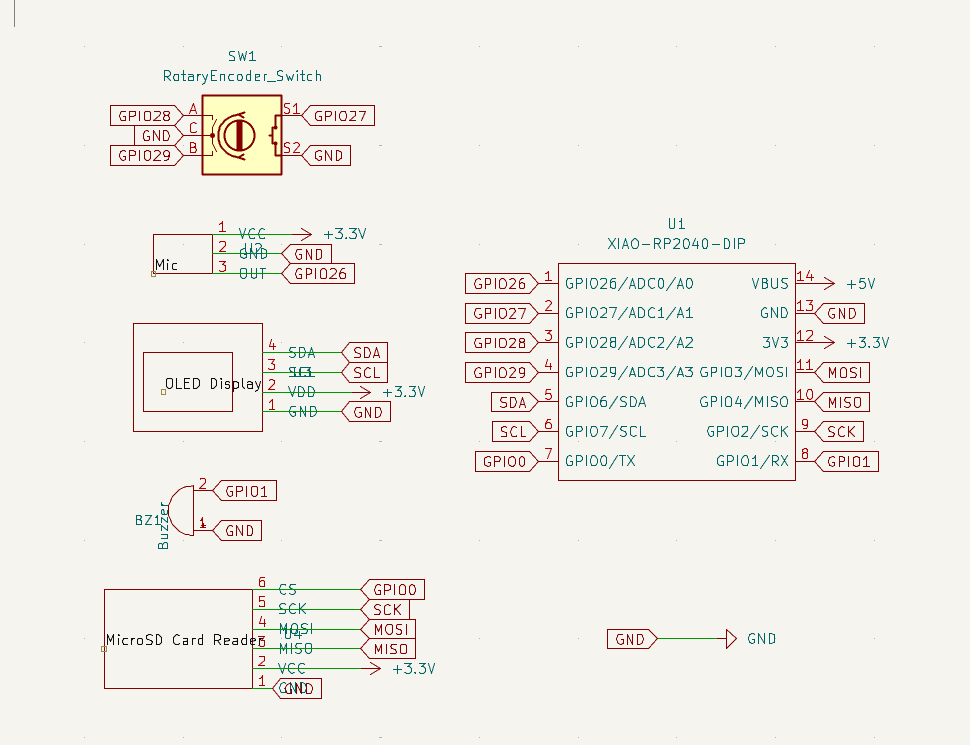
| Component | Link | Price (USD) |
|---|---|---|
| 0.96 Inch OLED Display Module (SSD1306) | https://www.aliexpress.com/item/1005006262908701.html | 3.51 |
| GY-MAX4466 Electret Microphone Amplifier Module | https://www.aliexpress.com/item/1005006070858246.html | 3.92 |
| RP2040 Seeed XIAO | https://www.aliexpress.com/item/1005003682505451.html | 12.11 |
| Rotary Encoder | https://www.aliexpress.com/item/1975155185.html | 3.62 |
| Buzzer | https://www.aliexpress.com/item/1005004883467830.html#nav-specification | 3.43 |
| MicroSD Card Reader | https://www.aliexpress.com/item/1005006248599786.html | 2.39 |
| MicroSD Card | https://www.aliexpress.com/item/1005007118463161.html | 1.99 |
| M3 Screws | https://www.aliexpress.com/item/32950591394.html | 4.89 |
| PCB (custom) | https://jlcpcb.com | 1.50 |
| Case | Printed with my own 3D printer | 0.00 |
| Total: 37.36 usd |
| Qty | Value | Footprint | References |
|---|---|---|---|
| 10 | LOGO | LOGO | G***, G***, G***, G***, G***, G***, G***, G***, G***, G*** |
| 1 | Buzzer | Buzzer_Beeper:Buzzer_12x9.5RM7.6 | BZ1 |
| 1 | RotaryEncoder_Switch | Rotary_Encoder:RotaryEncoder_Alps_EC11E-Switch_Vertical_H20mm | SW1 |
| 1 | XIAO-RP2040-DIP | OPL:XIAO-RP2040-DIP | U1 |
| 1 | ~ | microphone:GY-MAX4466 | U2 |
| 1 | ~ | SSD1306:Untitled | U3 |
| 1 | ~ | SDReader:Untitled | U4 |
google/mozc-devices
Circuit diagrams and firmware source code for Gboard DIY keyboards

conorpp/u2f-zero
U2F USB token optimized for physical security, affordability, and style

rusefi/rusefi
rusefi - GPL internal combustion engine control unit

VoronDesign/Voron-Hardware
Cool Hardware designed by the Voron Design group

hoglet67/RGBtoHDMI
Bare-metal Raspberry Pi project that provides pixel-perfect sampling of Retro Computer RGB/YUV video and conversion to HDMI

hackclub/OnBoard
💡 Join 1,000 teenagers and make your first PCB with a $100 grant!


It measures 87.6 × 85.3 mm and has 2 copper layers, 1.6 mm thick.
16 parts. The full list of its parts is on this page, with links to each part's symbol and footprint where PCBKit's library has them.
From the Sn3akySqu1d/Soundalyser repository on GitHub, at the commit this page was made from: the board is Kicad/Soundalyser.kicad_pcb and its schematic Kicad/Soundalyser.kicad_sch. PCBKit opens the board in the browser, with nothing to install.
Its repository states no licence, so its author keeps all rights: ask Sn3akySqu1d before reusing the design.