2 layers65 × 56 mm

 STB1019/Progetto_Leonardo1
Project with the aim of building a robot that is able to move and climb stairs
Leonardo v2.0 is an open-source printed circuit board by STB1019, from the STB1019/Progetto_Leonardo repository on GitHub. It is a 2-layer board with 23 parts on 64 nets.
Its parts include 11 connectors, 7 resistors and 1 IC. It belongs with the robots and motor control boards of this library.
An IEEE Student Branch Project
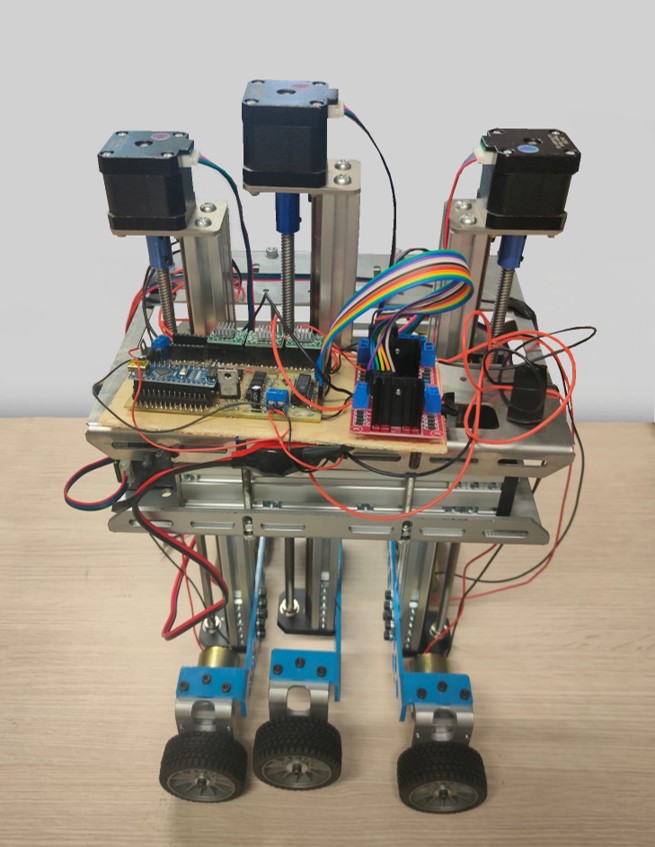
Project with the aim of building a robot that is able to move and climb stairs.
Raspberry and Arduino
See the open issues for a list of proposed features (and known issues).
See also our trello Trello
| Qty | Value | Footprint | References |
|---|---|---|---|
| 7 | 10K | Resistor_SMD:R_0805_2012Metric | R1, R2, R3, R4, R6, R7, R8 |
| 4 | Conn_01x04_Pin | Connector_PinHeader_2.54mm:PinHeader_1x04_P2.54mm_Vertical | J4, J5, J6, J7 |
| 4 | Pololu_Breakout_A4988 | Module:Pololu_Breakout-16_15.2x20.3mm | A1, A2, A3, A4 |
| 4 | Screw_Terminal_01x02 | TerminalBlock_Phoenix:TerminalBlock_Phoenix_MKDS-1,5-2_1x02_P5.00mm_Horizontal | J1, J8, J9, J10 |
| 2 | Conn_01x06_Pin | Connector_PinHeader_2.54mm:PinHeader_1x06_P2.54mm_Vertical | J2, J3 |
| 1 | Conn_02x03_Odd_Even | Connector_PinHeader_2.54mm:PinHeader_2x03_P2.54mm_Vertical | J13 |
| 1 | ~ | ESP32_NODEMCU:DIP-38_1000_ELL | U1 |

google/mozc-devices
Circuit diagrams and firmware source code for Gboard DIY keyboards


Duet3D/Duet-2-Hardware
The KiCAD source for the Duet 3d printer controller see www.duet3d.com
23 parts. The full list of its parts is on this page, with links to each part's symbol and footprint where PCBKit's library has them.
From the STB1019/Progetto_Leonardo repository on GitHub, at the commit this page was made from: the board is 3-schemaElettrico/_PCB_PROTOTIPO_2_KICAD (attivo)/Leonardo_v2.0/Leonardo_v2.0.kicad_pcb and its schematic 3-schemaElettrico/_PCB_PROTOTIPO_2_KICAD (attivo)/Leonardo_v2.0/DC_Motor_driver.kicad_sch. PCBKit opens the board in the browser, with nothing to install.
Its repository states no licence, so its author keeps all rights: ask STB1019 before reusing the design.