
4 layers65 × 30 mm
PiEVF HW00
PumaFPV/PiEVF
The goal is to play with the DSI interface of a raspberryPi and an EVF of a Sony A7RIII because they are pretty cheap on aliexpress
7 parts1MIT
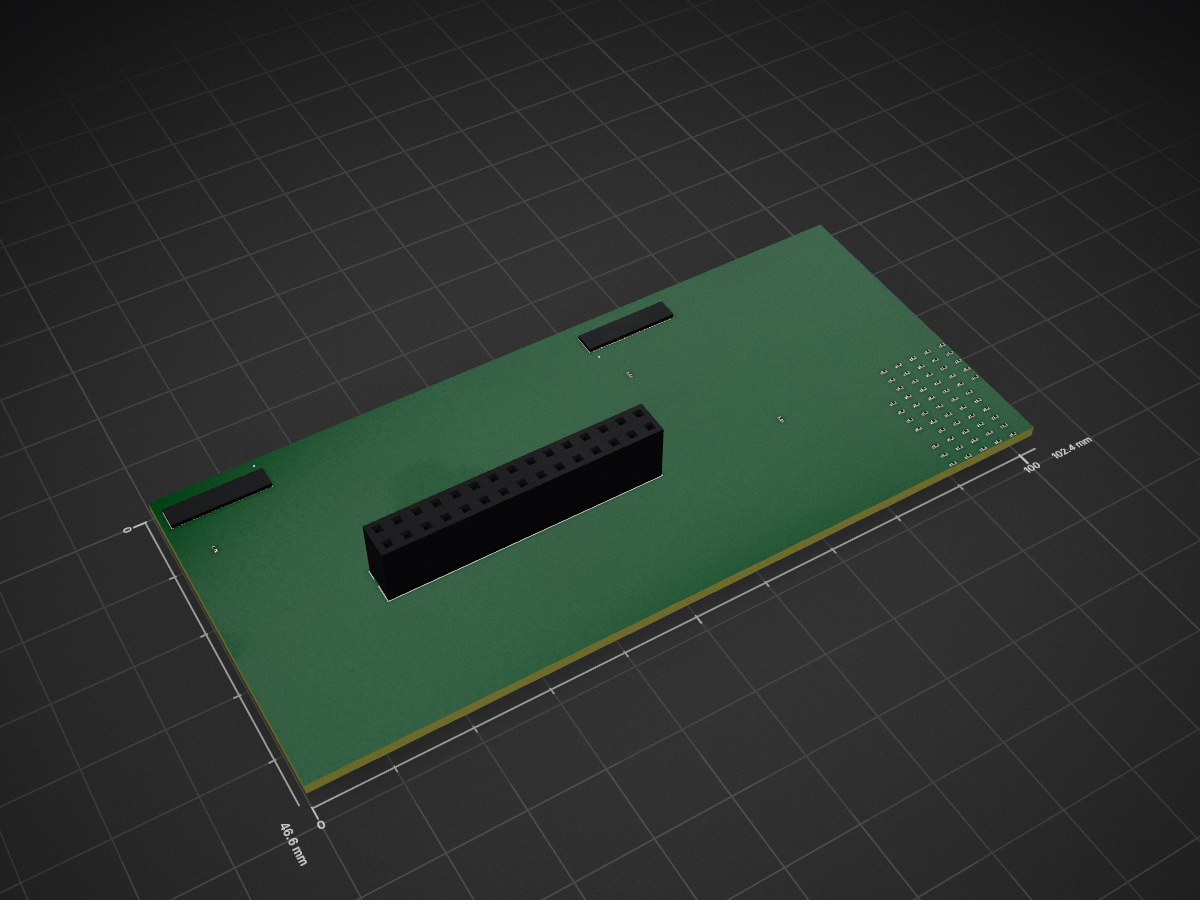
 PumaFPV/PiEVF1
The goal is to play with the DSI interface of a raspberryPi and an EVF of a Sony A7RIII because they are pretty cheap on aliexpress
LVDS to Dual EVF is an open-source printed circuit board by PumaFPV, from the PumaFPV/PiEVF repository on GitHub, published under the MIT licence. It is a 2-layer board with 63 parts on 209 nets.
It is built around the FR02C061JA1-R5000. Its parts include 60 resistors and 3 connectors.
The goal is to play with the DSI interface of a raspberryPi and an EVF of a Sony A7RIII because they are pretty cheap on aliexpress
| Qty | Value | Footprint | References |
|---|---|---|---|
| 60 | 16.5 | Resistor_SMD:R_0201_0603Metric | R2, R10, R11, R12, R13, R14, R15, R16, R17, R18, R19, R20, R21, R22, R23, R24 +44 |
| 2 | FR02C061JA1-R5000 | Component_lib:FR02C061JA1R5000 | J1, J3 |
| 1 | Conn_02x15_Odd_Even | Connector_PinSocket_2.54mm:PinSocket_2x15_P2.54mm_Vertical | J2 |
PumaFPV/PiEVF
The goal is to play with the DSI interface of a raspberryPi and an EVF of a Sony A7RIII because they are pretty cheap on aliexpress

cristibaluta/Leica-G9ii
A complete hardware mod project that transforms the Panasonic Lumix G9ii into a Leica M-style camera


coseyfannitutti/discipad
17-key numpad assembled with only through hole components, including usb type-c

eddyem/stm32samples
Code samples and ready projects based on bare-metal STM32

pekkaroi/bldc-drive
Cheap and simple brushless DC motor driver designed for CNC applications using STM32 microcontroller

63 parts, built around the FR02C061JA1-R5000. The full list of its parts is on this page, with links to each part's symbol and footprint where PCBKit's library has them.
From the PumaFPV/PiEVF repository on GitHub, at the commit this page was made from: the board is Hardware/LVDS_to_Dual_EVF/LVDS_to_Dual_EVF.kicad_pcb and its schematic Hardware/LVDS_to_Dual_EVF/LVDS_to_Dual_EVF.kicad_sch. PCBKit opens the board in the browser, with nothing to install.
Its repository publishes it under the MIT licence: you may reuse it on that licence's terms (keep the author's notice, and for a copyleft licence share your changes alike).