2 layers103 × 30.5 mm
 Moreshwar-R/VECTRA-Line-Follower
High-speed line follower robot built with ESP32, QTR sensors, and PID control.
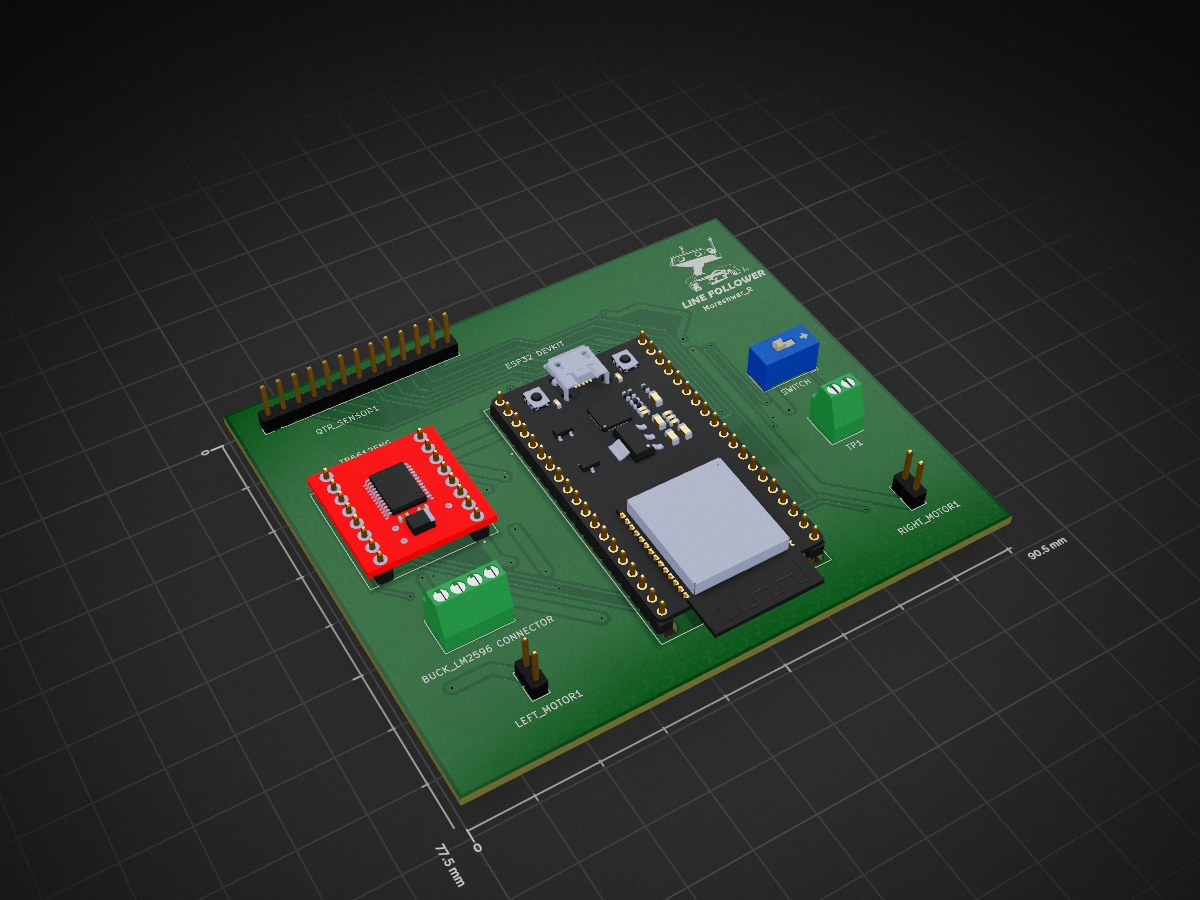
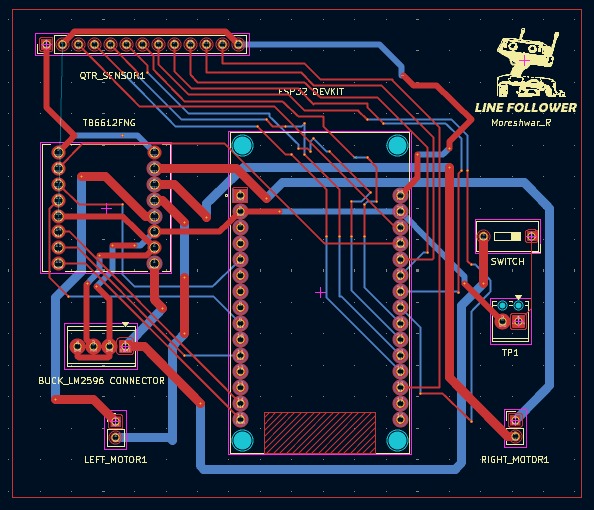
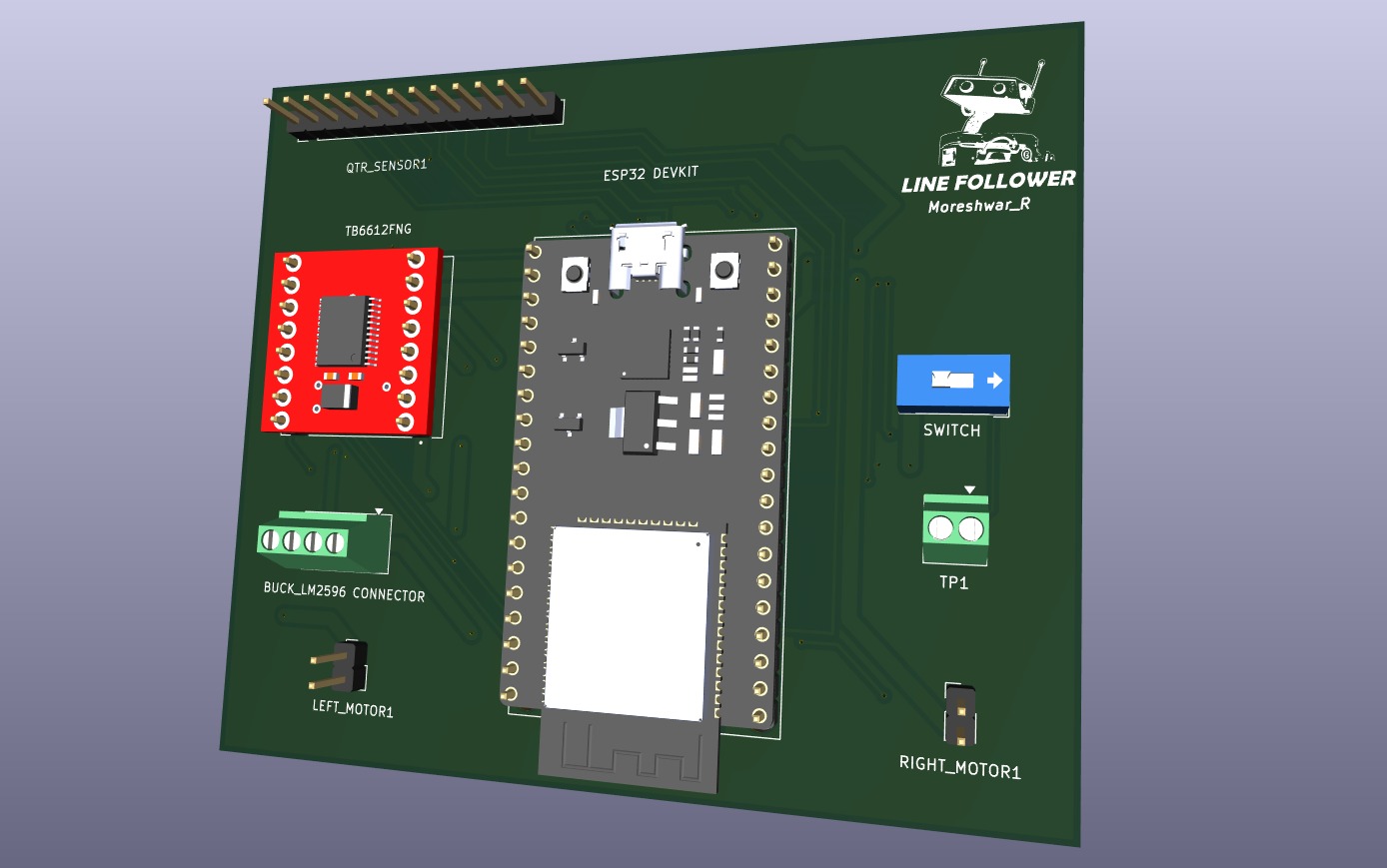
Line follower is an open-source printed circuit board by Moreshwar-R, from the Moreshwar-R/VECTRA-Line-Follower repository on GitHub, published under the MIT licence. It is a 2-layer board of 90.5 × 77.5 mm with 9 parts on 35 nets, routed with 253 tracks and 56 vias.
It belongs with the ESP32 boards of this library.
ESP32 · TB6612FNG · 10-channel IR array · LSRB intersection logic + Anti-Wobble PID
VECTRA is a high-speed competition line follower designed to stay locked on the track even when the layout changes from one event to the next. A wide 10-channel IR array reads sharp turns, acute angles and intersections, while decisive LSRB logic layered over a tuned PID controller keeps every junction predictable. Built around an ESP32 and a TB6612FNG driver, it balances speed, stability and fast trackside tuning.
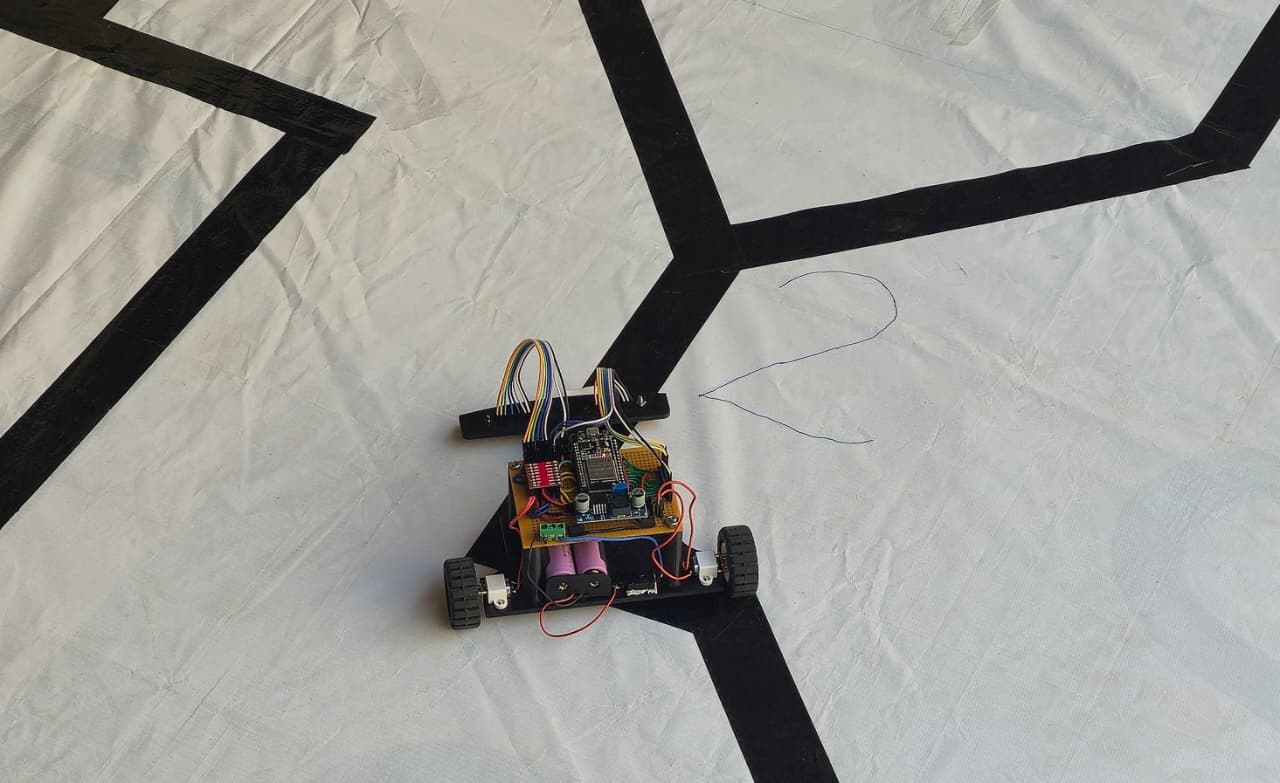
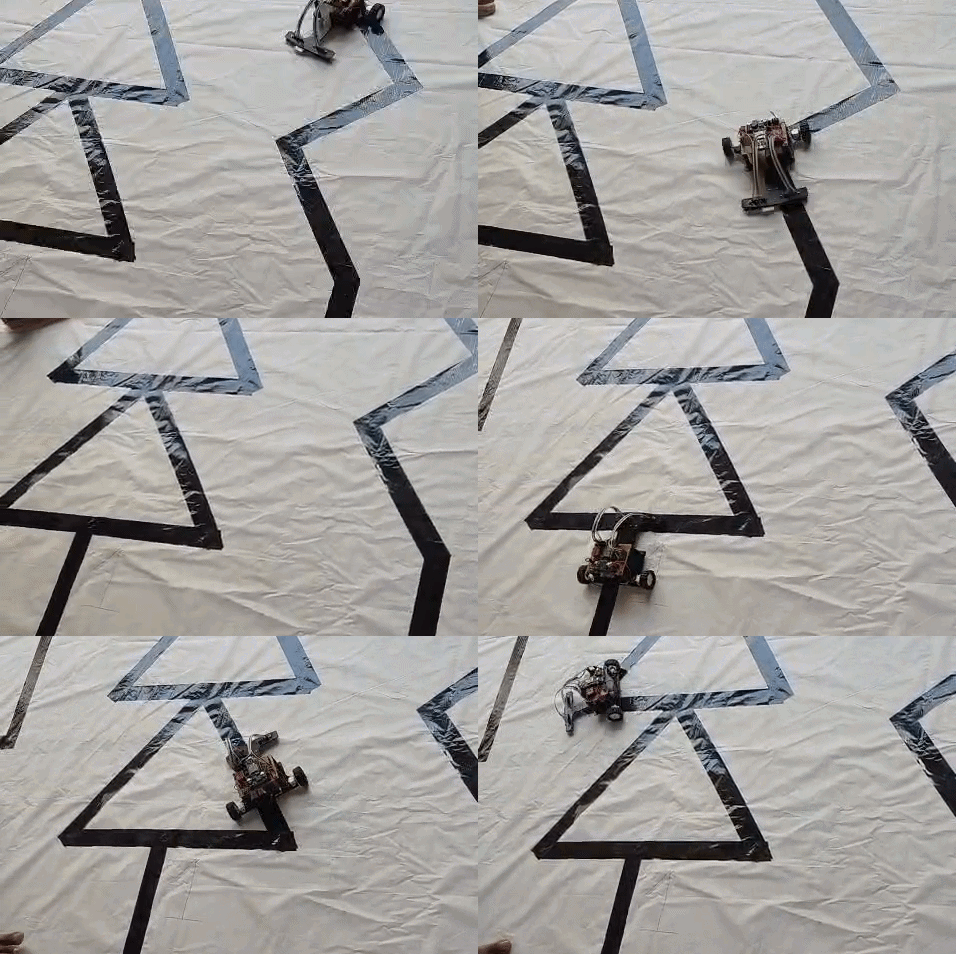
| Component | Qty | Description |
|---|---|---|
| ESP32 DevKit (30-pin) | 1 | Dual-core microcontroller — reads the sensors and runs the control loop. |
| TB6612FNG motor driver | 1 | Dual H-bridge that drives both motors efficiently and cool. |
| N20 6V micro-gear motor + wheel | 2 | Provides drive; compact and quick. |
| Front caster wheel | 1 | Third contact point for smooth balance. |
| 10-channel reflective IR array | 1 | Senses the line; wide span covers changing track maps. |
| LM2596 buck module | 1 | Steps the 7.4 V battery down to a clean 5 V for the logic. |
| 2S Li-ion battery (7.4 V) | 1 | Main power source. |
| SPST switch | 1 | Master power cut-off. |
| Chassis, standoffs, wires, connectors | — | Frame and interconnections. |
error (outer sensors pull harder).correction = Kp·error + Kd·(error − lastError), applied differentially.Schematic
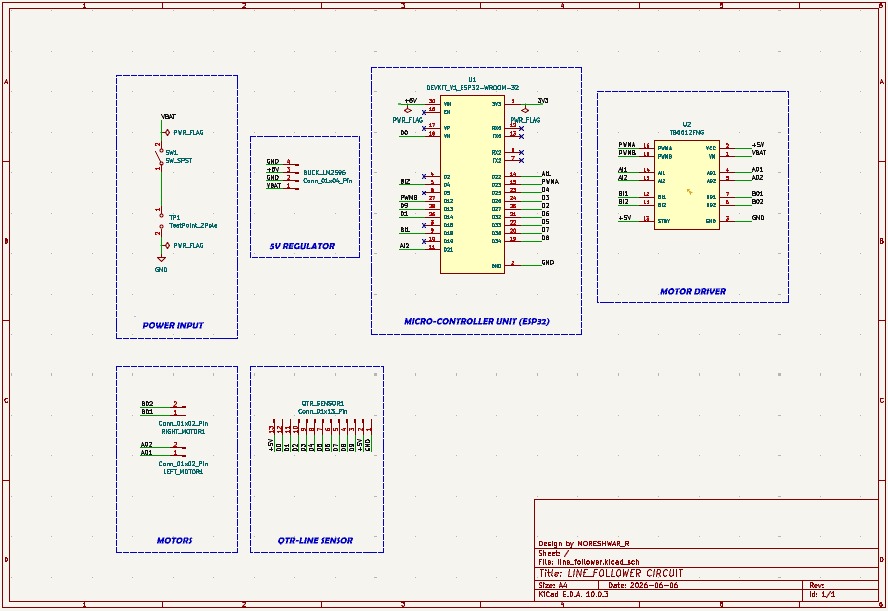
PCB Layout
3D Model
firmware/line_follower.ino| Variable | Default | Role |
|---|---|---|
Kp | 15 | Correction strength |
Kd | 30000 | Damping / overshoot control |
baseSpeed | 250 | Cruise speed (0–255) |
THRESHOLD | 4090 | Black/white cutoff (recalibrate per track) |
LICENSE.#LineFollower #ESP32 #TB6612FNG #PID #LSRB #Robotics #Arduino #Embedded #KiCad
| Qty | Value | Footprint | References |
|---|---|---|---|
| 2 | Conn_01x02_Pin | Connector_PinHeader_2.54mm:PinHeader_1x02_P2.54mm_Vertical | LEFT_MOTOR1, RIGHT_MOTOR1 |
| 1 | Conn_01x04_Pin | TerminalBlock_Phoenix:TerminalBlock_Phoenix_MPT-0,5-4-2.54_1x04_P2.54mm_Horizontal | BUCK_LM2596 CONNECTOR |
| 1 | Conn_01x13_Pin | Connector_PinHeader_2.54mm:PinHeader_1x13_P2.54mm_Vertical | QTR_SENSOR1 |
| 1 | DEVKIT_V1_ESP32-WROOM-32 | DEVKIT_V1_ESP32-WROOM-32:MODULE_DEVKIT_V1_ESP32-WROOM-32 | ESP32 DEVKIT |
| 1 | LOGO | LOGO | G*** |
| 1 | SW_SPST | Button_Switch_THT:SW_DIP_SPSTx01_Slide_9.78x4.72mm_W7.62mm_P2.54mm | SWITCH |
| 1 | TB6612FNG | ROB-14450:MODULE_ROB-14450 | TB6612FNG |
| 1 | TestPoint_2Pole | TerminalBlock_Phoenix:TerminalBlock_Phoenix_MPT-0,5-2-2.54_1x02_P2.54mm_Horizontal | TP1 |


FrameworkComputer/ExpansionCards
Reference designs and documentation to create Expansion Cards for the Framework Laptop

VoronDesign/Voron-Hardware
Cool Hardware designed by the Voron Design group

hackclub/OnBoard
💡 Join 1,000 teenagers and make your first PCB with a $100 grant!


adamws/kicad-kbplacer
KiCad plugin for automatic keyboard's key placement and routing
It measures 90.5 × 77.5 mm and has 2 copper layers, 1.6 mm thick.
9 parts. The full list of its parts is on this page, with links to each part's symbol and footprint where PCBKit's library has them.
From the Moreshwar-R/VECTRA-Line-Follower repository on GitHub, at the commit this page was made from: the board is hardware/line_follower.kicad_pcb and its schematic hardware/line_follower.kicad_sch. PCBKit opens the board in the browser, with nothing to install.
Its repository publishes it under the MIT licence: you may reuse it on that licence's terms (keep the author's notice, and for a copyleft licence share your changes alike).