
2 layers33.7 × 97.8 mm
HAN ESP TSS721
UtilitechAS/amsreader-firmware
ESP8266 and ESP32 compatible firmware to read, interpret and publish data to MQTT from smart electrical meters, both DLMS and DSMR is supported
29 parts470

 LubergAlexander/esp8266-breakout-for-autoprogramming1
Test esp8266 breakout board with an autoprogramming header.
Esp8266-breakout for autoprogramming is an open-source printed circuit board by LubergAlexander, from the LubergAlexander/esp8266-breakout-for-autoprogramming repository on GitHub. It is a 2-layer board of 33.7 × 36.4 mm with 16 parts on 22 nets, routed with 91 tracks and 5 vias.
It is built around the ESP-12E. Its parts include 5 resistors, 1 capacitor, 1 IC and 1 connector. It belongs with the interfaces and adapters boards and the ESP8266 boards of this library.
Test esp8266 breakout board with an autoprogramming header.
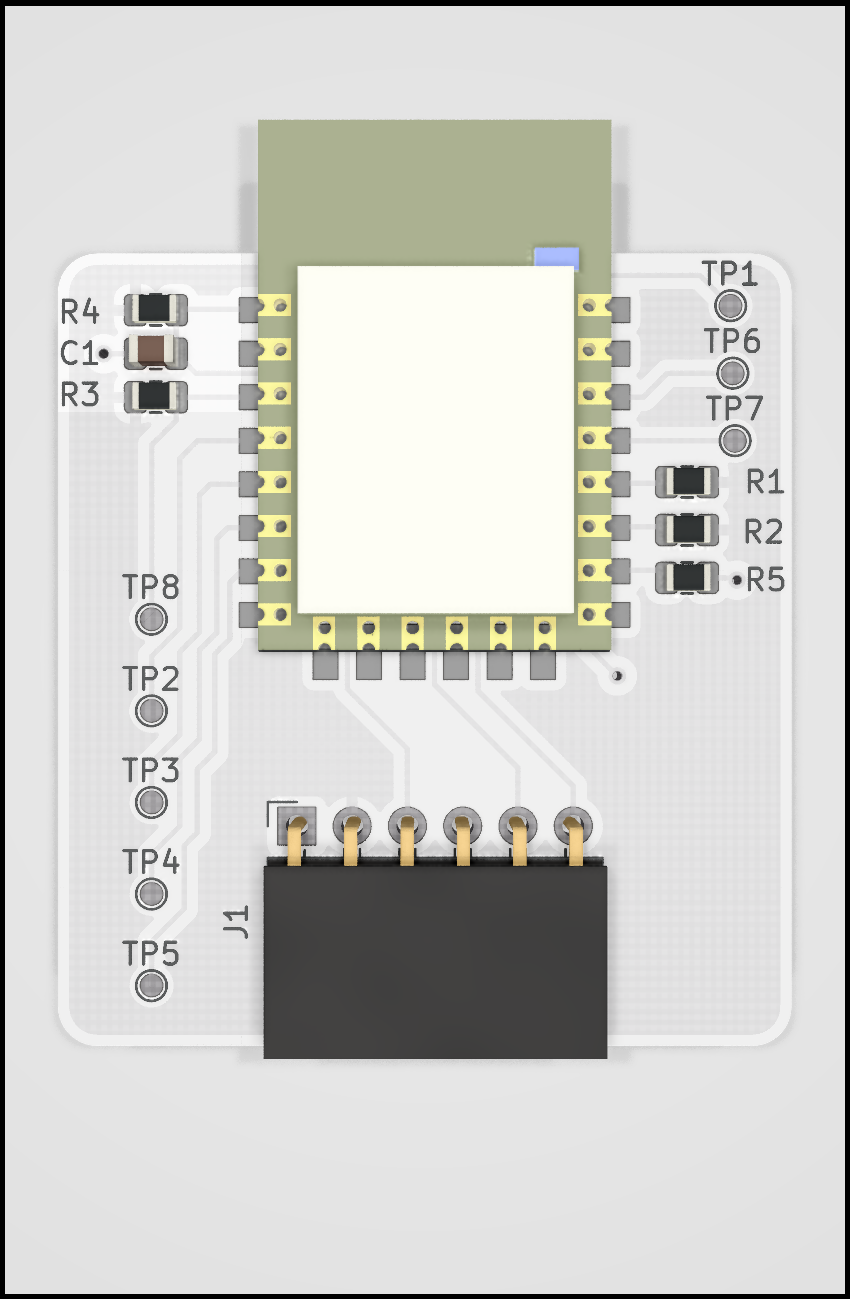
| Qty | Value | Footprint | References |
|---|---|---|---|
| 8 | TestPoint | TestPoint:TestPoint_Pad_D1.0mm | TP1, TP2, TP3, TP4, TP5, TP6, TP7, TP8 |
| 5 | 12k | Resistor_SMD:R_0805_2012Metric | R1, R2, R3, R4, R5 |
| 1 | 470pF | Capacitor_SMD:C_0805_2012Metric | C1 |
| 1 | Conn_01x06_Female | Connector_PinSocket_2.54mm:PinSocket_1x06_P2.54mm_Horizontal | J1 |
| 1 | ESP-12E | ESP8266:ESP-12E_SMD | U1 |
UtilitechAS/amsreader-firmware
ESP8266 and ESP32 compatible firmware to read, interpret and publish data to MQTT from smart electrical meters, both DLMS and DSMR is supported


skorokithakis/tiny-ESP8266-breakout
A very small and basic ESP8266 breakout board

mcbittech/souliss-smart-thermostat-WiFi
ESP8266 WiFi Smart Thermostat based on Souliss IoT Framework

girst/hardpass-passwordmanager-mirror-of-git.gir.st
https://git.gir.st/hardpass.git - Seldomly Updated Mirror: Hardpass is a Raspberry Pi Zero based hardware password manager, using passwordstore.org.

MakerMeik/Window-Sensor
Here you will find all the files you need to build an ESP8266-based window sensor whose battery will last for several years. Have a look at my video on Youtube: https://youtu.be/vxbuO1zWo3w


It measures 33.7 × 36.4 mm and has 2 copper layers, 1.6 mm thick.
16 parts, built around the ESP-12E. The full list of its parts is on this page, with links to each part's symbol and footprint where PCBKit's library has them.
From the LubergAlexander/esp8266-breakout-for-autoprogramming repository on GitHub, at the commit this page was made from: the board is esp8266-breakout-for-autoprogramming.kicad_pcb. PCBKit opens the board in the browser, with nothing to install.
Its repository states no licence, so its author keeps all rights: ask LubergAlexander before reusing the design.