2 layers216.9 × 86.8 mm
Sweepbling lp pcb
davidphilipbarr/Sweep
Sweep - a small promicro based keyboard inspired by the Ferris.
59 parts2.1k

 Cedutus/Lihis5
Lihis is a keyboard made by Eetu for Eetu
Lihis is an open-source printed circuit board by Cedutus, from the Cedutus/Lihis repository on GitHub, published under the MIT licence. It is a 2-layer board of 151.9 × 76.2 mm with 59 parts on 64 nets, routed with 767 tracks and 4 vias.
Its parts include 25 diodes, 25 switches, 1 resistor, 1 IC and 1 connector. It belongs with the keyboards and input boards of this library.
Lihis is a keyboard made by Eetu for Eetu. It's basically a worse Helix using a Blackpill.
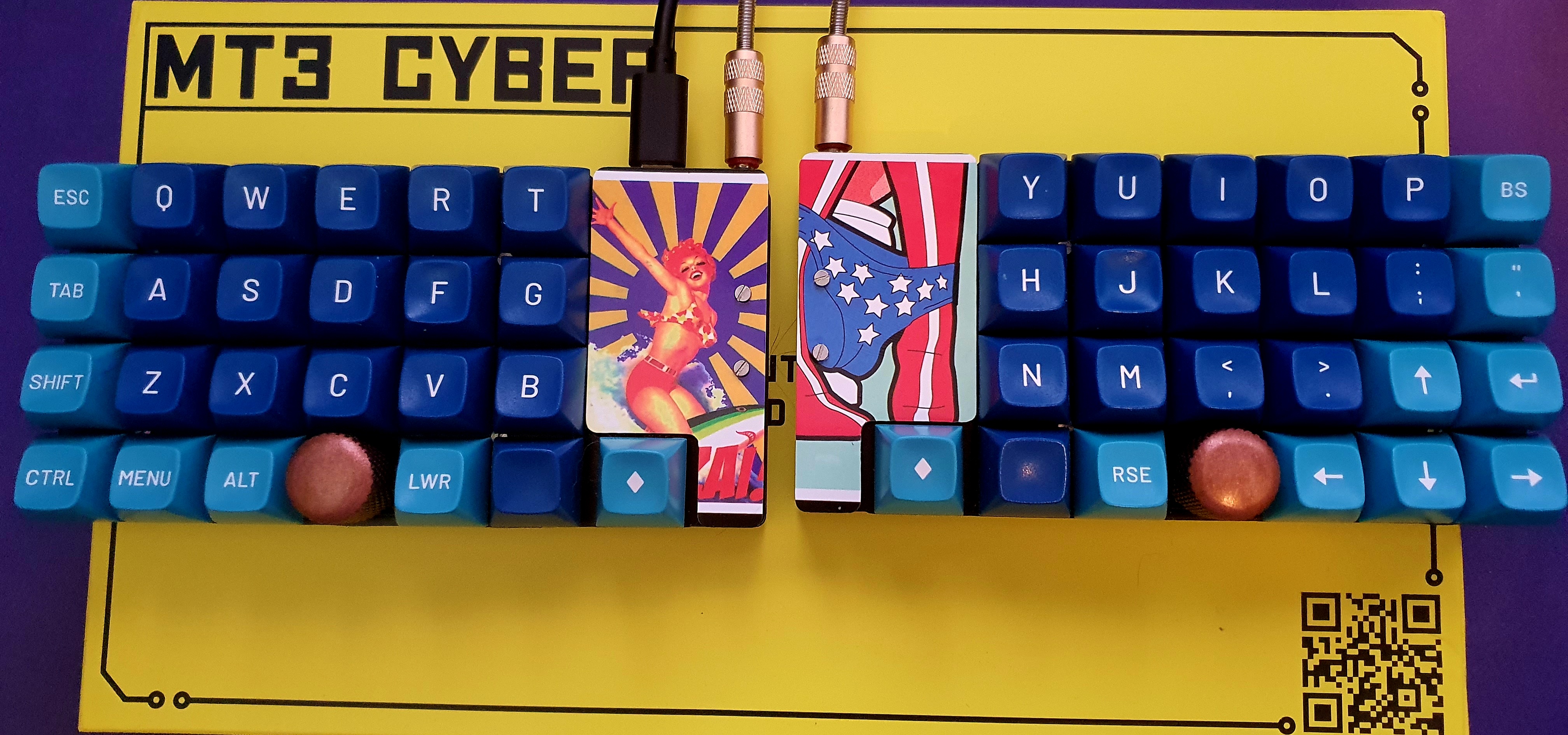
Firmware is not included in QMK repo, you will have to compile it yourself. Most of the code is copied and stripped down from Vattern's Grandiceps keyboard. Blackpill bootloader: hold down the boot button on the blackpill, then press NRST. it might take some tries.
| Qty | Value | Footprint | References |
|---|---|---|---|
| 25 | D | keyboard_parts:D_SOD123_axial_flip | D1, D2, D10, D11, D12, D13, D14, D15, D16, D17, D18, D19, D20, D21, D22, D23 +9 |
| 24 | SW_PUSH | kbd:MX_ALPS_PG1350_noLed | SW1, SW2, SW10, SW11, SW12, SW13, SW14, SW15, SW16, SW17, SW18, SW19, SW20, SW21, SW23, SW24 +8 |
| 4 | Val** | kbd:M2_HOLE_v2 | , , , |
| 2 | Val** | kbd:thread_m2 | Ref**, Ref** |
| 1 | 10k | kbd:R | R1 |
| 1 | MJ-4PP-9 | kbd:MJ-4PP-9 | J1 |
| 1 | Rotary_Encoder_Switch | Keebio-Parts:RotaryEncoder_EC11 | SW22 |
| 1 | YAAJ_WeAct_BlackPill_Part_Like | Footprints:YAAJ_WeAct_BlackPill_22 | U1 |
davidphilipbarr/Sweep
Sweep - a small promicro based keyboard inspired by the Ferris.


VoronDesign/Voron-Hardware
Cool Hardware designed by the Voron Design group


dmcke5/NucDeck
The Open Source DIY Handheld Gaming PC!

jackw01/scanlight
A better light source for scanning color negative film

ChrisChrisLoLo/beyblock20
The magnetic, modular, 20-key macropad that can join together to form an ortholinear board

sadekbaroudi/vik
This is a VIK module designed to mount a PER56 scroll ring, with a 35mm Cirque Trackpad and optional WS2812B LEDs.
It measures 151.9 × 76.2 mm and has 2 copper layers, 1.6 mm thick.
59 parts. The full list of its parts is on this page, with links to each part's symbol and footprint where PCBKit's library has them.
From the Cedutus/Lihis repository on GitHub, at the commit this page was made from: the board is Lihis_Non-hotswap/Lihis.kicad_pcb. PCBKit opens the board in the browser, with nothing to install.
Its repository publishes it under the MIT licence: you may reuse it on that licence's terms (keep the author's notice, and for a copyleft licence share your changes alike).