


2 layers18.5 × 26 mm
24g2usb rp2350zero
joypad-ai/joypad-os
Universal controller firmware for building adapters, dongles, and custom controllers.
4 parts1.7kApache-2.0

 BrettHallen/MicroPalm-PC-4000
Information about the Micro Palm Computers PC/4000
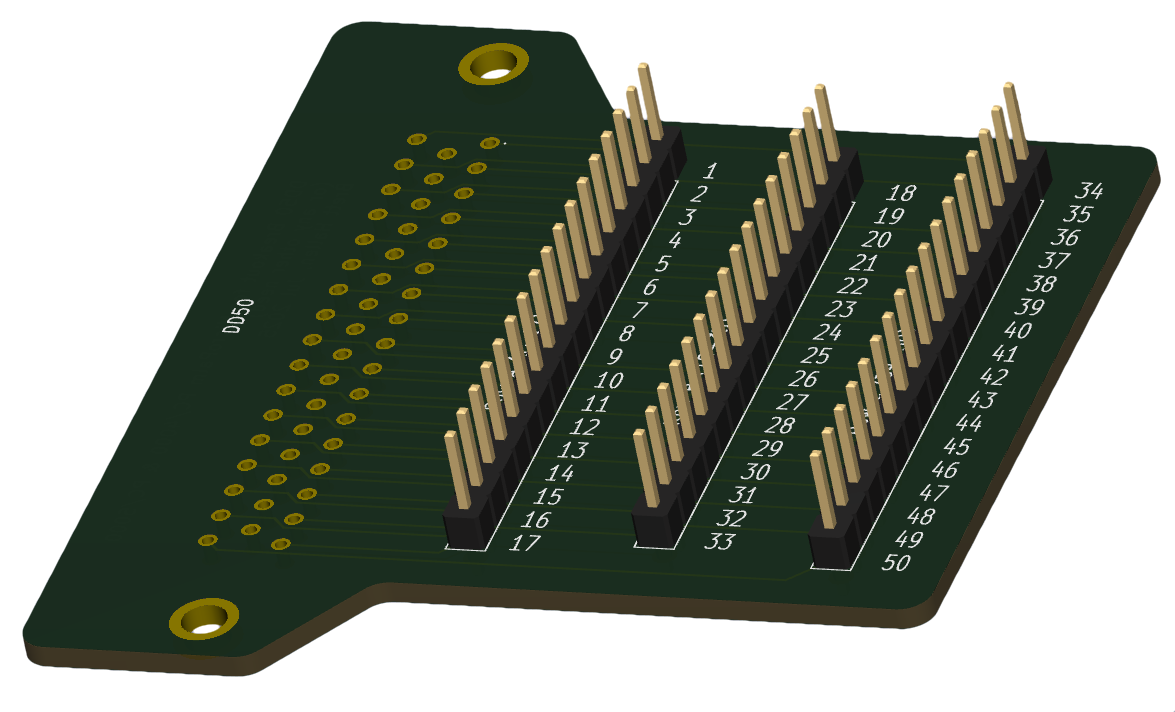
DD50 Breakout is an open-source printed circuit board by BrettHallen, from the BrettHallen/MicroPalm-PC-4000 repository on GitHub. It is a 2-layer board of 60.3 × 68.9 mm with 4 parts on 52 nets, routed with 184 tracks and 0 vias.
It is built around the DD50P564TXLF. It belongs with the interfaces and adapters boards of this library.
Scrounging the web, trying to find any scrap of info I could, I stumbled upon the name of the founder/CEO ... Vel Casler. A pretty unique name so managed to find him on LinkedIn and the university where he worked as a professor. I sent him a message asking if he had any info that he could share, but discovered today (July 2025) that he passed away about two years ago in August 2023.

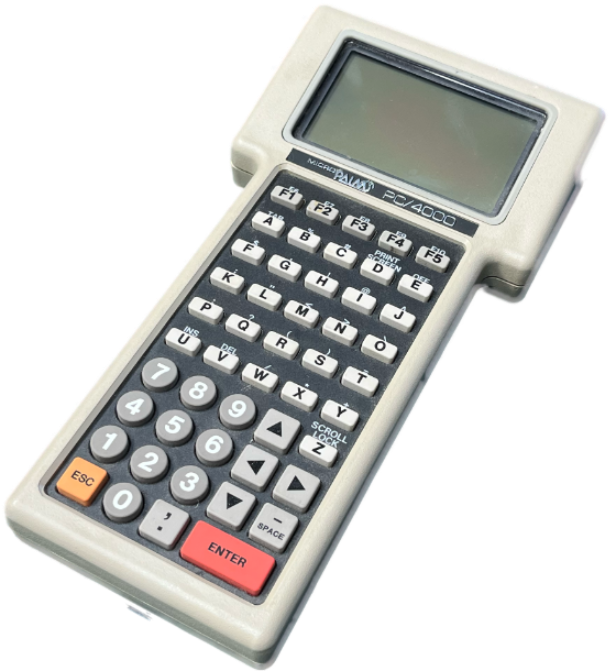
The PC/4000 (and PC/5000) are MS-DOS compatible handheld computers running on an 80C88. The PC/4000 comes with 256KB of RAM and 512KB of "virtual disk" storage, and has a 20x8 character, 120x64 graphics capable, backlit LCD. They run on three C-size batteries (alkaline or rechargeable NiCd).
It has a single 50-pin DD50 socket through which it can support the items below.
According to the demo program:
Options included:
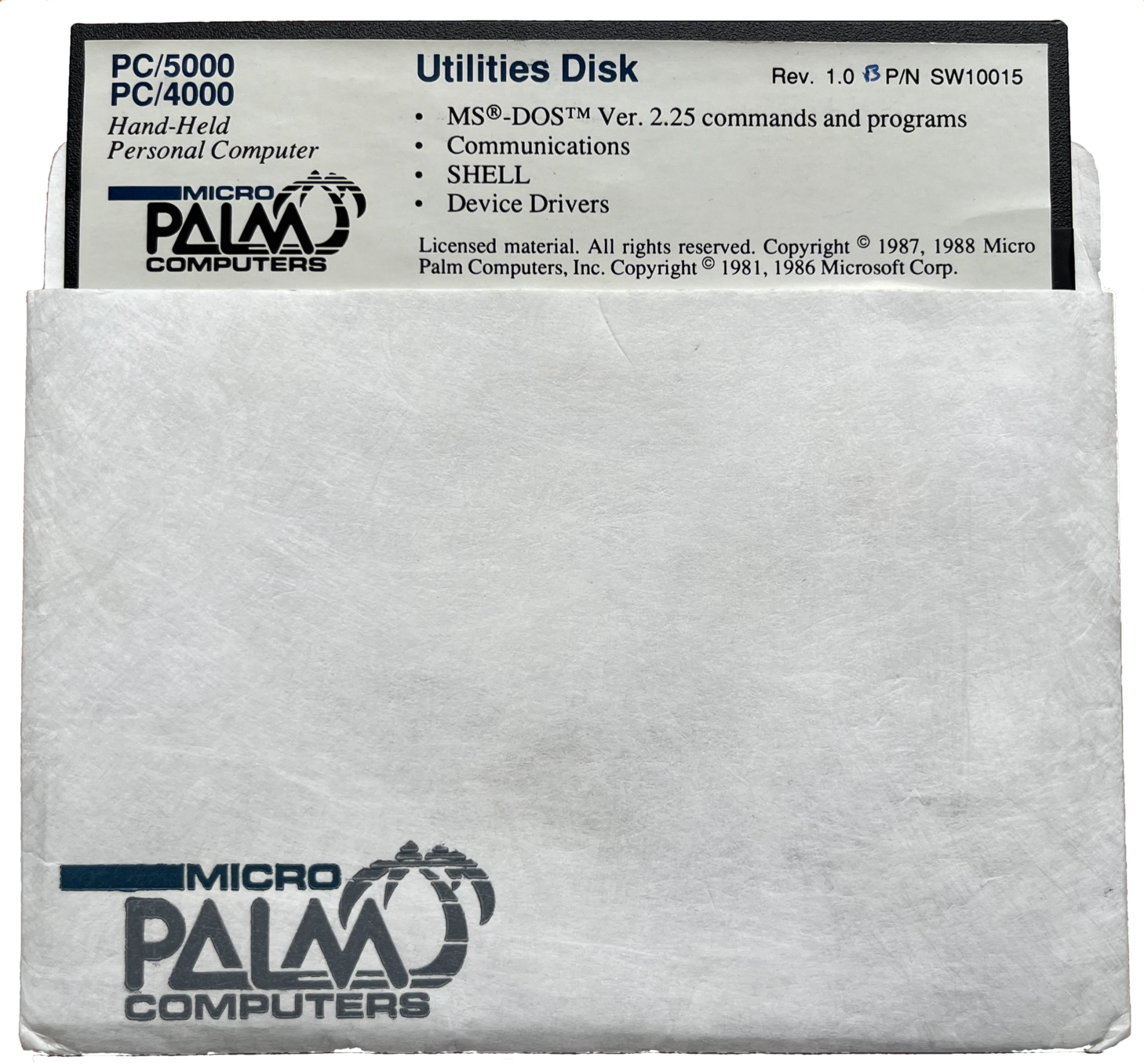
Unfortunately I don't have much documentation. I do have the READ.ME that came on the Utilities Disk (SW10015) and a four-page leaflet (MC10041).
It would be great to find the following:
I found a German article from 1992 - it seems to be announcing a reseller in Germany:
With the models "PC/3000", "PC/4000" and "PC/5000" Technitron presents a family of MS-DOS PCs in pocket size. The computers come from Micro Paim Computers and are often used for meter reading, according to the Munich provider,
The most powerful PC/5000 variant works with an 80C80 (sic) processor and a 256 KB system memory. In the PC/4000 version, the main memory is also 256 KB, a maximum of 704 KB of memory can be realized on both devices. In addition, disk storage modules with capacities of 128 KB, 256 KB, 512 KB or 1024 KB are available. All computers have a ROM bios and are compatible with IBM PCs. Applications can therefore be developed on a conventional PC and then transferred to the portable system. Programming languages such as Basic, Cobol, C, Pascal or Dbase can be used. According to Technitron, the user can make extensions to the PC/5000 model via plug-in modules. For example, an asynchronous modem, interfaces and RAM memory are offered. The LC display of the PCs works backlit, with two versions available: a standard screen for extreme temperatures (from about -30 degrees Celsius to about 65 degrees Celsius) and a more readable "Supertwist" display for areas of application where the temperature fluctuations are lower (from about -10 degrees Celsius to about 48 degrees Celsius). The display takes place in eight lines with 20 characters each. Graphics are displayed with 120x64 pixels.
As the Munich company reports, the keyboard is protected against weather influences. The sealed buttons are positioned in such a way that they can also be operated with gloves.
My machine came with a Utilities Disk
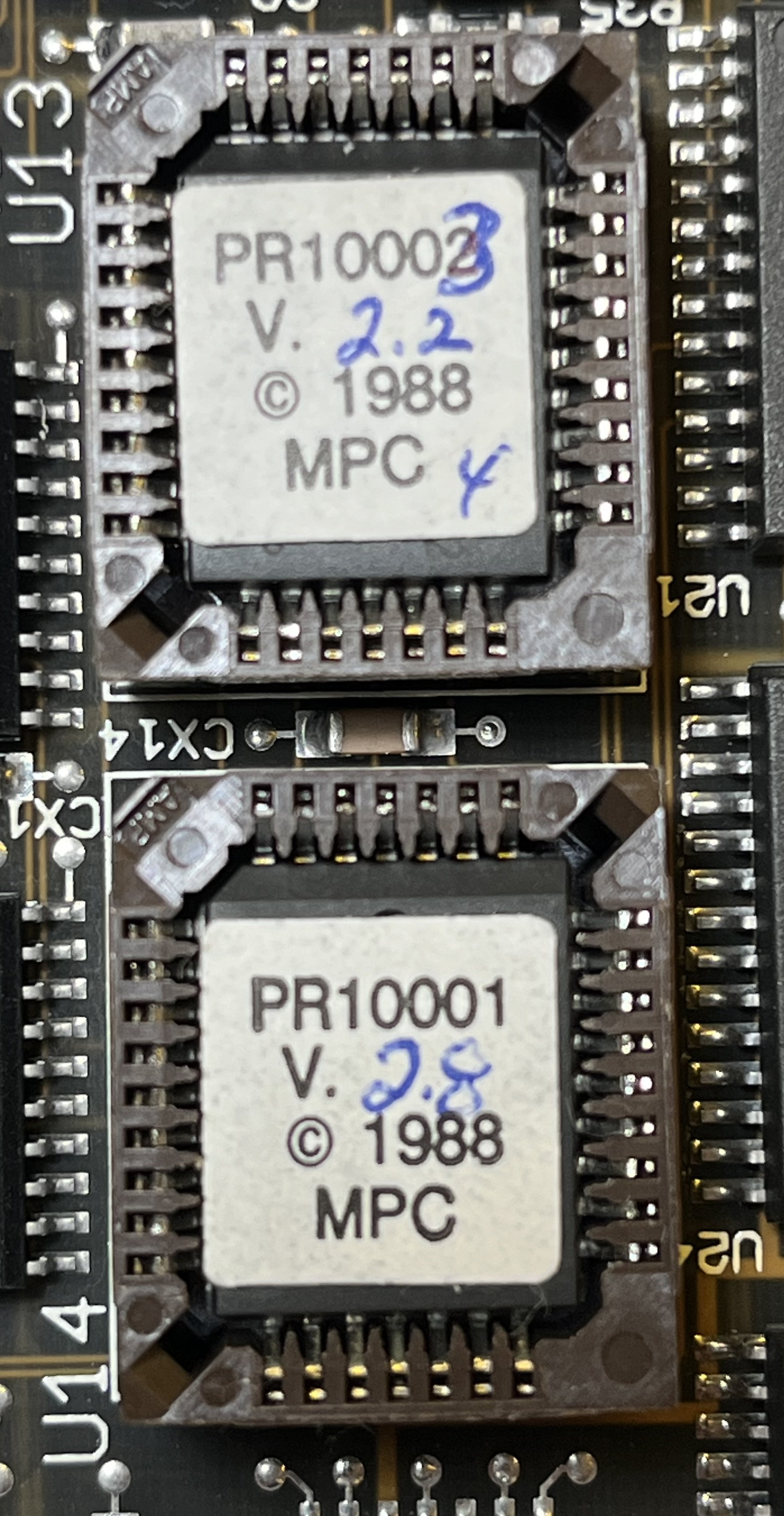
The machine has two ROM sockets. It appears one is for diagnostic routines and the other is the BIOS/MS-DOS.
Both have been dumped.
The ROMs are N27C256-2 types.
Photos of the machine, including interior.
My YouTube videos.
The DD50 interface is, as far as I know, undocumented ... well, it's documented in the missing documentation.
I think it includes four serial ports at least. Anyway, looks like I'm going to have to figure the pin out the hard way, hence the breakout board.
| Qty | Value | Footprint | References |
|---|---|---|---|
| 1 | DD50P564TXLF | Connector_Dsub:DSUB-50_Pins | J1 |
| 1 | Row A (1-17) | Connector_PinHeader_2.54mm:PinHeader_1x17_P2.54mm_Vertical | J2 |
| 1 | Row B (18-33) | Connector_PinHeader_2.54mm:PinHeader_1x16_P2.54mm_Vertical | J3 |
| 1 | Row C (34-50) | Connector_PinHeader_2.54mm:PinHeader_1x17_P2.54mm_Vertical | J4 |
joypad-ai/joypad-os
Universal controller firmware for building adapters, dongles, and custom controllers.


hackclub/OnBoard
💡 Join 1,000 teenagers and make your first PCB with a $100 grant!

tardate/LittleArduinoProjects
a collection of "Little Electronic & Arduino Projects", most involving electronics or an Arduino in one way or another!

drandyhaas/KiCadRoutingTools
A set of Python/Rust tools to aid routing in KiCad

osy/XG_Mobile_Station
Open source eGPU dock for ROG Ally and ROG Flow

Luos-io/luos_engine
Open-source and real-time orchestrator for cyber-physical-systems, to easily design, test and deploy embedded applications and digital twins.

NVNTLabs/switch2-SDEX2M2
Micro SD Express to M.2 NVME Adapter for Nintendo Switch 2
It measures 60.3 × 68.9 mm and has 2 copper layers, 1.6 mm thick.
4 parts, built around the DD50P564TXLF. The full list of its parts is on this page, with links to each part's symbol and footprint where PCBKit's library has them.
From the BrettHallen/MicroPalm-PC-4000 repository on GitHub, at the commit this page was made from: the board is DD50_Breakout/DD50_Breakout.kicad_pcb and its schematic DD50_Breakout/DD50_Breakout.kicad_sch. PCBKit opens the board in the browser, with nothing to install.
Its repository states no licence, so its author keeps all rights: ask BrettHallen before reusing the design.