2 layers370 × 165 mm

 BrettHallen/Amstrad-CPC9
Amstrad CPC related projects
CPC464 Dual ROM is an open-source printed circuit board by BrettHallen, from the BrettHallen/Amstrad-CPC repository on GitHub. It is a 2-layer board of 40.3 × 21.7 mm with 4 parts on 29 nets, routed with 30 tracks and 0 vias.
Its parts include 2 ICs, 1 resistor and 1 connector.
Amstrad CPC related projects.
A simple HTML/web page to aid typing in Locomotive BASIC program listings on a modern computer. It doesn't run the program, that's for a proper emulator.
This HTML page will:
An idea to convert the 6128 PLUS model's Centronics floppy connector to a more standard 26-way or 34-way pin header to connect a drive via a ribbon cable.
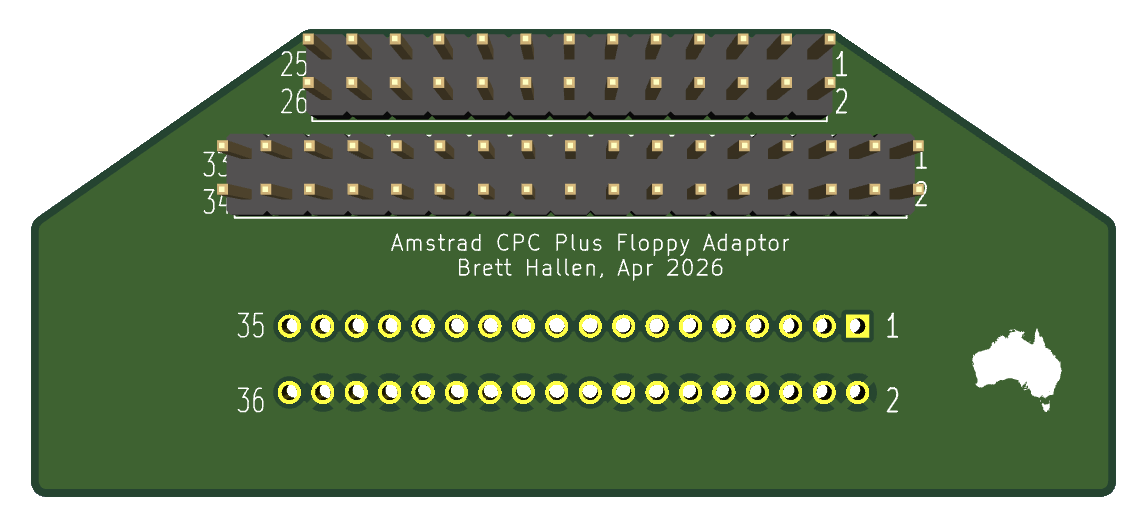
21-May-2026: test boards being fabricated
An idea for a no-cut adaptor board to allow two 32KB ROM images to be installed/switchable on a 64KB EPROM. This means you could have the original 464 firmware/BASIC 1.0 and 664 (or 6128) firmware/BASIC 1.1 easily switchable. Alternatively you could install a diagnostic ROM in one of the 32KB banks.
Of course you would need to de-solder the original ROM and install this, but you wouldn't need to worry about cutting the PCB and wiring up pin 1, and you can just reinstall the original ROM.
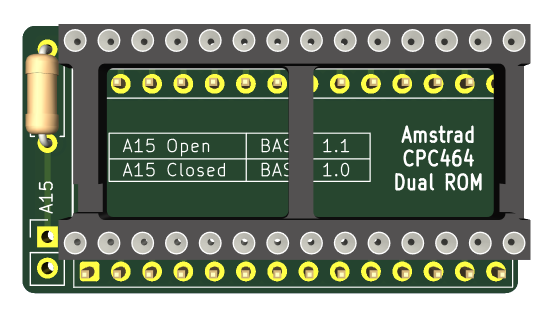
21-May-2026: test boards being fabricated
Started off as a quick'n'dirty keyboard for my 2nd CPC664 motherboard that's missing the top case/keyboard, then morphed to a generic CPC keyboard that could be used for troubleshooting naked motherboards.
25-Jul-2025: work in progress
Trying out hardware projects from the book.
A modification of grzegorz_gr's original design to use with WacKEDmaN's enhanced firmware.
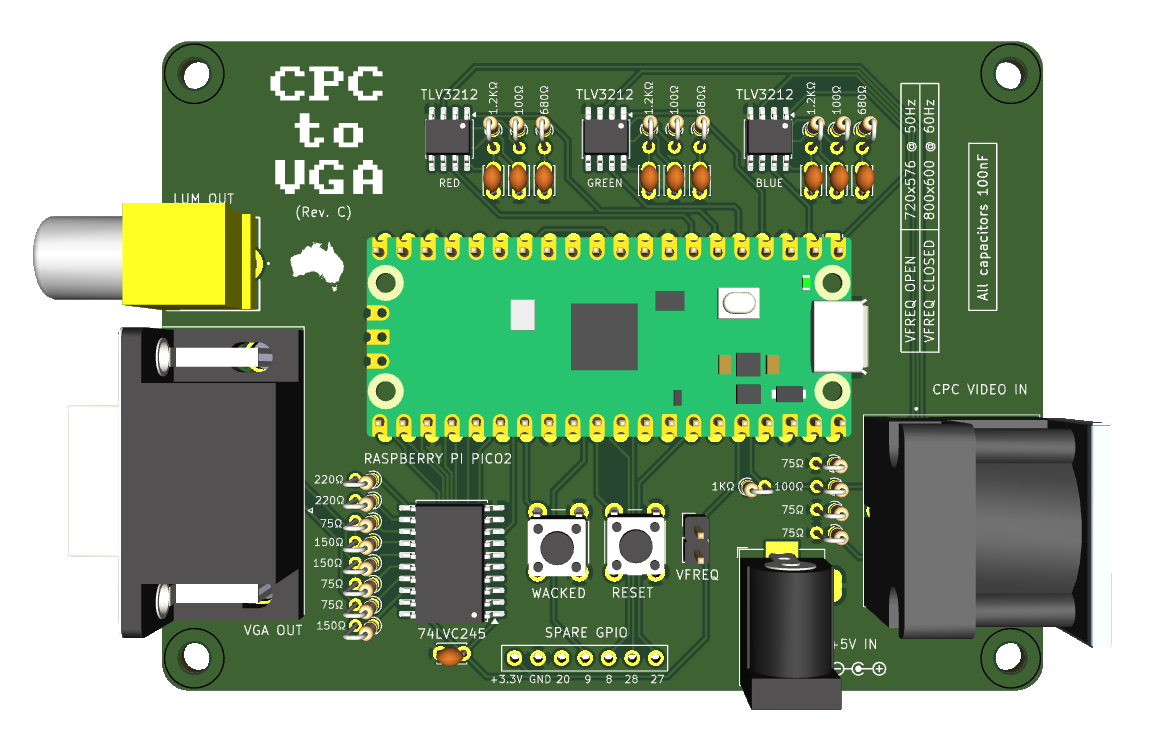
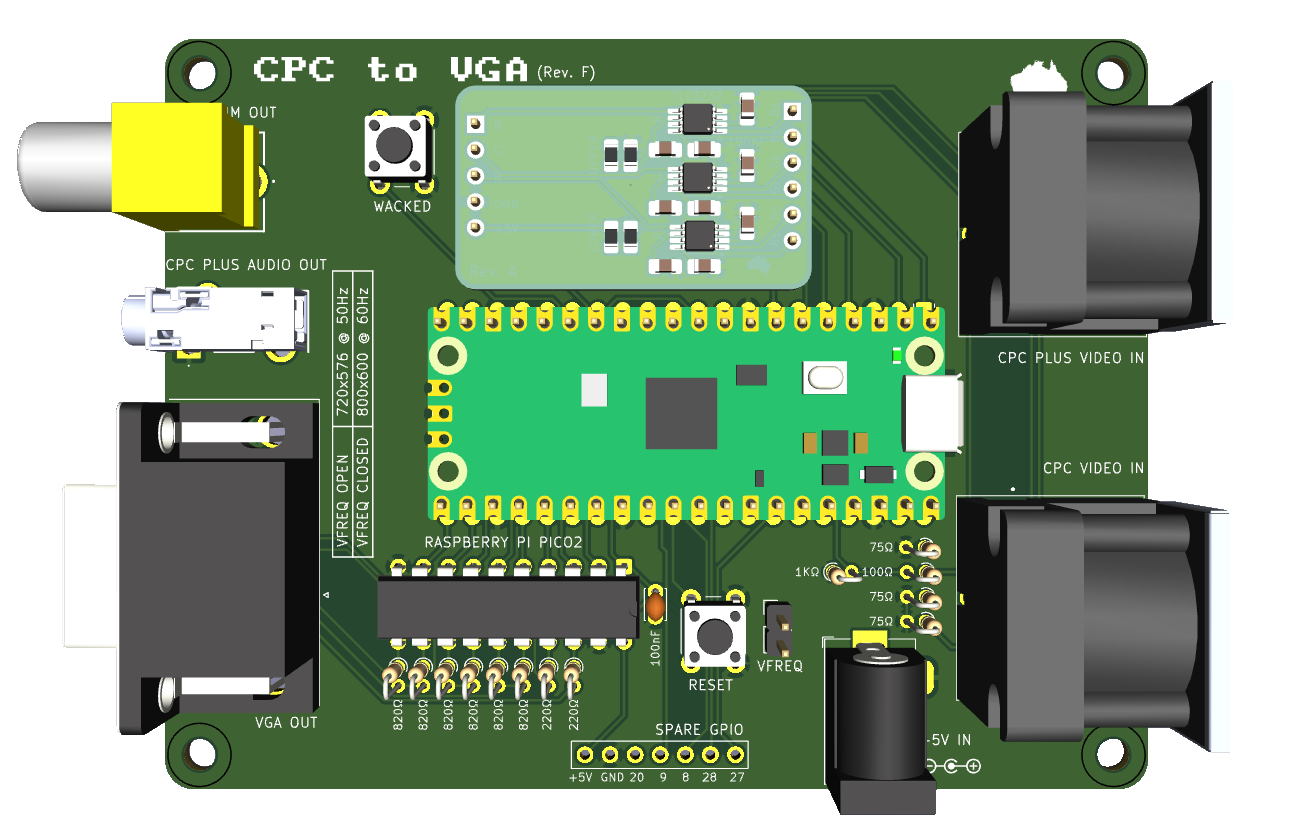
22-May-2025: Rev. C pending fab & testing
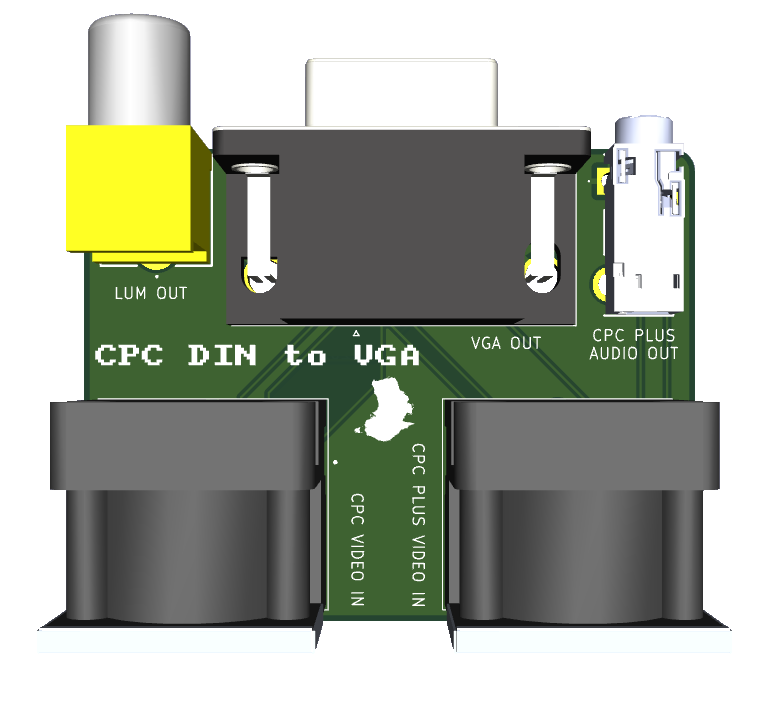
This is just a very simple connector converter - convert the CPC/CPC PLUS DIN to VGA, with also an RCA for the B&W LUM signal and 3.5mm stereo socket for the PLUSs' audio output.
The idea is that you can then more easily plug it into a device with a VGA socket (like GBS8200) for actual signal conversion.
Laserwarp was the first game, with Map Rally, that we got with our green screen Amstrad CPC464 so I have fond memories.

I thought it might be interesting to try out Claude to disassemble and delve into how the game works.
| Qty | Value | Footprint | References |
|---|---|---|---|
| 1 | 10KΩ | Resistor_THT:R_Axial_DIN0207_L6.3mm_D2.5mm_P7.62mm_Horizontal | R1 |
| 1 | 27256 Socket | Package_DIP:DIP-28_W15.24mm | U1 |
| 1 | 27512 ROM | Package_DIP:DIP-28_W15.24mm_Socket | U2 |
| 1 | Conn_01x02 | Connector_PinHeader_2.54mm:PinHeader_1x02_P2.54mm_Vertical | J1 |


joypad-ai/joypad-os
Universal controller firmware for building adapters, dongles, and custom controllers.


hackclub/OnBoard
💡 Join 1,000 teenagers and make your first PCB with a $100 grant!

tardate/LittleArduinoProjects
a collection of "Little Electronic & Arduino Projects", most involving electronics or an Arduino in one way or another!

drandyhaas/KiCadRoutingTools
A set of Python/Rust tools to aid routing in KiCad

osy/XG_Mobile_Station
Open source eGPU dock for ROG Ally and ROG Flow

Luos-io/luos_engine
Open-source and real-time orchestrator for cyber-physical-systems, to easily design, test and deploy embedded applications and digital twins.

NVNTLabs/switch2-SDEX2M2
Micro SD Express to M.2 NVME Adapter for Nintendo Switch 2
It measures 40.3 × 21.7 mm and has 2 copper layers, 1.6 mm thick.
4 parts. The full list of its parts is on this page, with links to each part's symbol and footprint where PCBKit's library has them.
From the BrettHallen/Amstrad-CPC repository on GitHub, at the commit this page was made from: the board is CPC464_Dual_ROM/CPC464_Dual_ROM.kicad_pcb and its schematic Amstrad_CPC_Keyboard/CPC464_CPC664/Amstrad_CPC664_Keyboard.kicad_sch. PCBKit opens the board in the browser, with nothing to install.
Its repository states no licence, so its author keeps all rights: ask BrettHallen before reusing the design.