16 layers50.8 × 22.9 mm
Adafruit adafruit dc stepper motor featherwing pcb adafruit dc stepper wing
oomlout/oomlout_oomp_project_bot_v_2
34 parts
 B-AROL-O/RAMIE-RAD_AI_Messing_In_Earthworks2
A local Gradio MCP server controlling a robot platform
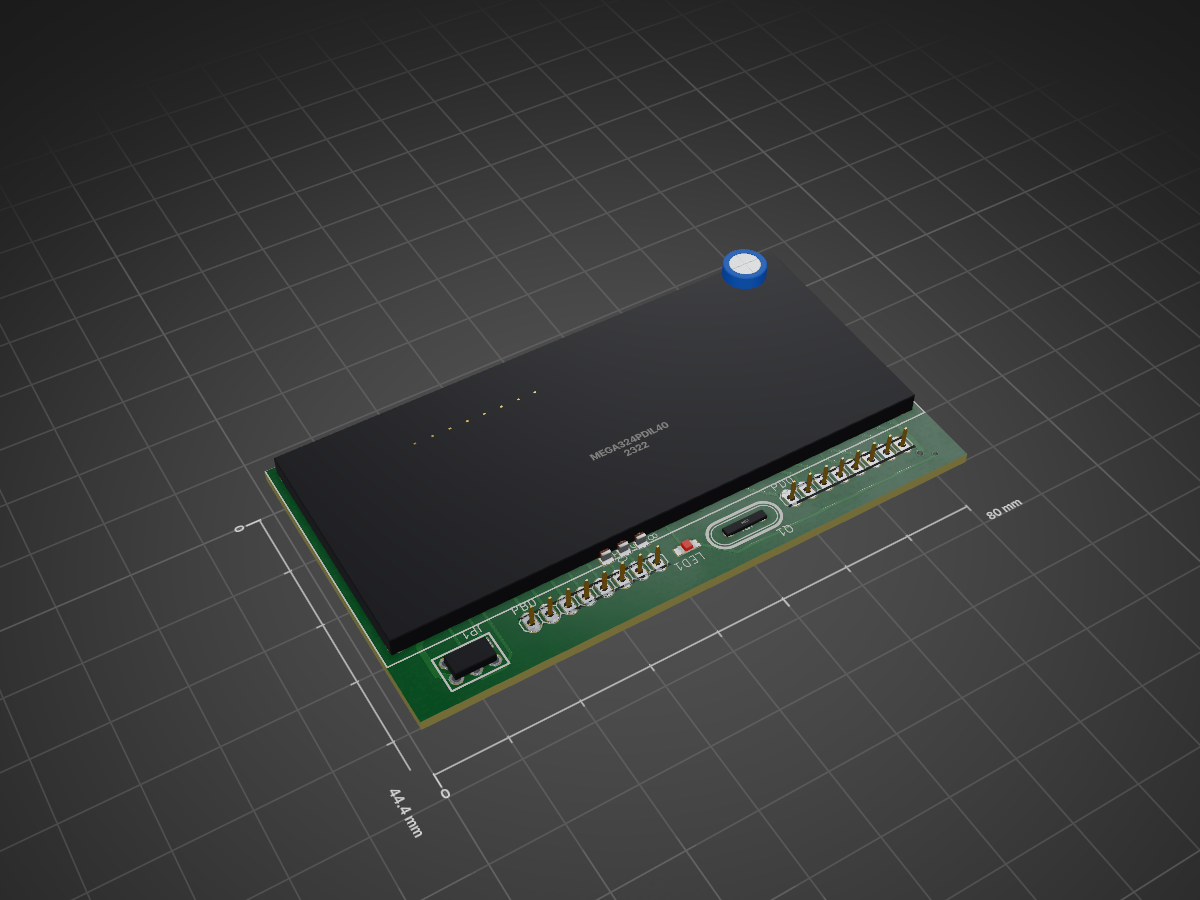
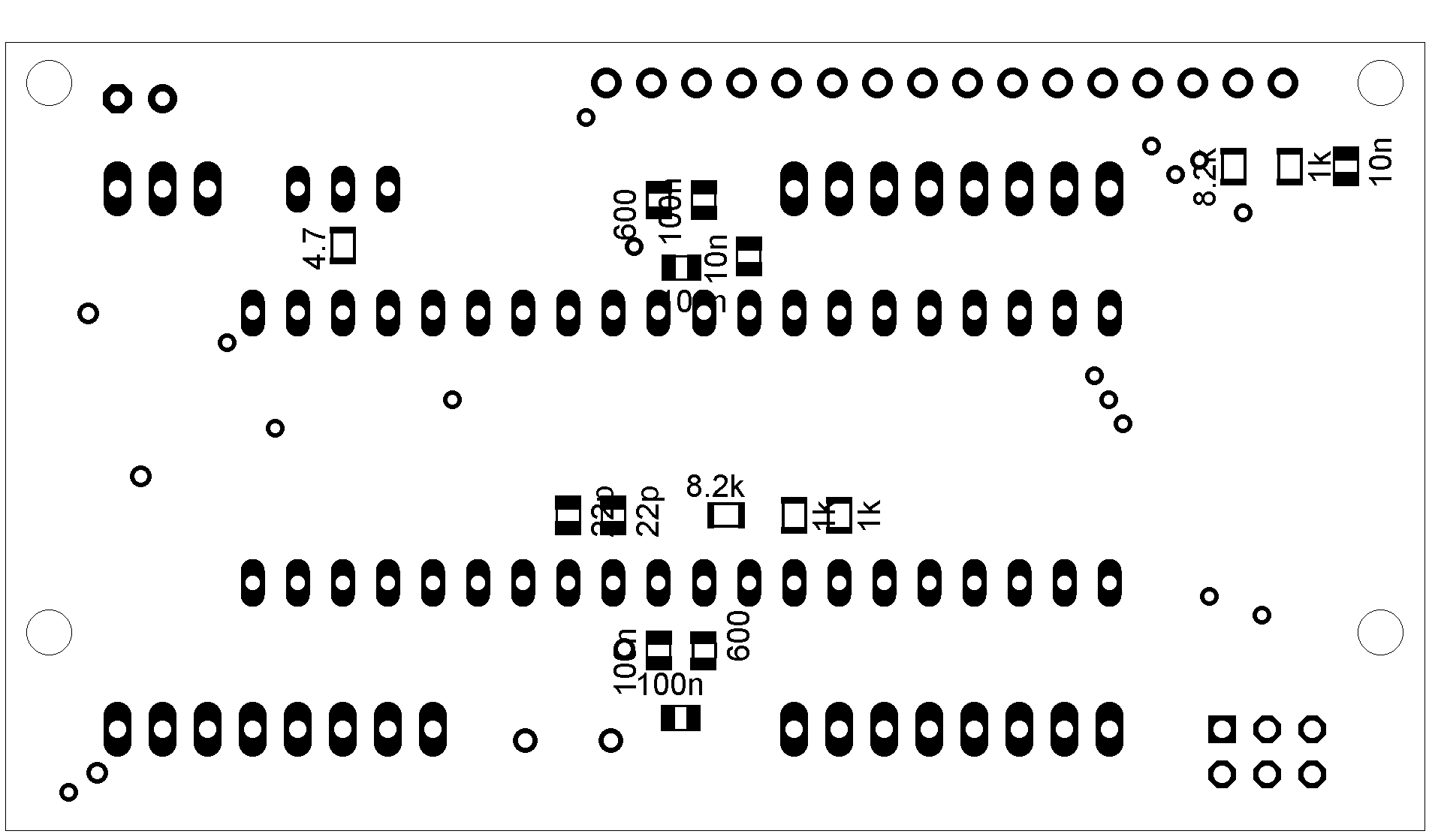
AT324LCD V1 is an open-source printed circuit board by B-AROL-O, from the B-AROL-O/RAMIE-RAD_AI_Messing_In_Earthworks repository on GitHub. It is a 16-layer board of 80 × 44.5 mm with 34 parts on 51 nets, routed with 407 tracks and 19 vias.
Its parts include 10 resistors, 1 IC, 1 diode and 1 transistor. It belongs with the robots and motor control boards of this library.
This is a board that I designed in 2012 to control robots
It was convenient for me to use this board as I have a bounch of them assembled
It has an Atmel AT324PA PDIP40, an ISP programmer, power and breaks out all the pins
I also have a more recent board based on Atmel 4809 in SMD package, both work for this application.
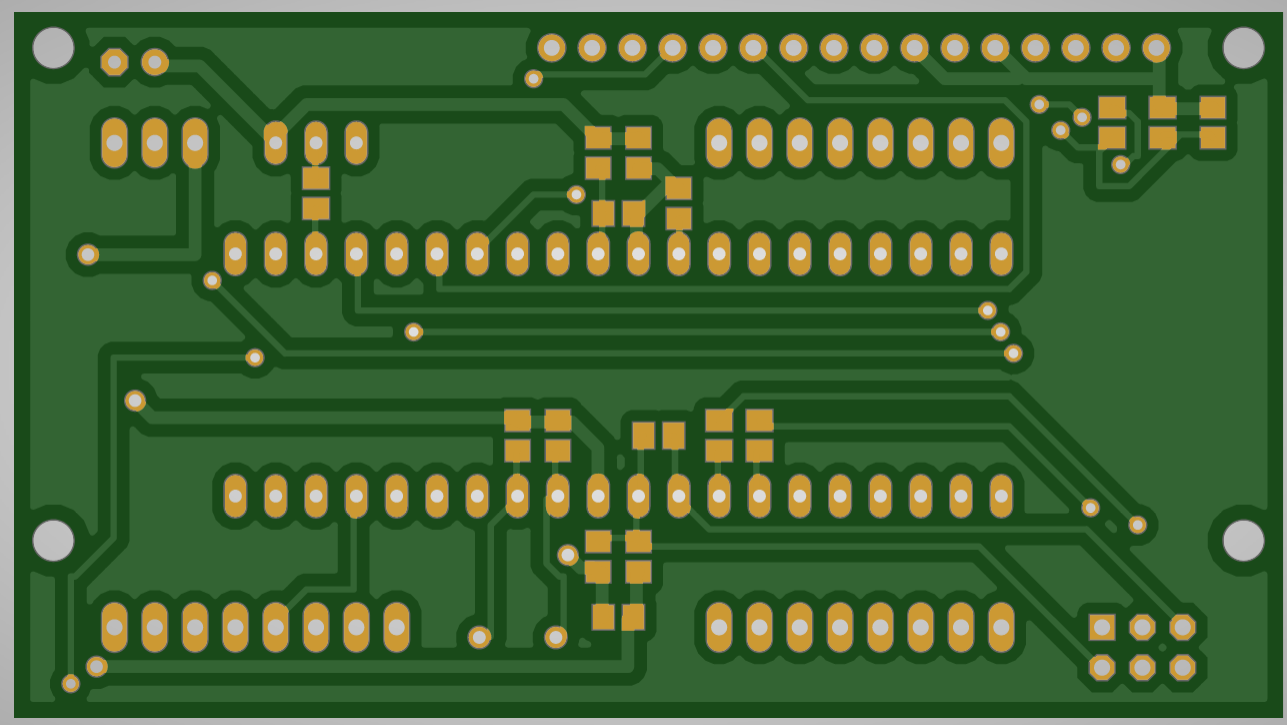
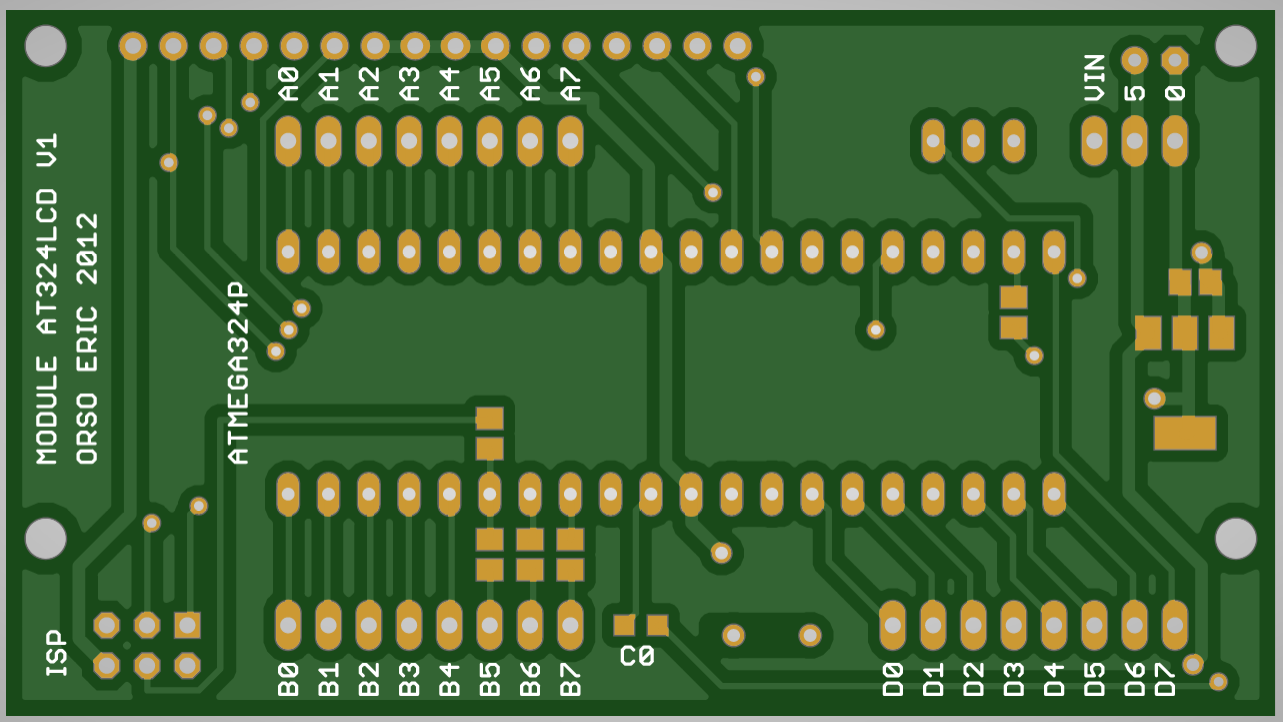
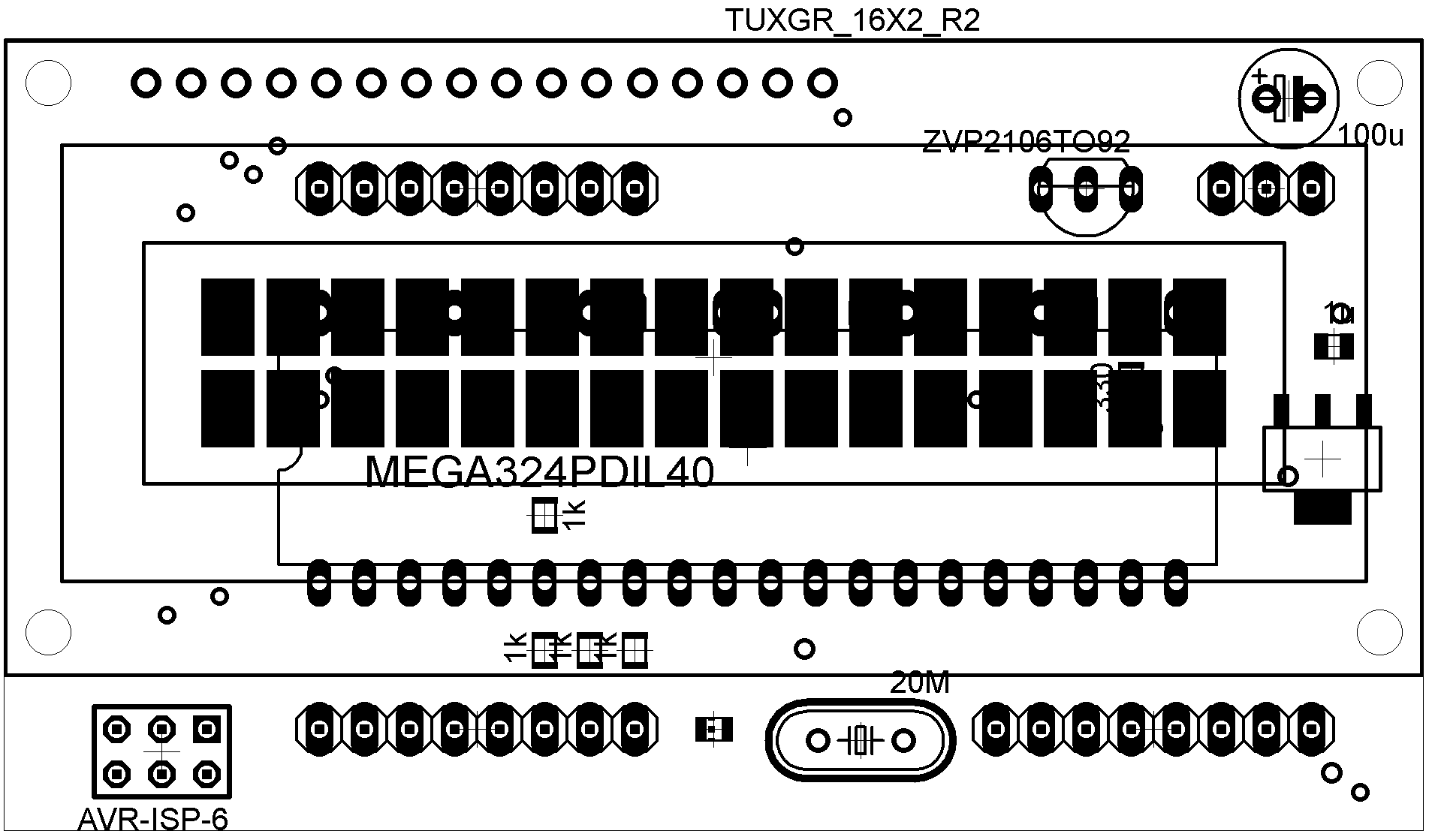
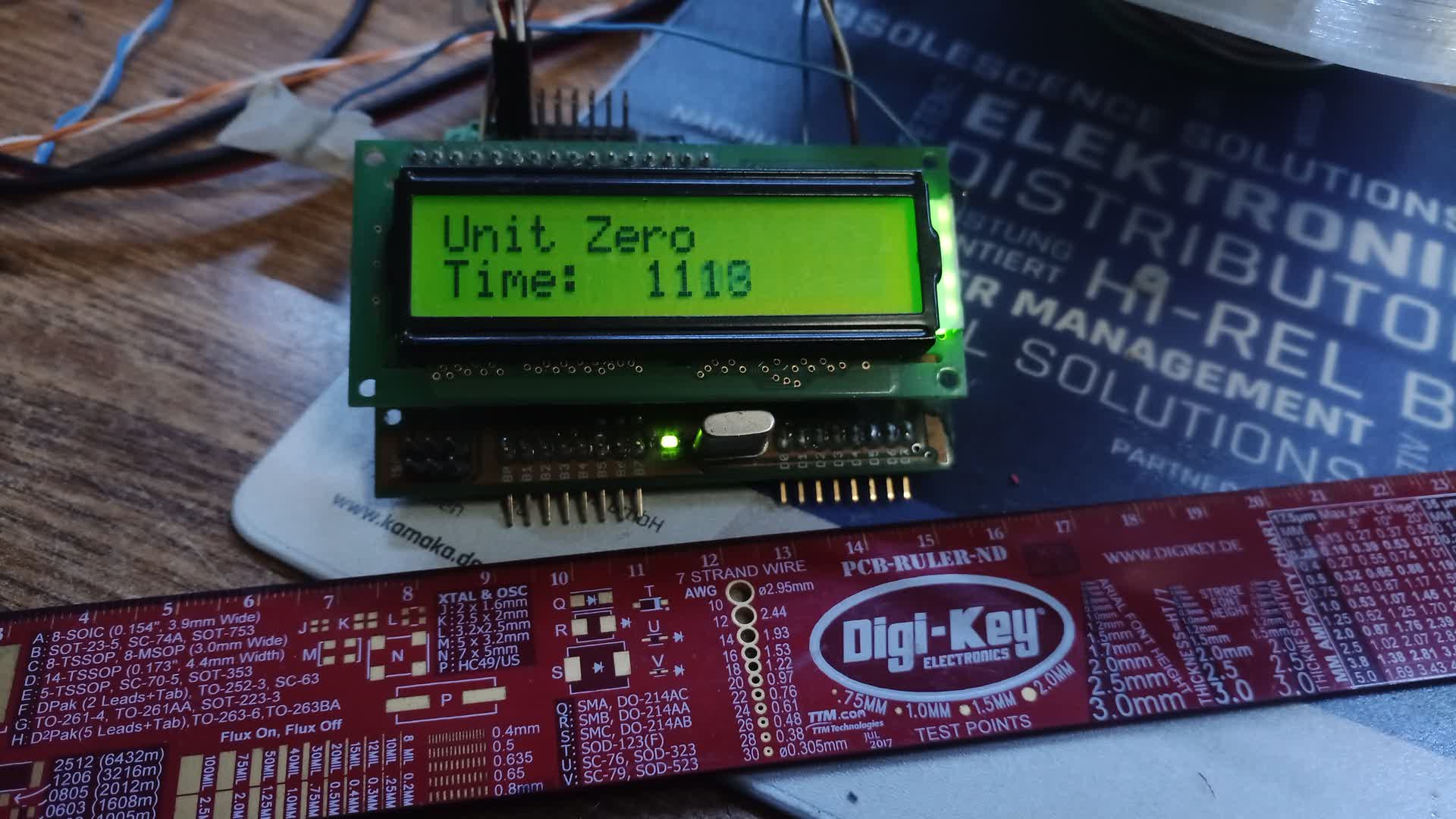
For going to the board I soldered a number of adapters
TODO
TODO
TODO
| Qty | Value | Footprint | References |
|---|---|---|---|
| 7 | 1k | M0805 | R2, R5, R6, R7, R8, R9, R10 |
| 4 | 100n | C0805 | CF3, CF4, CF5, CF6 |
| 3 | 1X08 | PA0, PB0, PD0 | |
| 2 | 10n | C0805 | CF1, CF2 |
| 2 | 22p | C0805 | CX1, CX2 |
| 2 | 600 | L0805 | LF1, LF2 |
| 2 | 8.2k | M0805 | R3, RPU1 |
| 1 | SOT223 | IC1 | |
| 1 | 1X03 | JP3 | |
| 1 | CHIP-LED0805 | LED1 | |
| 1 | 100u | E2,5-6 | CB2 |
| 1 | 1u | C0805 | CB1 |
| 1 | 20M | HC49_S | Q1 |
| 1 | 330 | M0805 | R4 |
| 1 | 4.7 | M0805 | RG1 |
| 1 | AVR-ISP-6 | AVR-ISP-6 | JP1 |
| 1 | MEGA324PDIL40 | DIL40 | U$1 |
| 1 | TUXGR_16X2_R2 | TUXGR_16X2_R2 | DIS1 |
| 1 | ZVP2106TO92 | TO92- | U$2 |
oomlout/oomlout_oomp_project_bot_v_2

statts/siguino
Low power board based on Arduino Pro Mini with in-built Sigfox network support

travisgoodspeed/plc77-glitcher
Port of an antique smart card glitcher to modern Kicad.


shlok435/ESP32_project
I want to make a full repository of a Hardware design board (basically a full KiCad project) and add it to Git. So i make this repository for learning and for example.

ihmnelson/ESP32-Embedded-Console
Handheld game/macropad device, roughly halfway between a Stream Deck and a Game Boy. Personal learning project — KiCad hardware design, not yet fabbed.

oomlout/oomlout_oomp_documentation_bot
a bot that goes around generating rough documentation for kicad projects
It measures 80 × 44.5 mm and has 16 copper layers, 1.6 mm thick.
34 parts. The full list of its parts is on this page, with links to each part's symbol and footprint where PCBKit's library has them.
From the B-AROL-O/RAMIE-RAD_AI_Messing_In_Earthworks repository on GitHub, at the commit this page was made from: the board is Electronics/Board motor screen/AT324LCD_V1.kicad_pcb. PCBKit opens the board in the browser, with nothing to install.
Its repository states no licence, so its author keeps all rights: ask B-AROL-O before reusing the design.