2 layers131.2 × 132.5 mm
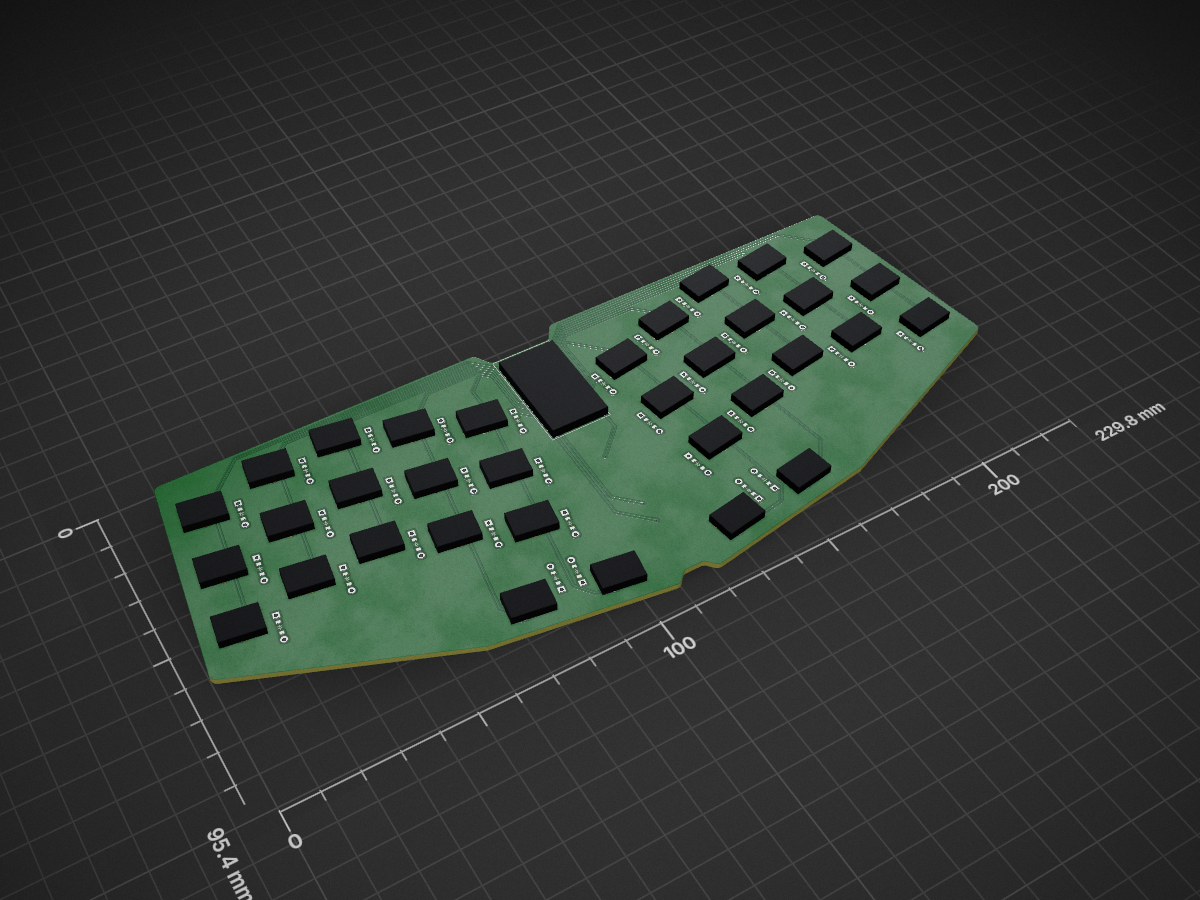
 4itor/moai36
moai keyboard
Moai is an open-source printed circuit board by 4itor, from the 4itor/moai repository on GitHub, published under the CC0-1.0 licence. It is a 2-layer board of 229.7 × 95.3 mm with 73 parts on 56 nets, routed with 368 tracks and 0 vias.
It belongs with the keyboards and input boards of this library.
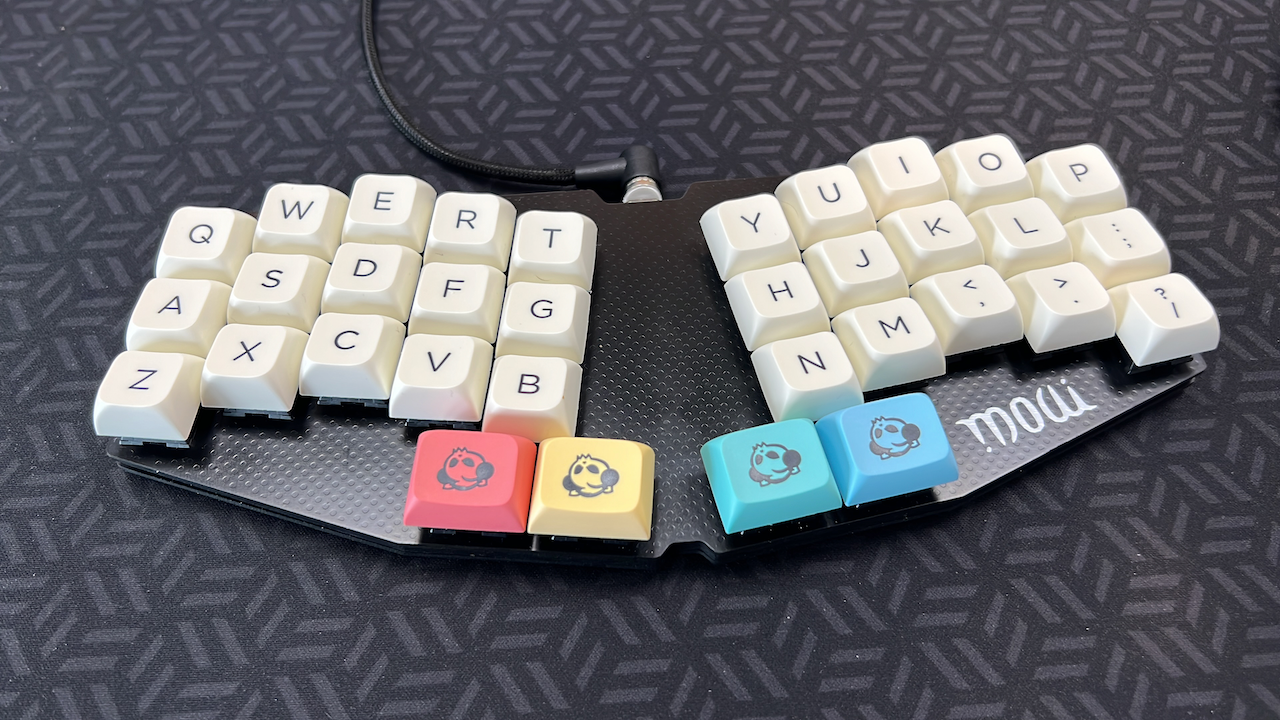
A small, 34 key, low(ish) profile keyboard with MX switches.
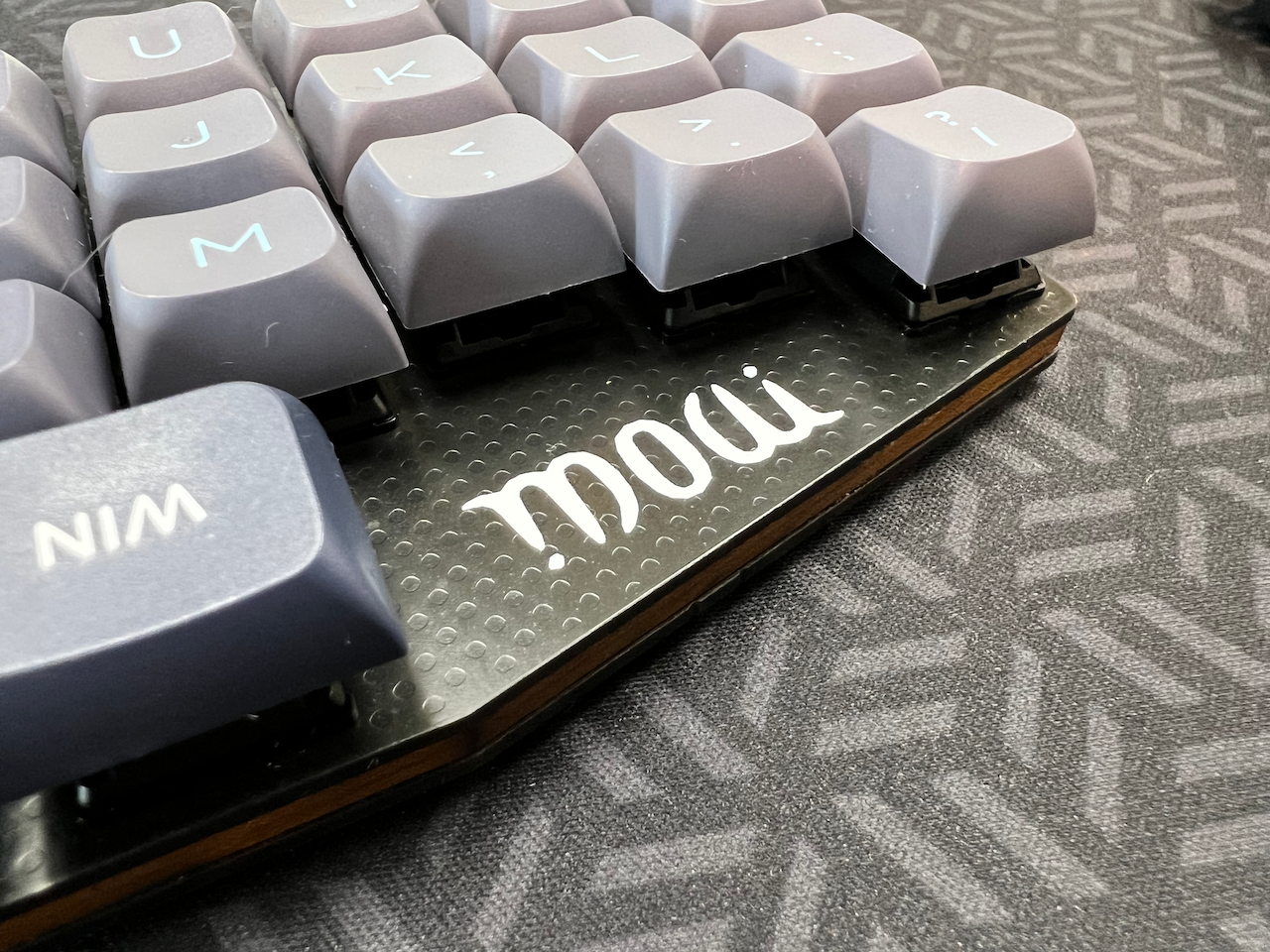
The keyboard is caseless, using just the plate and the pcb, with a maple woodcut (3.3mm height) between both. No screws, the soldered switches keep everything in place.
The wood gives enough stability and it's quite sturdy compared to other caseless builds I've done before (even the ones that used screws).
The texture on top of the plate is created poking holes on the Cu layer below; tried just this once and results where better than expected; As the plate is simmetrical I created two designs (one on each side), but only used the textured one for now.
Word of advice : The distance between each pair of thumb keys is tenths of a millimeter less than the standard for 1.25U keys, this is intentional. I have found no incompatibilities in any keycap profiles thrown at it (Cherry, MDA/XVX, XDA, SDA, MT3, etc) from several vendors, but your milleage may vary.
See more pictures in the Gallery.

The moai logo is an ambigram on the romanized japanese term moai.
Moais (模合, Mo-ai) are social support groups that form in order to provide varying support from social, financial, health, or spiritual interests.
Moai means "meeting for a common purpose" in Japanese and originated from the social support groups in Okinawa, Japan.
Source: Wikipedia
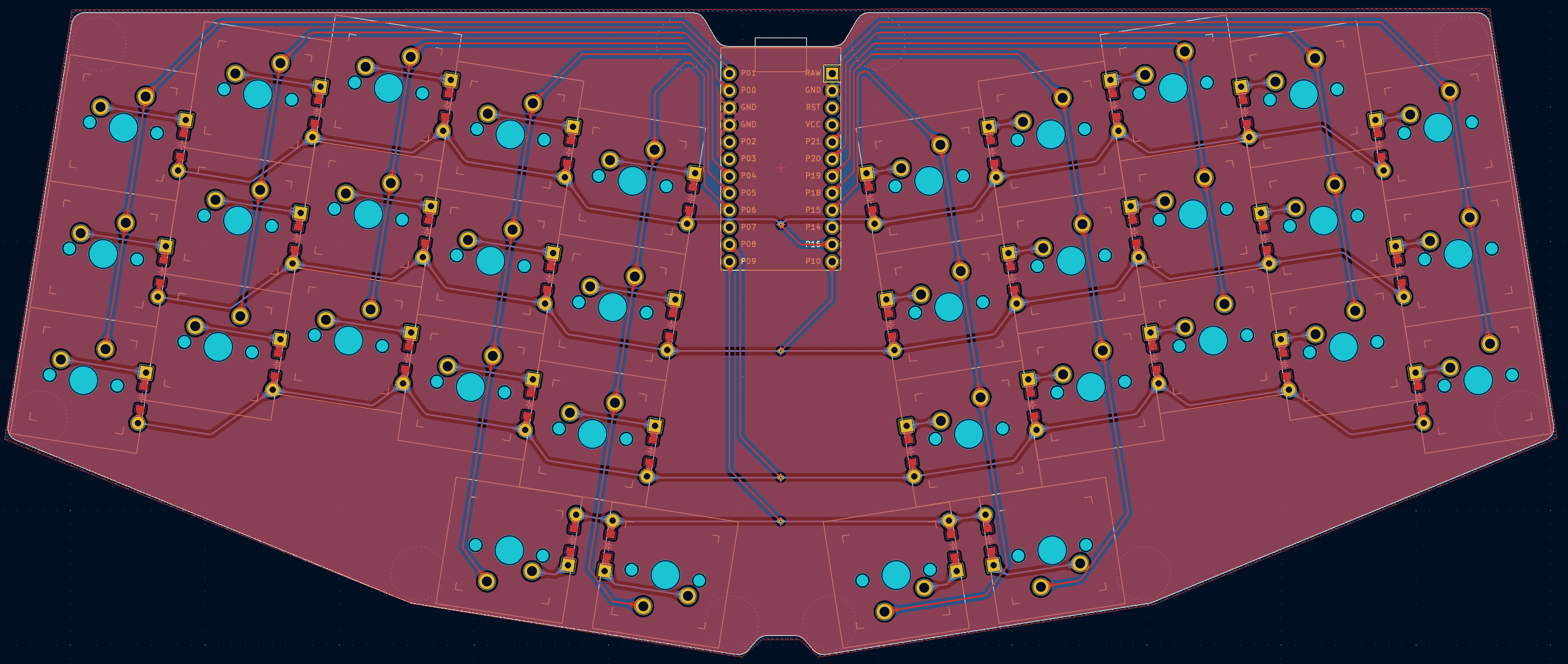
It was designed using Ergogen and Kicad.
Original procedural design on Ergogen folder and Kicad+Gerbers on Build Files
See build notes
| Qty | Value | Footprint | References |
|---|---|---|---|
| 34 | MX | 10.001251, 10.001252, 10.0012510, 10.0012511, 10.0012512, 10.0012513, 10.0012514, 10.0012515, 10.0012516, 10.0012517, 10.0012518, 10.0012519, 10.0012520, 10.0012521, 10.0012522, 10.0012523 +18 | |
| 34 | ComboDiode | D1, D2, D10, D11, D12, D13, D14, D15, D16, D17, D18, D19, D20, D21, D22, D23 +18 | |
| 1 | ProMicro | MCU1 |
The 69 most common of 73 parts.
It measures 229.7 × 95.3 mm and has 2 copper layers, 1.6 mm thick.
73 parts. The full list of its parts is on this page, with links to each part's symbol and footprint where PCBKit's library has them.
From the 4itor/moai repository on GitHub, at the commit this page was made from: the board is build_files/pcb/moai.kicad_pcb. PCBKit opens the board in the browser, with nothing to install.
Its repository publishes it under the CC0-1.0 licence: you may reuse it on that licence's terms (keep the author's notice, and for a copyleft licence share your changes alike).


hackclub/OnBoard
💡 Join 1,000 teenagers and make your first PCB with a $100 grant!


eddyem/stm32samples
Code samples and ready projects based on bare-metal STM32

